
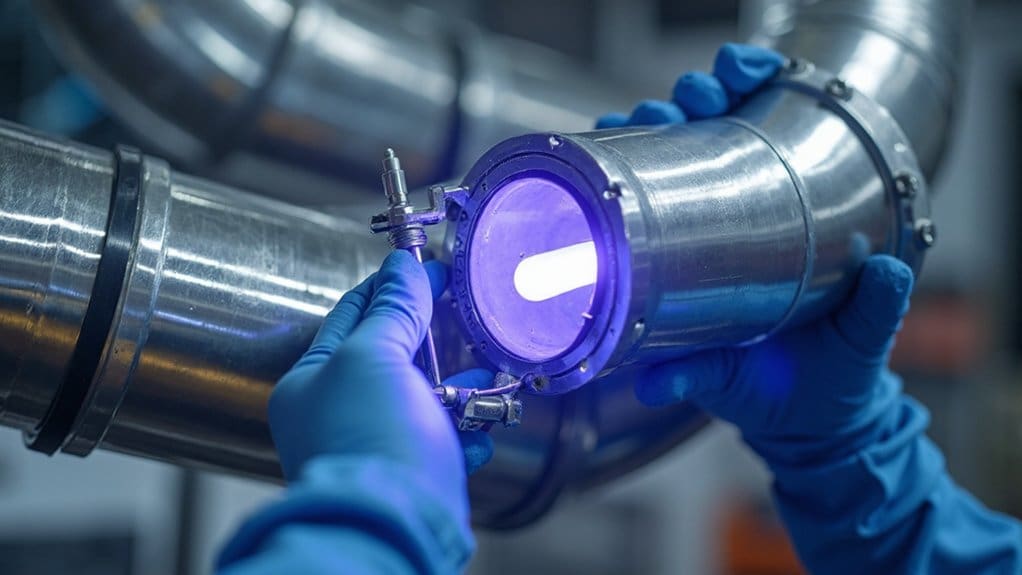
Turn off power to your HVAC system, determine suitable placement near the evaporator coil, and gather essential tools before installing UV lights. The installation involves mounting the unit, connecting power according to manufacturer specifications, and providing proper shielding to prevent direct exposure. Regular maintenance includes cleaning quartz sleeves, replacing UV lamps based on their lifespan, and monitoring system effectiveness. Following these steps guarantees your UV system delivers 99.9% pathogen elimination while maximizing efficiency and discovering advanced optimization techniques.
Key Takeaways
- Turn off power, gather tools, determine ideal placement near evaporator coils, and follow manufacturer specifications for mounting and electrical connections.
- Install proper shielding to prevent UV exposure, obtain necessary permits, and consult HVAC professionals to ensure local code compliance.
- Regularly inspect UV components, clean quartz sleeves and reflective surfaces, and replace lamps according to manufacturer’s recommended lifespan schedule.
- Monitor system effectiveness through routine testing and maintain continuous operation by replacing power supplies and checking electrical connections as needed.
- Dispose of mercury-containing UV lamps properly according to local regulations and follow sustainable practices for environmental compliance during maintenance.
Understanding UV Light Technology in HVAC Applications
The invisible threat of airborne pathogens in your home’s HVAC system has found a powerful adversary in ultraviolet light technology. UV light, specifically UV-C light, operates as a germicidal weapon that destroys microorganisms DNA, rendering bacteria, viruses, and mold harmless as they pass through your ductwork.
When you integrate UV light into HVAC systems, you’re investing in superior indoor air quality through proven scientific principles. The effectiveness of UV depends on proper exposure time and intensity, making strategic placement within your system critical for ideal results.
The benefits of UV extend beyond pathogen elimination. You’ll notice reduced allergens, eliminated odors, and decreased microbial growth on coils and surfaces. This technology also enhances your HVAC system’s efficiency by keeping components cleaner.
However, UV light installation requires professional expertise to maximize exposure coverage. The installation process involves careful sizing calculations and strategic positioning. Remember, proper maintenance including regular bulb replacement maintains peak germicidal performance throughout the system’s lifespan.
Benefits of Installing UV Lights in Your HVAC System
When you install UV lights in your HVAC system, you’ll immediately begin reaping measurable improvements in your home’s air quality and system performance. The effectiveness of the UV light in HVAC applications centers on its ability to eliminate harmful microorganisms at the source.
Benefits of installing UV lights include three key advantages:
- Enhanced Air Purification – UV light kills 99.9% of viruses, bacteria, and mold spores circulating through your system, dramatically improving indoor air quality and reducing exposure to seasonal allergens.
- Increased System Efficiency – Installing UV lights prevents microbial buildup on coils, boosting your HVAC’s operational efficiency while extending its lifespan and reducing repair frequency.
- Odor Elimination – HVAC UV light systems eliminate lingering odors caused by mold and bacterial growth, creating fresher indoor environments.
UV light for HVAC systems works continuously, providing 24/7 protection against airborne pathogens while maintaining ideal system performance throughout every season.
Preparing for UV Light Installation
Before you can enjoy these compelling air quality benefits, proper preparation sets the foundation for a successful UV light installation. You’ll need to gather essential tools and materials first, including a template, tin snips, self-tapping screws, and your UV light system with bulb replacement components.
Safety comes first when working on your HVAC system. Turn off all power to prevent electrical hazards during the installation process. This critical step safeguards both you and your equipment.
Next, determine ideal placement within your system. Position the UV light at the center of your supply duct, or slightly off-center for end coil configurations. Proper placement guarantees maximum effectiveness against airborne contaminants.
Review the manufacturer’s instructions thoroughly before beginning any mounting procedures. Understanding specific requirements for your model prevents costly mistakes. Plan your maintenance schedule early, including routine testing protocols and cleaning procedures. This preparation ensures long-term performance and helps you maintain peak air quality benefits throughout your system’s lifespan.
Step-by-Step Installation Process
Now that you’ve completed your preparation, begin the installation by carefully marking the mounting location on your ductwork. Cut the hole precisely to guarantee proper installation of your UV light system. This step’s critical for maintaining your HVAC system’s integrity and maximizing air quality improvements.
Follow these essential installation steps:
- Mount and seal the unit – Secure the UV light housing to prevent air leaks that could compromise your system’s efficiency
- Connect the power source – Wire the UV lamps to either 24V or 120/240V power to your HVAC system based on manufacturer specifications
- Position for maximum effectiveness – Install UV bulbs near the evaporator coil or supply duct where they’ll neutralize contaminants most effectively
After installation, conduct thorough testing to verify proper operation. If you’re uncertain about electrical connections or ideal placement, consult with a professional to guarantee your UV light system functions safely and effectively within your HVAC system.
Safety Precautions and Compliance Requirements
While UV light systems offer significant air quality benefits, you’ll need to prioritize safety measures during installation and operation. Proper shielding prevents harmful direct exposure to your skin and eyes during maintenance procedures. You must follow electrical safety protocols throughout the installation process to prevent accidents and guarantee system reliability.
Compliance with local regulations requires consulting HVAC professionals who understand your area’s specific codes and standards. These experts can guide you through permit requirements and coordinate with local authorities to verify your installation meets all applicable safety standards.
You’ll need to obtain necessary permits before beginning work, as UV light installations often require official approval. Working with reputable HVAC companies experienced in UV systems ensures proper code compliance throughout the process. These professionals understand both installation requirements and ongoing maintenance safety precautions, helping you maintain a safe, compliant system that delivers optimal air quality benefits.
Optimal Placement and Configuration Guidelines
Once you’ve addressed safety requirements and obtained proper permits, determining where to position your UV light system becomes the next critical step for maximizing its effectiveness. Your HVAC system’s configuration directly impacts ideal performance, making proper placement essential for successful disinfection.
Consider these critical positioning factors for your UV light installation:
- Duct placement varies by system type – Center positioning works best for A-coil systems, while end-coil systems require slightly off-center placement for complete coverage.
- Air handler positioning – Mount your UV light between the evaporator coil and blower motor to effectively treat the entire air stream as it passes through.
- Avoid direct coil placement – Never install the unit directly below your evaporator coil, as this orientation reduces effectiveness and can cause operational issues.
Your system’s unique layout determines the most effective configuration. Consulting experienced HVAC professionals guarantees you’ll follow proper installation guidelines and achieve maximum disinfection results for your specific setup.
Regular Maintenance and Bulb Replacement
After successfully installing your UV light system, maintaining its peak performance requires consistent attention to bulb replacement and system upkeep. You’ll need to replace UV bulbs every 9-12 months to guarantee optimal disinfection against viruses and bacteria. Without frequent replacement, the bulbs lose their ability to damage DNA and RNA structures in harmful microorganisms and mold spores, creating potential health risks.
Regular maintenance includes periodic inspection and cleaning of UV components to prevent dust accumulation that reduces effectiveness. You should schedule thorough HVAC maintenance checks that include your UV system to ensure continued effectiveness and system efficiency. Don’t forget to monitor the power supply and replace it when necessary to keep everything functioning properly.
When disposing of used bulbs, handle them carefully since they contain small amounts of mercury. Proper disposal protects the environment while confirming your UV light system continues providing clean, purified air throughout your home.
Testing and Performance Monitoring
Beyond routine maintenance, you’ll want to verify your UV light system actually delivers the air quality improvements you invested in. Performance monitoring guarantees your investment continues eliminating contaminants effectively over time.
Regular testing involves three key monitoring approaches:
- UV Output Measurement – Test the light’s effectiveness by measuring its actual output to confirm it’s still eliminating contaminants at ideal levels
- Energy Usage Tracking – Monitor your HVAC system’s energy consumption to identify performance degradation before it becomes problematic
- Air Quality Comparisons – Compare pre-installation and post-installation air quality measurements to quantify your system’s real-world impact
Routine inspection and cleaning of UV components maintains peak performance, while documenting all maintenance activities creates valuable troubleshooting records. This systematic approach helps you spot declining effectiveness early, plan future upgrades, and assure your UV light system consistently delivers the cleaner indoor air you’re paying for.
Conclusion
You’ve now mastered the blueprint for cleaner, healthier indoor air. Like a guardian standing watch, your properly installed and maintained UV light system will silently eliminate harmful microorganisms 24/7. Don’t let poor air quality compromise your family’s health—take action today. Remember, consistent maintenance isn’t just recommended; it’s essential for ideal performance. You’ll breathe easier knowing you’ve invested in a proven technology that transforms your HVAC system into a powerful air purification powerhouse.