
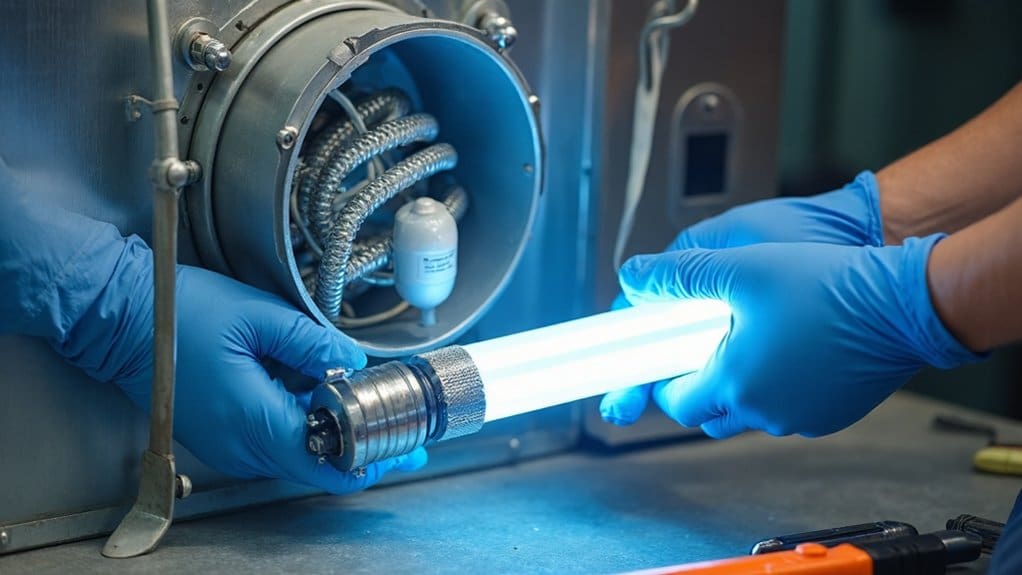
You’ll need to power down your HVAC system at the circuit breaker, then identify suitable placement near the evaporator coil for maximum effectiveness. Gather essential tools including tin snips, self-tapping screws, and a mounting template. Cut the required hole, securely mount the UV light fixture, and connect to either 24-volt or 120/240-volt power supply based on your system’s configuration. Test functionality by checking for visible illumination and proper ballast operation. Following these professional steps guarantees your air purification system operates at peak performance.
Key Takeaways
- Turn off power at the circuit breaker and wear UV-resistant goggles for safety before beginning installation.
- Position UV light near the evaporator coil using a template to mark precise hole placement.
- Cut metal housing with tin snips and secure fixture with four self-tapping screws.
- Connect power supply using either 24-volt from furnace or separate 120/240-volt electrical circuit.
- Test functionality by checking for visible illumination, ballast hum, and measuring UV intensity output.
Understanding HVAC UV Light Technology and Benefits
How does ultraviolet light technology transform your HVAC system into a powerful air purification tool? UV light works by emitting germicidal radiation that destroys the DNA and RNA of microorganisms, effectively killing or inactivating harmful pathogens as they pass through your air handler.
When you install UV lights in HVAC systems, you’re adding a critical layer of mold prevention and bacterial control. The UV bulb produces shortwave ultraviolet light (UV-C) that targets mold and bacteria circulating through your air circulation system. This technology vastly improves your indoor air quality by eliminating contaminants before they spread throughout your home.
Three main types of UV bulbs are available: low-pressure, medium-pressure, and high-pressure mercury-vapor lamps. Low-pressure mercury vapor lamps are most common because they produce abundant UV-C light. Understanding this technology before beginning the installation process guarantees you’ll select the right system for your specific air handler configuration and purification needs.
Safety Precautions and Personal Protection Requirements
Before you begin installing UV lights in your HVAC system, you must prioritize safety by gathering the proper protective equipment and taking essential precautions. Personal protective equipment is non-negotiable when handling ultraviolet light systems. You’ll need UV-resistant goggles to shield your eyes from harmful radiation during installation.
Always disconnect the power supply at your circuit breaker before starting work. This critical step prevents electrical hazards that could cause serious injury or system damage. Never attempt proper installation while power remains connected to your HVAC unit.
Follow the manufacturer’s instructions precisely for your specific UV light model. Each system has unique requirements that affect both safety and performance. Guarantee adequate ventilation throughout the installation process to minimize exposure to ozone and other potential byproducts.
These safety precautions form the foundation for successful UV light installation. Taking shortcuts with personal protection or ignoring electrical safety protocols can result in injury and compromised system effectiveness.
Essential Tools and Materials for UV Light Installation
Successful UV light installation requires specific tools and materials that you’ll need to gather before starting the project. You’ll need a template to mark the precise hole size for your UV light placement in the air handler. Ten snips are essential for cutting through the metal housing cleanly and safely. Four self-tapping screws will secure the UV light fixture firmly in place within your HVAC system.
Don’t forget to have your UV bulb ready for installation after you’ve mounted the fixture. Before you install the lights, guarantee you’re familiar with your gas furnace and air handler locations. This knowledge helps you choose the optimal placement for maximum effectiveness against mold and airborne contaminants.
Having all materials ready streamlines the installation process and prevents interruptions. Once you’ve gathered these essential tools, you’ll be prepared to proceed with the UV lights installation efficiently, ensuring your HVAC system receives proper UV light power distribution.
Powering Down Your HVAC System Safely
With your tools and materials organized, you must prioritize electrical safety by completely powering down your HVAC system before beginning any installation work. Turn off the power at the circuit breaker to eliminate electrical hazards while installing the UV light.
Next, you’ll need to determine the best power supply option for your specific system. Choose the right voltage model—either 24 volt or 120/240 volt—based on your HVAC system’s compatibility. For 24 volt models, power typically comes from your gas furnace‘s lower section, while 120/240 volt models include pre-molded plugs for easier connection.
Before proceeding with the installation, evaluate your existing transformer’s capacity and fuse rating to prevent overloading. If you’re adding multiple accessories or UV lamps, you may require professional assistance to install an additional transformer. This assessment will guarantee proper installation and maximize performance of your UV light system.
Identifying Optimal UV Light Placement in Your Air Handler
Proper placement of your UV light directly impacts its effectiveness in eliminating harmful microorganisms throughout your HVAC system. You’ll want to position the UV light near your evaporator coil, where it can best prevent mold growth and kill bacteria in the air handler.
Your coil’s shape determines the ideal placement strategy:
- A-shaped evaporator coils – Install the UV light above, centered, and downstream of the coil for even coverage
- N-shaped evaporator coils – Position the light either above or below the coil based on your air handler’s layout
- Airflow consideration – Align placement with your system’s airflow patterns to maximize air exposure to UV radiation
- Maintenance access – Choose a location near the access panel or service door for easy bulb replacement
You’ll need to balance effectiveness with practicality. The perfect placement guarantees maximum UV exposure while maintaining convenient access for routine maintenance. Consider your air handler’s specific configuration when making this critical decision.
Measuring and Cutting Access Holes in Metal Ductwork
Once you’ve determined the ideal placement for your UV light, you’ll need to create a precise access hole in your metal ductwork. First, measure your UV lamp dimensions carefully to determine the proper hole size – typically 2-3 inches in diameter depending on your HVAC system’s specifications.
Use a hole saw attachment on your drill to cut through the sheet metal, creating a clean circular opening. Position this hole strategically so the UV lamp can effectively target the evaporator coil and treat airborne contaminants like mold spores as air passes through your system.
After cutting, deburr all edges thoroughly to prevent damage to the UV lamp housing during installation. Sharp metal edges can compromise the seal and reduce effectiveness against airborne contaminants.
Finally, seal the hole’s perimeter with foil tape to prevent air leaks that could affect your blower motor’s efficiency. This guarantees maximum airflow while maintaining the UV light’s ability to neutralize harmful particles.
Mounting and Securing the UV Light Unit
After completing your access hole, you’ll position the UV light housing against the opening you’ve created. Mount the UV light using the provided brackets or self-tapping screws, ensuring the fixture sits flush against the air handler cabinet for a secure fit. Position the unit near the evaporator coil where it’ll maximize effectiveness in killing microorganisms within your HVAC system.
When you install the UV light, orient the lamp properly to achieve ideal coil coverage. The housing must align perfectly with your cut opening to prevent air leaks that could compromise system efficiency.
- Verify the UV light housing is properly aligned before drilling pilot holes
- Use appropriate screws for your specific air handler cabinet material
- Check that the lamp orientation provides maximum coil exposure
- Test the fixture’s stability by gently applying pressure
Finally, seal any gaps around the mounted fixture using foil tape or reflective tape, directing the UV radiation into the airstream for maximum antimicrobial effectiveness.
Electrical Connections and Power Supply Setup
With your UV light securely mounted, you’ll need to establish the electrical connection to power the unit. Your UV light can operate on either 24-volt or 120/240-volt supply, depending on your specific model. For 24-volt units, you’ll typically source power from your gas furnace’s lower portion. However, it’s important to be aware that your existing transformer’s capacity and fuse rating must handle the additional load without overloading your HVAC system.
If you have a 120/240-volt model, you’ll connect the pre-molded plug to a separate electrical circuit. Consider installing an additional transformer when multiple accessories or UV lamps are present in your air conditioning system. Proper electrical connections and power supply setup guarantee your unit operates effectively near the air intake area.
Regular maintenance includes monitoring electrical connections, and bulbs should be replaced according to manufacturer specifications for continued effectiveness of your installation.
Testing UV Light Functionality and Performance
Following the completion of your electrical connections, you’ll want to verify that your UV light system performs as intended. Testing guarantees your HVAC system’s new UV light operates effectively and maintains ideal air quality.
Start by checking for visible illumination and listening for the ballast hum, which indicates proper electrical function. Use a UV light meter to measure intensity levels and confirm they meet manufacturer specifications. This verification step is indispensable for eliminating microorganisms effectively.
Monitor your system’s performance through these essential steps:
- Measure UV intensity using a professional meter to verify output matches expected levels
- Conduct visual inspection of the bulb for proper illumination and secure mounting
- Schedule regular maintenance to assess cleanliness and replace components as needed
- Track air quality improvements over time to ensure microorganisms are being eliminated
Regular inspection and monitoring will help you identify when it’s time to replace the bulb or upgrade your system for better performance.
Maintenance Schedule and Bulb Replacement Guidelines
Your UV light system requires consistent maintenance to deliver peak germicidal performance throughout its operational life. You’ll need to replace UV bulb components every 12-24 months, as the germicidal output diminishes over time even when the bulb appears functional. Clean UV bulb surfaces every 3-6 months using alcohol wipes to remove dust buildup that reduces effectiveness.
Schedule annual inspections of your UV light ballast and wiring connections. Look for loose connections, corrosion, or signs of electrical wear that could compromise system operation. Monitor UV light effectiveness by tracking improvements in your HVAC system’s air quality and reduced microbial growth on coils.
Always follow the manufacturer’s maintenance schedule for your specific UV light model. Different manufacturers recommend varying intervals based on bulb technology and system design. Proper maintenance guarantees your UV light functions properly and preserves optimal germicidal performance, protecting your HVAC system and indoor air quality investment.
Frequently Asked Questions
Where to Install UV Light in Air Handler?
You’ll want to position your UV light near the evaporator coil for proper location and ideal positioning. This guarantees maximum exposure duration against airborne contaminants while maintaining air flow direction and following safety precautions for energy efficiency.
How Much Does It Cost to Install UV Lights in Air Handler?
You’ll typically pay $500-700 for professional installation cost of UV lights. This investment improves air quality improvement while considering maintenance requirements, energy efficiency, and system compatibility for ideal lifespan of bulbs performance.
Should UV Light Be Above or Below Coil?
You should position your UV light above A-shaped coils and either above or below N-shaped coils. Following proper uv light positioning guidelines guarantees ideal air coil uv light placement for maximum germicidal effectiveness.
What Is the UV Light Inside the Air Handler?
Like a microscopic guardian angel, you’ll find UV light’s a germicidal lamp destroying harmful DNA. It provides air purification benefits, microbial growth prevention, and airborne contaminant elimination while delivering health impact reduction and air quality improvement for your home.
Conclusion
You’ve just transformed your air handler into a microscopic battlefield where UV warriors eliminate 99.9% of airborne pathogens. Like a lighthouse protecting ships from rocky shores, your new UV system guards your family’s health 24/7. Remember, you’ll need to replace that bulb annually—mark your calendar now. Within weeks, you’ll notice cleaner air and fewer seasonal sniffles. You’ve made an investment that’ll pay dividends in comfort and wellness for years ahead.