
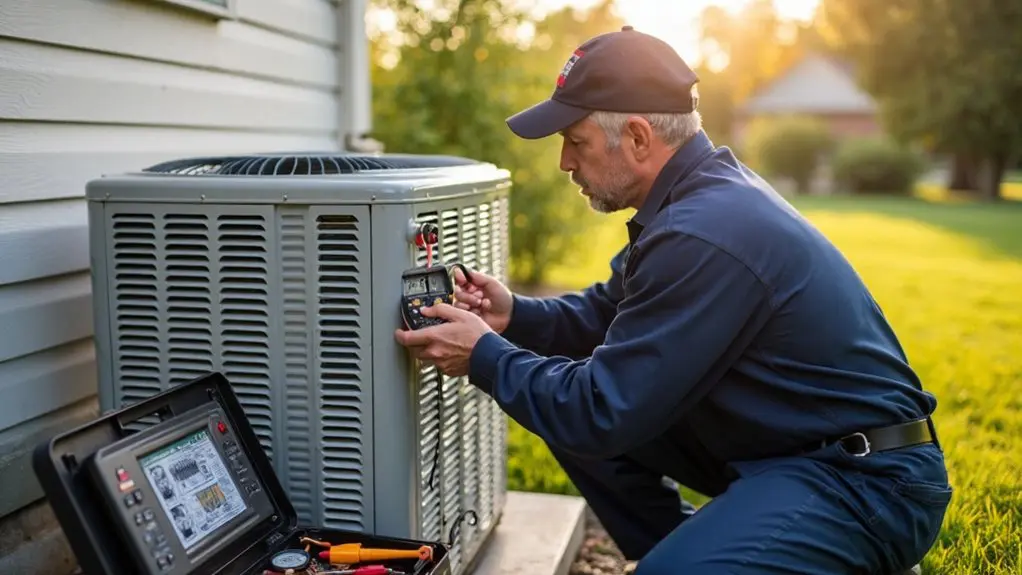
Your heat pump requires specialized maintenance in Lake Saint Louis’ demanding climate, where harsh winters and humid summers stress reversing valves and defrost controls. Professional bi-annual tune-ups include refrigerant level verification, electrical connection inspection, condenser coil cleaning, and moving parts lubrication. You’ll achieve up to 25% energy savings, extend equipment lifespan by 15-20 years, and prevent costly breakdowns during peak usage periods. Recognizing warning signs like unusual noises, insufficient capacity, or frequent cycling guarantees ideal system performance and investment protection through thorough seasonal maintenance protocols.
Key Takeaways
- Regular bi-annual tune-ups extend heat pump lifespan by 15-20 years and reduce energy consumption up to 25%.
- Professional maintenance includes electrical inspections, refrigerant verification, coil cleaning, and lubrication of moving components.
- Schedule spring maintenance for cooling preparation and fall service to ensure optimal heating system readiness.
- Watch for warning signs like strange noises, insufficient heating/cooling, frequent cycling, or escalating energy bills.
- Lake Saint Louis’ harsh winters and humid summers demand professional installation and consistent maintenance schedules.
Understanding Lake Saint Louis Climate Demands on Heat Pump Systems
The Lake Saint Louis climate presents unique challenges that directly impact your heat pump system’s operational demands and maintenance requirements. During harsh winters with freezing temperatures and heavy snowfall, your heat pump must work harder to extract heat from cold outdoor air, placing increased stress on compressor components and refrigerant lines. The region’s hot, humid summers force your system into continuous cooling mode, straining electrical components and reducing overall energy efficiency without proper maintenance protocols.
These extreme weather fluctuations require your heat pump to shift frequently between heating and cooling operations, accelerating wear on reversing valves and defrost controls. Professional installation guarantees optimal refrigerant charge levels and proper airflow calibration for peak system performance. Regular maintenance becomes critical for preserving equipment longevity and preventing costly breakdowns during temperature extremes. Neglecting scheduled service intervals compromises your system’s ability to maintain consistent indoor comfort while driving up operational costs through decreased efficiency ratings.
Essential Components of Professional Heat Pump Tune-Up Services
Professional technicians address Lake Saint Louis’s demanding climate conditions through thorough tune-up protocols that systematically evaluate your heat pump’s critical operational components. During a comprehensive Heat Pump Tune-Up, HVAC specialists inspect electrical connections, verify refrigerant levels and pressures, lubricate moving parts, and clean condenser coils to maintain ideal Air system performance.
Your home’s energy efficient operation depends on these professional maintenance services, which require bi-annual scheduling for dual-function systems providing both heating and cooling. Certified technicians guarantee peak performance while identifying minor issues before they escalate into costly repair scenarios.
Regular maintenance protocols extend equipment lifespan by 15-20 years and reduce utility expenses up to 25%. Professional tune-up services include systematic component evaluation, refrigerant pressure testing, electrical connection verification, and moving part lubrication. These preventive measures maintain efficient energy consumption while preventing unexpected breakdowns that compromise your home’s comfort during extreme weather conditions.
Cost-Saving Benefits of Regular Heat Pump Maintenance
Strategic heat pump maintenance delivers measurable financial returns that compound annually through reduced energy consumption and extended equipment longevity. Regular tune-up services optimize your heat pump’s efficiency, cutting utility bills by up to 25% through improved system performance and reduced operational strain.
Proactive maintenance protocols extend your heat pump’s lifespan by 15-20 years, maximizing your equipment investment while deferring costly replacement expenses. Biannual service appointments identify minor component issues before they escalate into major breakdown scenarios requiring emergency repairs.
Professional maintenance guarantees ideal temperature control while preventing system failures that disrupt comfort and demand expensive service calls. The cost-saving benefits far exceed tune-up expenses through sustained operational efficiency and reduced repair frequency.
Your heat pump operates more smoothly with consistent maintenance, consuming less energy while delivering superior climate control performance. This systematic approach transforms routine service costs into long-term financial advantages through enhanced reliability and operational longevity.
Warning Signs Your Heat Pump Needs Professional Attention
Five critical warning signs indicate your Lake Saint Louis heat pump requires immediate professional intervention to prevent costly system failures and restore ideal performance.
Strange mechanical noises including grinding, clicking, or rattling sounds signal internal component failures requiring urgent HVAC technicians’ assessment. These problems often escalate without proper maintenance service, leading to expensive repairs.
Insufficient heating or cooling capacity indicates refrigerant leaks, airflow restrictions, or compressor malfunctions that compromise system efficiency. Your heat pump shouldn’t struggle to maintain comfortable temperatures.
Frequent cycling patterns suggest thermostat issues, refrigerant charge imbalances, or other operational problems affecting overall performance. Professional technicians can diagnose these complex system irregularities during thorough tune-up services.
Escalating energy bills compared to previous years indicate declining efficiency requiring immediate professional evaluation. Your HVAC system shouldn’t consume excessive energy.
Unusual odors—burning, musty, or moldy—signal electrical problems, moisture issues, or component deterioration demanding expert inspection. Don’t ignore these warning signs; schedule professional heat pump service immediately.
Seasonal Maintenance Schedule for Optimal Performance
Rather than waiting for warning signs to appear, implementing a structured seasonal maintenance schedule prevents most heat pump problems before they occur. Your heat pump requires bi-annual maintenance: once before heating season and once before cooling season to maintain peak efficiency.
Spring maintenance focuses on cooling preparation. Clean the outdoor unit, inspect refrigerant levels, lubricate moving components, and test electrical systems. Fall maintenance emphasizes heating readiness with identical procedures plus additional filter replacement and ductwork inspection.
This seasonal approach delivers measurable benefits. Proper maintenance extends your heat pump’s lifespan by 15-20 years while reducing energy bills up to 25%. Conversely, neglecting scheduled maintenance decreases performance and increases utility costs.
Schedule professional tune-ups with a licensed HVAC contractor in Lake Saint Louis for ideal results. Professional technicians possess specialized tools and expertise to identify potential issues during routine inspections, ensuring your system operates efficiently year-round and helping prevent breakdowns during peak usage periods.
Energy Efficiency Improvements Through Proper Upkeep
Maintaining your heat pump’s peak efficiency requires systematic attention to specific components that directly impact energy consumption. Professional tune-up services can boost your system’s efficiency by up to 25%, delivering substantial energy savings on monthly utility bills. This maintenance approach extends your heat pump’s operational lifespan by 15-20 years while preventing costly repairs through early issue detection.
Critical maintenance tasks include monitoring refrigerant levels, safeguarding proper lubrication of moving components, and replacing air filters regularly. Clean air filters improve indoor air quality while preserving optimal airflow, allowing your heat pump to achieve peak performance without overworking. Refrigerant calibration ensures proper heat transfer cycles, directly affecting energy consumption rates.
Regular maintenance prevents minor inefficiencies from compounding into major system failures. By addressing wear patterns, cleaning coils, and calibrating controls, you’ll maintain consistent performance throughout seasonal temperature fluctuations. This proactive approach maximizes your heat pump investment while minimizing operational costs.
Preventing Costly Breakdowns With Preventive Care
Beyond achieving ideal efficiency ratings, preventive maintenance serves as your primary defense against catastrophic system failures that can cost thousands in emergency repairs. Regular Heat Pump Maintenance prevents up to 95% of potential breakdowns through systematic component inspection and servicing protocols.
Scheduled Service appointments enable technicians to identify failing components before complete system failure occurs. During comprehensive Tune-up Services, professionals examine refrigerant levels, clean evaporator coils, lubricate motor bearings, and test electrical connections. This Preventive Maintenance approach catches minor malfunctions that typically escalate into major failures.
Routine Maintenance directly correlates with Breakdown Prevention effectiveness. Systems receiving proper care Extend Lifespan by 2-5 years compared to neglected units. Each maintenance cycle maintains excellent System Efficiency while preventing the 10-20% efficiency degradation that occurs without regular servicing.
Strategic preventive care eliminates emergency service calls and reduces long-term operating expenses. Your investment in scheduled maintenance consistently outweighs potential Costly Repairs, ensuring reliable heating and cooling performance throughout system lifecycle.
Choosing Qualified HVAC Technicians in the St. Louis Area
Selecting competent HVAC professionals determines the success of your heat pump maintenance program and long-term system reliability. When evaluating HVAC technicians in the St. Louis area, prioritize NATE certification as your primary qualification benchmark. These certified professionals demonstrate thorough knowledge of heat pump systems and industry-standard procedures.
Verify technicians possess experience with your specific equipment make and model. Qualified professionals should offer same-day or next-day service availability for urgent repairs, ensuring uninterrupted home comfort. Look for companies providing extensive HVAC services beyond basic maintenance, including preventive maintenance programs and professional repairs.
Customer satisfaction guarantees indicate commitment to expert service delivery. Choose technicians who can diagnose complex system issues accurately and recommend appropriate solutions. Jerry Kelly Heating, Air Conditioning & Electrical exemplifies these standards, serving Lake Saint Louis for over 45 years with NATE-certified technicians experienced in all heat pump maintenance requirements, backed by 100% customer satisfaction commitments.
Long-Term Investment Protection Through Regular Service
Working with qualified HVAC professionals establishes the foundation for protecting your heat pump investment through systematic maintenance protocols. Regular maintenance delivers measurable returns through enhanced operational efficiency and equipment longevity.
Professional Heat Pump Maintenance procedures extend the lifespan by 15-20 years while achieving higher efficiency ratings. Preventative maintenance reduces utility costs up to 25% through optimized system performance. Technicians perform critical inspections including proper lubrication of moving components, thorough refrigerant checks, and electrical connection assessments.
These systematic interventions guarantee your system continues operating at peak performance throughout its service life. Early detection of minor issues prevents expensive emergency repairs and component failures. Professional maintenance protocols address wear patterns before they compromise system integrity.
Your heat pump represents a significant capital investment requiring protection through consistent service intervals. Regular maintenance schedules maximize equipment returns while maintaining warranty compliance. Long-term investment protection depends on professional oversight ensuring ideal performance, energy efficiency, and extended operational lifespan through proven maintenance methodologies.
Conclusion
You’re now equipped with the diagnostic protocols and preventive maintenance strategies that’ll maximize your heat pump’s operational lifespan. Coincidentally, the same refrigerant leak indicators you’ve learned to identify often manifest just before system failure occurs. By implementing these scheduled service intervals and performance benchmarks, you’ll maintain ideal coefficient of performance ratings while avoiding emergency service calls. Your proactive approach to compressor maintenance, coil cleaning, and electrical component inspection directly correlates with sustained energy efficiency and reduced operational costs.