
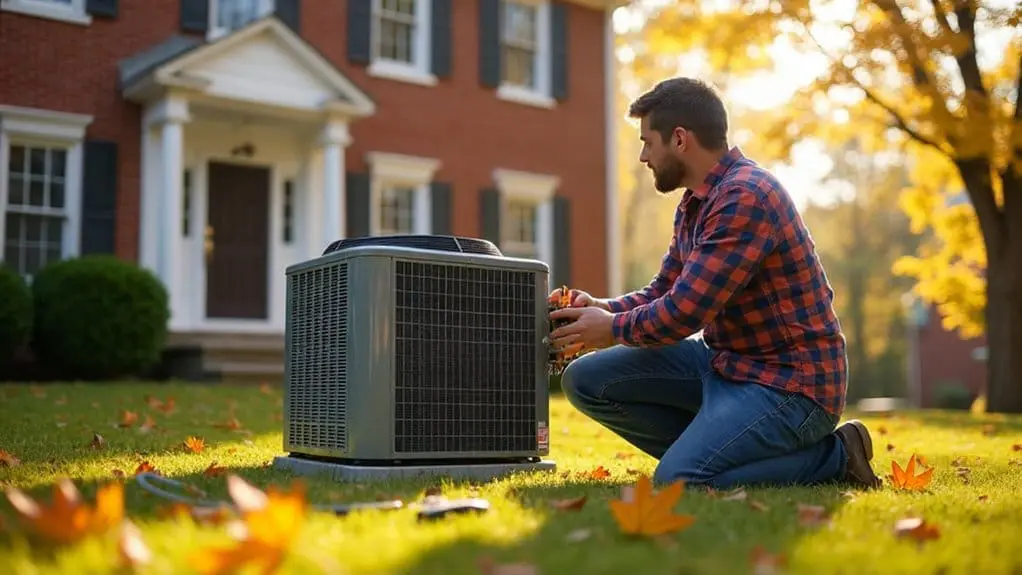
Missouri’s continental climate subjects your heat pump to extreme operational stress, with temperature differentials reaching 64 degrees that force maximum capacity operation. You’ll need to replace air filters every 2-3 months, clean outdoor condenser units regularly, and schedule bi-annual professional tune-ups before heating and cooling seasons. High humidity levels strain dehumidification capabilities while winter freezing promotes ice buildup on outdoor units. Proper maintenance preserves SEER ratings and prevents accelerated component wear from temperature fluctuations—comprehensive strategies guarantee optimal system performance year-round.
Key Takeaways
- Missouri’s 64-degree temperature differential forces heat pumps to operate at maximum capacity extremes during hot summers and cold winters.
- Replace air filters every 2-3 months and clean outdoor condenser units regularly to maintain optimal heat exchange efficiency.
- Schedule professional tune-ups bi-annually before heating and cooling seasons to preserve operational efficiency and extend equipment lifespan.
- Choose heat pumps with minimum SEER 14 and HSPF 8.2 ratings to handle Missouri’s humid summers and cold winters effectively.
- Monitor refrigerant levels annually and inspect ductwork for leaks to prevent ice buildup and maintain proper system performance.
Understanding Missouri’s Climate Challenges for Heat Pump Systems
Missouri’s dramatic temperature swings create significant operational demands for heat pump systems, requiring these units to function efficiently across a temperature range that spans from summer highs of 89°F in St. Louis to winter lows of 25°F. These climate challenges directly impact your system’s Seasonal Energy Efficiency Ratio and overall performance metrics. During extreme cold periods, heating capacity diminishes as refrigerant struggles to extract sufficient thermal energy from frigid outdoor air. Conversely, elevated humidity levels during summer months strain your outdoor unit’s dehumidification capabilities, increasing energy consumption. The 64-degree temperature differential forces your heat pump to operate at maximum capacity extremes, accelerating component wear and reducing efficiency ratings. Proper maintenance becomes critical for mitigating these environmental stressors and maintaining ideal system performance throughout Missouri’s challenging seasonal changes.
How St. Louis Weather Patterns Impact Heat Pump Performance
The Gateway City’s continental climate subjects your heat pump to extreme operational stress through its characteristic hot, humid summers and cold, damp winters, creating performance challenges that directly affect system efficiency and component longevity. Temperature fluctuations between seasonal extremes accelerate wear and tear on compressor components and refrigerant systems. High humidity levels during summer months restrict airflow through evaporator coils, reducing heat transfer capacity and forcing extended operational cycles. Winter’s freezing temperatures promote ice buildup on outdoor units, blocking airflow and compromising defrost cycles. These weather-induced stresses compound system performance degradation, requiring targeted maintenance protocols to preserve operational efficiency. Your heat pump’s ability to maintain consistent indoor comfort depends on addressing these climate-specific challenges through preventive maintenance scheduling.
Essential Heat Pump Maintenance Tasks for Missouri Homeowners
While Missouri’s demanding climate creates unique operational challenges for heat pumps, implementing a systematic maintenance regimen safeguards your investment and guarantees prime performance year-round.
Your HVAC system requires specific maintenance tasks to combat Missouri’s temperature extremes and humidity fluctuations. Replace air filters every 2-3 months to maintain ideal airflow and system efficiency. Clean your outdoor condenser unit regularly, removing debris and vegetation that restricts heat exchange. Schedule professional tune-ups twice annually—before heating and cooling seasons—to identify potential issues early.
| Task | Frequency | Impact |
|---|---|---|
| Filter replacement | Every 2-3 months | Airflow optimization |
| Condenser cleaning | Monthly | Heat exchange efficiency |
| Professional tune-ups | Bi-annually | System longevity |
| Refrigerant level check | Annually | Proper charge maintenance |
| Ductwork inspection | Annually | Air distribution effectiveness |
Monitor refrigerant levels and inspect ductwork for leaks to ensure your heat pump delivers consistent energy-efficient performance throughout Missouri’s demanding seasonal changes.
Seasonal Maintenance Schedules for Optimal Heat Pump Operation
Beyond implementing these maintenance fundamentals, you’ll maximize your heat pump’s performance by aligning specific tasks with Missouri’s distinct seasonal demands. Schedule professional tune-ups twice annually—spring preparation for summer cooling loads and fall winterization for heating cycles. This seasonal maintenance approach guarantees your HVAC system operates efficiently throughout Missouri climate extremes.
During peak usage periods, replace air filters every 1-3 months to maintain ideal airflow. Clear debris from your outdoor unit quarterly, preventing heat exchange interference. Annual ductwork inspections identify leaks compromising system performance.
Consider installing a smart thermostat that automatically adjusts settings based on occupancy patterns and weather conditions. This upgrade delivers substantial energy savings by optimizing your heat pump maintenance schedule. Proper timing of these tasks prevents costly repairs while extending equipment lifespan in Missouri’s challenging climate conditions.
Common Heat Pump Problems in St. Louis Climate Conditions
Because St. Louis’ extreme temperature fluctuations create unique challenges for heat pump systems, you’ll encounter specific problems requiring immediate attention. Refrigerant levels drop during temperature swings, reducing heating capacity throughout the heating season. Dust and debris accumulate on outdoor coils, restricting airflow and decreasing efficiency. Your condensate drain frequently clogs during humid summers, causing water damage and system shutdowns. The blower motor experiences increased strain from processing outside air in extreme conditions, leading to premature failure. Refrigerant changes occur when coils freeze during sudden temperature drops. Without proper ventilation, indoor air quality deteriorates, potentially creating carbon monoxide risks. Regular maintenance prevents these climate-specific issues from escalating into costly repairs and maintains optimal system performance year-round.
Energy Efficiency Considerations for Missouri Heat Pump Systems
Missouri’s variable climate demands heat pump systems that meet specific energy efficiency benchmarks to maintain cost-effective operation throughout the year. You’ll need a minimum Seasonal Energy Efficiency Ratio (SEER) of 14 for Missouri’s humid summers, while the Heating Seasonal Performance Factor (HSPF) must reach 8.2 for ideal winter performance. Systems with Annual Fuel Utilization Efficiency (AFUE) ratings of 90% or higher can reduce your heating costs by 25% compared to 78% AFUE models.
Maintaining peak Energy Efficiency Ratio (EER) and Coefficient of Performance (COP) requires systematic attention to critical components. You must guarantee proper refrigerant charge levels, optimize airflow through regular filter maintenance, and verify adequate ventilation. Professional testing procedures evaluate temperature/humidity control systems, confirming your heat pump operates within manufacturer specifications for maximum energy efficiency throughout Missouri’s challenging seasonal changes.
Professional Heat Pump Services vs. DIY Maintenance
While understanding efficiency metrics provides the foundation for heat pump performance, implementing proper maintenance strategies requires you to distinguish between tasks you can handle independently and those demanding professional expertise.
| DIY Maintenance Tasks | Professional Services |
|---|---|
| Replace air filters monthly | Refrigerant level inspection |
| Clean outdoor unit coils | Electrical connection testing |
| Clear debris from condenser | Thermostat calibration |
| Check thermostat settings | Ductwork assessment |
| Visual inspection for damage | Compressor diagnostics |
DIY maintenance involves basic upkeep you can perform safely without specialized tools. However, heat pump repair requires an experienced HVAC technician’s expertise to prevent breakdowns and safeguard reliable performance. Professional tune-ups annually optimize energy efficiency through thorough system diagnostics. Expert services provide proper heat pump service that extends equipment lifespan, while attempting complex repairs without training risks further damage and safety hazards.
Maximizing Heat Pump Lifespan in Missouri’s Variable Climate
How effectively can your heat pump withstand Missouri’s demanding seasonal shifts from sweltering summers to frigid winters? Your system’s longevity depends on strategic maintenance protocols tailored to variable climate conditions. Professional heat pump services should include bi-annual seasonal tune-ups targeting critical components before peak operational periods.
Proper maintenance encompasses outdoor coil cleaning, refrigerant level verification, and filter replacement cycles. These routine maintenance procedures prevent excessive cycling that causes premature component failure. Consider upgrading to variable-speed or inverter-driven pumps for enhanced durability in Missouri’s fluctuating conditions.
Correct heat pump installation sizing prevents system strain from continuous operation. HVAC systems operating within designed parameters experience reduced wear rates. Professional heat pump repair addresses issues before they escalate into costly replacements. Strategic heat pump maintenance scheduling maximizes equipment lifespan while maintaining ideal efficiency ratings throughout Missouri’s challenging seasonal changes.
Conclusion
Like Odysseus traversing treacherous waters, you’ll successfully helm your heat pump through Missouri’s climate challenges by adhering to systematic maintenance protocols. You’ve learned refrigerant cycle optimization, coil cleaning procedures, and seasonal performance adjustments essential for St. Louis conditions. Don’t let your system become a Titanic—monitor superheat/subcooling values, replace filters bi-monthly, and schedule professional inspections annually. Your proactive approach guarantees ideal COP ratings and extends compressor longevity despite Missouri’s demanding thermal loads.