
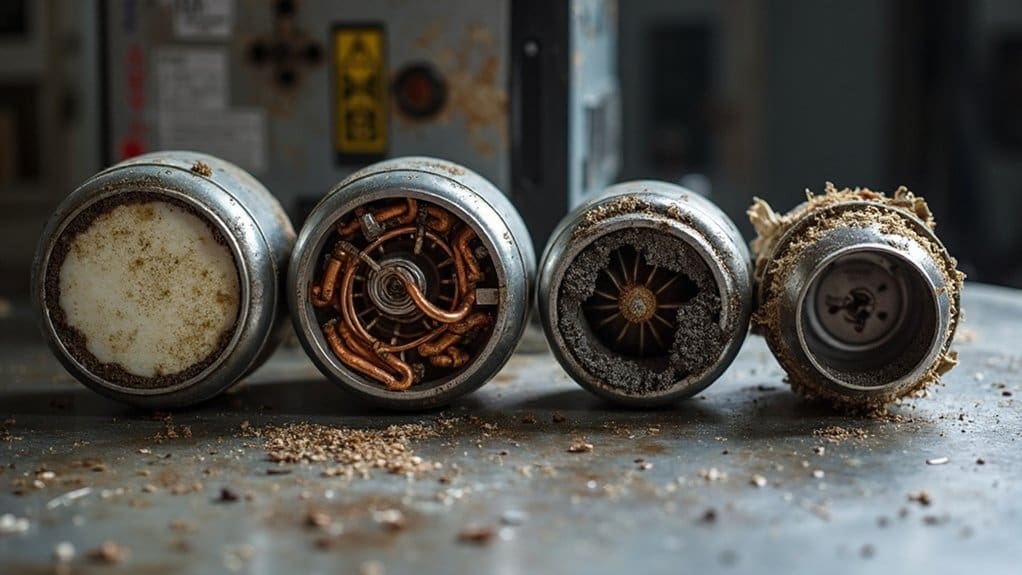
Your furnace’s most common problems include clogged air filters restricting airflow, pilot light or ignition system failures causing complete shutdowns, thermostat malfunctions disrupting temperature control, blower motor issues creating strange noises, and short cycling that repeatedly starts and stops your system. You can fix many of these by replacing dirty filters monthly, checking thermostat settings and batteries, and ensuring proper airflow around vents. However, understanding the warning signs and proper repair techniques will help you tackle these issues more effectively.
Key Takeaways
- Replace clogged air filters monthly to restore airflow and prevent system strain that causes higher energy bills.
- Check thermostat settings, replace batteries, and clean sensors before calling technicians for heating system communication issues.
- Relight pilot lights on older furnaces or contact professionals for electrical ignition system failures in newer models.
- Replace worn blower belts and inspect bearings when hearing scraping, squealing, or clunking noises from the system.
- Clear clogged filters and check thermostat calibration to stop short cycling that damages components and wastes energy.
Clogged Air Filters Restricting Airflow
The most common culprit behind poor furnace performance is often hiding in plain sight—your air filter. Clogged air filters drastically restrict airflow into your furnace system, forcing it to work harder and consume more energy. This increased strain leads to higher energy bills and reduces system longevity considerably.
You should check your air filters monthly and replace them every 2-3 months to maintain excellent furnace performance. This simple, inexpensive task prevents your system from overworking and extends its lifespan substantially.
Don’t underestimate the consequences of neglecting this basic furnace maintenance. Severely restricted airflow can cause serious mechanical failures, including a malfunctioning limit switch or dangerous heat exchanger problems. These issues require costly professional repairs that could’ve been easily prevented.
Replacing dirty air filters is the quickest fix you can implement today. It’s an effortless way to improve efficiency, lower energy costs, and protect your investment from premature failure.
Pilot Light and Ignition System Failures
When your furnace won’t start despite having clean air filters, you’re likely dealing with pilot light or ignition system failures. Older furnaces depend on pilot lights, while newer furnaces use electrical ignition systems. Both can malfunction due to dirt buildup, worn components, or faulty safety switches.
Here are three warning signs of ignition problems:
- Complete silence – Your furnace not turning on when the thermostat calls for heat
- Unstable flame – A flickering pilot light that won’t stay consistently blue and steady
- Intermittent operation – Your furnace repeatedly shutting off mid-cycle before completing the heating process
For newer furnaces, an HVAC technician can typically replace faulty ignition components to restore operation. However, older furnaces with chronic pilot light issues may require complete system replacement due to safety risks. Don’t attempt DIY repairs on gas components, as improper handling creates serious safety hazards requiring professional expertise.
Thermostat Malfunctions and Settings Issues
Although your furnace’s mechanical components might be working perfectly, thermostat malfunctions can leave you without heat or cause your system to run nonstop. A malfunctioning thermostat disrupts communication between your heating system and home controls.
Start troubleshooting by verifying your thermostat is set to “heat” mode at your desired temperature. Check if batteries need replacement, as dead batteries prevent proper system operation. Dirty sensors can also interfere with temperature readings, so gently clean the thermostat’s interior components.
If these basic fixes don’t restore proper heating, the issue might involve incorrect wiring or calibration problems. These complex repairs require an HVAC technician’s expertise to avoid damaging your system or compromising air quality.
Consider upgrading an outdated thermostat to a programmable or smart model. Modern thermostats provide better temperature control, improved energy efficiency, and advanced features that optimize your home’s heating performance while reducing utility costs.
Blower Motor and Belt Problems
While furnace heating problems often stem from complex mechanical issues, blower motor and belt malfunctions create some of the most recognizable warning signs. Your blower mechanism’s components work together to circulate warm air throughout your home, but when they fail, you’ll notice immediate changes in performance.
Listen for these telltale sounds that indicate blower problems:
- Scraping noise – Worn-out blower bearings grinding against metal components, creating harsh metallic sounds
- High-pitched squeal – A slipping blower belt struggling to turn the blower fan properly
- Clunking noise – A failing blower motor making irregular mechanical sounds during operation
When your blower capacitor malfunctions, your furnace starts and stops midway through cycles, preventing consistent air coming from vents. Poor airflow signals blower motor issues requiring immediate attention. Replace worn-out belts, inspect bearings for damage, and test capacitor functionality. These quick fixes restore proper circulation and maintain energy efficiency.
Short Cycling and Overheating Issues
Short cycling represents one of the most frustrating furnace malfunctions you’ll encounter, as your system repeatedly starts and stops without completing full heating cycles. This problem stems from clogged air filters, malfunctioning thermostats, or oversized furnaces that heat your home too quickly.
You’ll notice higher energy bills and reduced efficiency when short cycling occurs. More concerning, it damages furnace components over time, leading to costly repairs. Start troubleshooting by checking your air filter—restricted airflow from clogs triggers the safety switch, forcing your system to shut down prematurely.
If replacing the filter doesn’t resolve the issue, contact an HVAC technician immediately. They’ll diagnose whether you’re dealing with thermostat problems or a faulty limit switch controlling your blower fan. A malfunctioning limit switch causes continuous operation, leading to dangerous overheating. Don’t attempt these repairs yourself—professional replacement secures your furnace operates safely and efficiently.
Conclusion
You’ve conquered common complications that compromise your comfort! By consistently checking clogged filters, carefully calibrating thermostats, and promptly patching pilot problems, you’ll prevent persistent performance issues. Remember to regularly inspect your system’s significant components—blower belts, motors, and mechanisms. Don’t delay when detecting dangerous overheating or short cycling symptoms. With these fundamental fixes in your toolkit, you’ll maintain marvelous warmth while minimizing major repairs and maximizing your furnace’s faithful function throughout frigid seasons.