
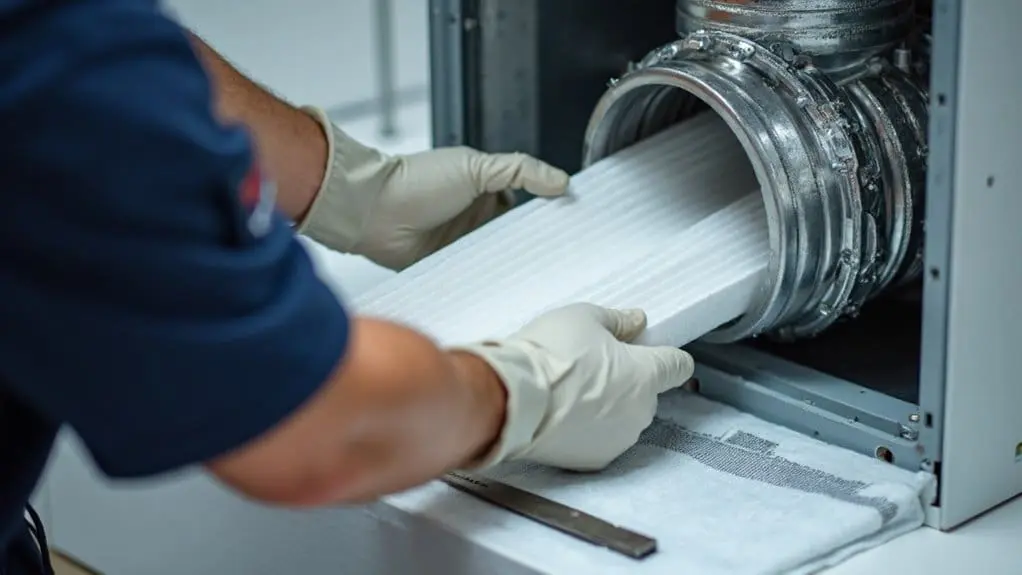
You’ll need professional air filtration services in St. Louis County to address region-specific contaminants like elevated VOCs from industrial emissions and seasonal pollen loads. Expert technicians guarantee proper airflow dynamics, seal integrity, and system integration with your existing HVAC infrastructure. Multi-stage filtration systems featuring HEPA technology remove 99.97% of 0.3-micron particles while maintaining ideal energy efficiency. Professional installation assures warranty compliance and baseline performance metrics for your whole-home purification system’s ongoing optimization.
Key Takeaways
- Professional installation ensures proper airflow dynamics, seal integrity, and HVAC integration for optimal energy efficiency and performance.
- St. Louis County requires specialized filtration targeting industrial VOCs, seasonal pollen, manufacturing particulates, and humidity-related mold spores.
- Whole-home systems integrate HEPA, activated carbon, electrostatic, and UV technologies for comprehensive multi-stage air purification.
- Regular maintenance addresses reduced airflow, increased energy costs, persistent allergies, unusual noises, and frequent filter replacements.
- Expert services provide warranty compliance, system commissioning, calibrated controls, and baseline metrics for ongoing optimization.
Understanding Indoor Air Quality Challenges in St. Louis County
When evaluating indoor air quality in St. Louis County, you’ll encounter region-specific contaminants that require targeted filtration strategies. Local industrial emissions introduce elevated VOC concentrations, while seasonal pollen loads stress conventional HVAC system filters. Your facility’s air sampling will likely reveal particulate matter from manufacturing processes, including submicron dust that bypasses standard filtration media.
You’re dealing with mold spore proliferation during humid periods, compounded by poor ventilation in older structures. These air contaminants necessitate multi-stage air filtration systems incorporating HEPA-grade media and activated carbon components. Standard residential air purifiers won’t adequately address industrial-grade particles or chemical vapors prevalent in this geography.
Your assessment protocol should include particulate counting, VOC detection, and microbiological sampling to establish baseline contamination levels. Local regulatory compliance requires adherence to specific air quality thresholds, particularly for commercial installations. Effective remediation demands professional-grade equipment calibrated for regional pollutant profiles rather than generic filtration approaches.
Types of Air Filtration Systems Available for Your Home
Since your St. Louis County home faces unique air quality challenges, selecting the appropriate air filtration system requires understanding available technologies. Whole-home air filtration systems integrate directly with your HVAC infrastructure, providing continuous filtration throughout your residence.
HEPA filters deliver 99.97% particle removal efficiency for contaminants down to 0.3 microns, making them essential for allergen control. Activated carbon filters target odors, gases, and VOCs through molecular adsorption processes. Electrostatic filters utilize charged plates to capture particles, offering reusable media that reduces ongoing maintenance costs.
UV light air purifier systems employ germicidal radiation to neutralize biological contaminants including bacteria, viruses, and mold spores. Professional air filtration services can configure hybrid systems combining multiple technologies for thorough contamination control.
Your air filtration system selection depends on specific indoor air quality concerns, HVAC compatibility, and maintenance preferences. Filtration professionals assess these variables to recommend ideal solutions for your residential application.
Benefits of Professional Air Filter Installation
Professional installation transforms your selected air filtration system into a precisely calibrated component of your HVAC infrastructure. Experienced technicians guarantee proper airflow dynamics, seal integrity, and ideal filter positioning that maximizes effective air filtration performance.
You’ll achieve superior energy efficiency through correct system integration. Professional Air Filtration Services in St. Louis County: Installation and Maintenance specialists optimize pressure differentials and airflow patterns, reducing strain on your HVAC equipment while maintaining consistent filtration rates.
The benefits of professional air filter installation extend beyond initial setup. Experienced technicians configure systems to improve indoor air quality by reducing the amount of particulates, allergens, and contaminants circulating through your space. This creates a healthier indoor environment for occupants.
Professional installation includes calibrated control settings, proper ductwork connections, and system commissioning procedures. You’ll receive documentation of specifications and performance parameters, enabling effective regular maintenance services. Proper installation ensures warranty compliance and establishes baseline metrics for ongoing system optimization.
How Whole-Home Air Filtration Systems Work
Whole-home air filtration systems operate through a centralized intake mechanism that draws contaminated air from your home’s return ducts into specialized filtration chambers. The system integrates directly with your existing Heating and Air Conditioning infrastructure, creating a continuous circulation loop that processes ambient air multiple times per hour.
Advanced filters within these filtration systems utilize HEPA technology, electrostatic charging, and UV sterilization to remove airborne particles measuring 0.3 microns or larger. The multi-stage filtration process captures allergens, pollutants, and microscopic contaminants with 99.97% efficiency rates.
Internal blower assemblies maintain consistent airflow velocity, ensuring ideal contact time between contaminated air and filtration media. Different types of air filters target specific particle classifications, from biological contaminants to chemical vapors.
This systematic approach helps improve indoor air quality by continuously cycling your home’s atmosphere through progressive purification stages, delivering measurably cleaner air to all occupied spaces throughout your residence.
Signs Your Air Filtration System Needs Repair or Replacement
Although whole-home air filtration systems operate reliably for years, specific performance indicators signal when your unit requires professional intervention or total replacement.
Reduced airflow through vents indicates clogged components beyond standard filter replacement intervals. Your existing HVAC system can help identify these issues through diagnostic testing. When the efficiency of your HVAC system declines markedly, professional assessment determines whether repair or a new system installation provides ideal solutions.
Key warning signs requiring immediate attention include:
- Increased energy bills despite consistent usage patterns, indicating system strain
- Persistent allergy symptoms throughout your home, suggesting compromised filtration capacity
- Unusual operational noises from filtration components during system cycles
- Frequent filter replacement requirements exceeding manufacturer specifications
When your system remains ineffective after standard maintenance procedures, health concerns may escalate due to inadequate air quality control. Professional technicians evaluate system performance against baseline efficiency metrics, determining whether targeted repairs restore functionality or complete system replacement addresses underlying mechanical deterioration effectively.
Regular Maintenance Services for Optimal Performance
While your air filtration system operates continuously throughout the year, systematic maintenance protocols guarantee peak efficiency and prolong equipment lifespan considerably. Professional air filtration services in St. Louis implement comprehensive regular maintenance schedules that address critical system components.
Scheduled replacement of air filters prevents warping and eliminates air leakage around filter housings. HEPA filters require precise handling during changeouts to maintain their integrity. Technicians inspect condensing and evaporator coils while checking equipment piping for leaks that compromise filtration systems performance.
Belt and pulley adjustments, coupled with V-belt replacements when necessary, ensure optimal airflow rates across different types of air filtration configurations. Air screen and filter media replacements maintain proper contaminant removal capabilities essential to improve indoor air quality.
Thorough mechanical inspections identify potential issues before they escalate into costly repairs. These proactive maintenance protocols preserve your indoor air quality investment while maximizing system efficiency throughout St. Louis County’s demanding seasonal conditions.
Customized Solutions for Residential and Commercial Properties
How do you determine the ideal air filtration configuration for your specific property’s unique challenges? Professional air filtration services begin with a comprehensive assessment of your building’s layout, occupancy patterns, and local air quality challenges specific to St. Louis County’s industrial proximity and seasonal variations.
Licensed technicians evaluate your indoor air quality requirements and recommend tailored solutions from multiple filtration technologies:
- HEPA filters for maximum particulate removal in sensitive environments
- Activated carbon systems targeting chemical contaminants and odors
- Electrostatic precipitators for cost-effective particle capture
- UV light sterilization eliminating biological contaminants
Your customized system integrates industry-leading brands like York, Carrier, and Trane, ensuring compatibility with existing HVAC infrastructure. Residential and commercial properties receive distinct approaches—homes focus on allergen control and comfort, while commercial facilities prioritize regulatory compliance and operational efficiency. This systematic methodology delivers the best performance across diverse applications.
Local Climate Considerations for St. Louis Air Quality
St. Louis County’s unique climatic profile demands specialized air filtration protocols to address region-specific contaminants affecting indoor air quality. You’ll encounter elevated ozone concentrations during summer months, requiring enhanced filtration capacity to neutralize photochemical pollutants. Winter operations must accommodate increased particulate matter from heating systems and atmospheric inversions that trap industrial pollution near ground level.
Your air filtration system design must account for seasonal changes impacting pollutant infiltration rates. Transportation corridors generate consistent PM2.5 and NOx emissions, necessitating continuous filtration protocols rather than intermittent operation. Industrial pollution sources demand multi-stage filtration incorporating activated carbon and HEPA components.
HVAC regulations in St. Louis mandate minimum MERV ratings and energy efficiency standards that directly influence filtration selection. You’ll need to balance regulatory compliance with performance requirements specific to local atmospheric conditions. Proper system sizing calculations must incorporate seasonal pollutant load variations and peak contamination periods to maintain ideal indoor air quality year-round.
Energy Efficiency and HVAC System Protection
Three critical performance metrics define your air filtration system’s impact on HVAC energy efficiency: pressure drop reduction, heat transfer optimization, and component protection protocols.
Properly installed air filters enhance energy efficiency by minimizing system strain and maximizing airflow dynamics. Your HVAC systems benefit from reduced operational loads when filter performance maintains ideal pressure differentials across components.
Filter maintenance directly correlates with system lifespan extension through:
- Coil Protection: High-quality air filters prevent debris accumulation on heat exchange surfaces
- Fan Motor Preservation: Regular filter replacement maintains proper airflow, reducing motor stress
- Ductwork Integrity: Advanced filtration solutions minimize particulate buildup in distribution systems
- Compressor Longevity: Clean airflow reduces thermal cycling frequency and mechanical wear
Filter replacement schedules must align with manufacturer specifications to achieve peak indoor air quality performance. Electrostatic and HEPA filtration technologies capture higher particulate concentrations than standard filters, delivering measurable energy savings. Proactive system protection through scheduled filter maintenance prevents costly equipment failures and maintains ideal operational efficiency.
Scheduled Filter Replacement and Inspection Services
Thorough scheduled filter replacement programs eliminate guesswork from your HVAC maintenance protocols while preventing costly system deterioration. Professional air filtration services implement systematic filter replacement schedules that maintain thorough indoor air quality while protecting equipment integrity. Technicians conduct inclusive air filter inspection procedures, examining condensing and evaporator coils for leaks and operational efficiency.
Your scheduled filter replacement program includes drip pan and J-trap examinations, guaranteeing proper drainage function. Belt and pulley inspections occur during each service visit, with V-belt replacements provided at no additional charge when wear indicators necessitate replacement. Outside air screen maintenance and filter media changes maintain efficient airborne pollutants removal.
These extensive HVAC maintenance protocols prevent air filter warping and system air leakage that compromise dust and dirt removal effectiveness. Regular servicing ensures HEPA filters and standard filtration media operate at peak performance levels, extending equipment lifespan while maintaining consistent air quality standards throughout your facility.
Conclusion
You’ve examined extensive filtration protocols, system specifications, and maintenance parameters—now it’s time to implement professional-grade solutions. Whether you’re upgrading MERV ratings, installing HEPA modules, or scheduling preventive maintenance cycles, your HVAC system’s operational efficiency depends on expert installation and calibrated performance monitoring. Don’t compromise air quality metrics or energy consumption ratios. Contact certified technicians for proper system integration, filter replacement scheduling, and indoor air quality assessments that meet industry standards and regulatory compliance requirements.