
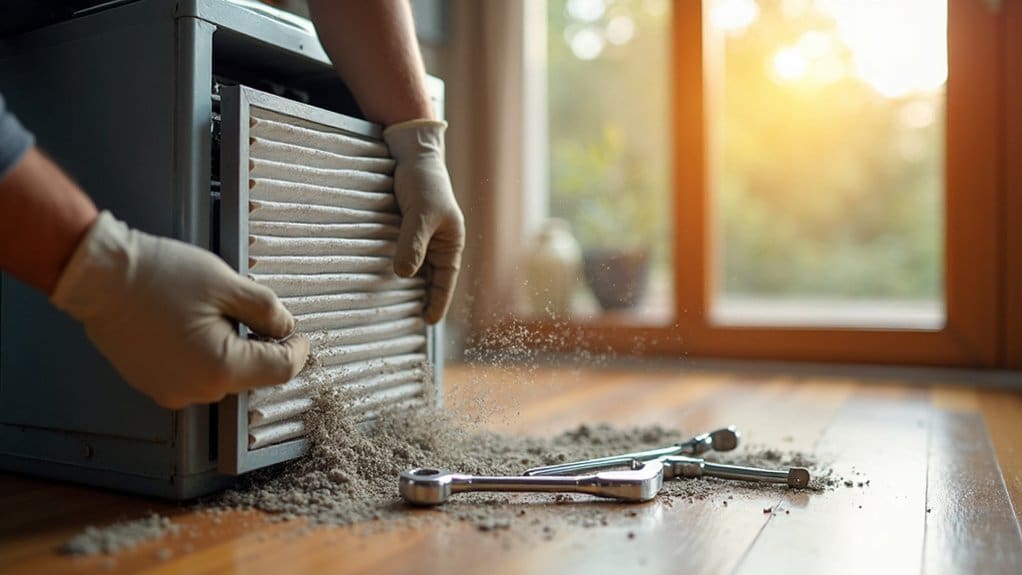
You’ll need to replace your St. Louis HVAC air filters every 1-3 months due to the region’s extreme humidity and temperature swings that can shift 40+ degrees daily. Choose MERV 11-13 rated filters to handle demanding local conditions while maintaining proper airflow. Dirty filters reduce efficiency by 15% and lead to higher utility bills. Watch for signs like decreased airflow, rising energy costs, or excessive dust accumulation. Continue below to discover specific seasonal maintenance strategies that’ll protect your system year-round.
Key Takeaways
- Replace air filters every 1-3 months during St. Louis heating and cooling seasons to maintain efficiency.
- Use MERV 11-13 rated filters to combat local pollutants and handle St. Louis humidity extremes effectively.
- Schedule professional HVAC maintenance in spring to prepare your system for hot St. Louis summers.
- Check filters before winter heating season begins to prevent frozen coils and costly repairs.
- Monitor for decreased airflow, rising utility bills, or dust accumulation as signs needing immediate attention.
Why Air Filtration System Maintenance Matters for St. Louis Homes
While you might view changing air filters as a minor household chore, maintaining your air filtration system directly impacts your St. Louis home’s comfort, health, and budget. Your HVAC system depends on clean air filters to function efficiently. When filters become clogged with dust and debris, they restrict airflow, forcing your system to work harder and consume more energy.
This increased strain translates directly into higher utility bills and potential equipment damage. Dirty filters also compromise your indoor air quality by allowing dust, pollen, and other contaminants to circulate throughout your home. These airborne particles can trigger allergies and respiratory issues for your family.
Regular maintenance prevents these problems entirely. By replacing your air filters every 1-3 months, you’ll extend your HVAC system’s lifespan, reduce energy costs, and maintain healthier indoor air. Neglecting this simple task can lead to expensive repairs or premature system failure.
Spring and Summer Air Filter Maintenance Best Practices
When spring temperatures start climbing in St. Louis, you’ll want to replace your air filters every 1-3 months during peak cooling season. This simple step maintains your HVAC system’s peak performance and safeguards your indoor air quality throughout summer’s demanding months.
Dirty filters force your air conditioning system to work harder, potentially increasing energy consumption by 15%. You’re fundamentally strangling your system’s airflow, which compromises energy efficiency and drives up utility bills.
Upgrade to high-efficiency pleated air filters that capture more dust, pollen, and airborne contaminants than basic flat filters. These superior filters provide better protection for your family’s health while supporting ideal system operation.
Don’t forget about your evaporator coil – regular cleaning enhances heat transfer and prevents mold growth. Schedule professional maintenance service in spring to guarantee your system’s ready for summer’s cooling demands. Following these HVAC maintenance tips keeps your system running efficiently when you need it most.
Fall and Winter Air Filtration System Care
How does your HVAC system’s filtration needs change as St. Louis temperatures drop? Fall and winter require more frequent attention to air filters since your heating system works harder during colder months.
You’ll need to check and replace air filters every 1-3 months to maintain proper airflow and indoor air quality. Before firing up your heating system for winter, clean or replace the furnace filter to guarantee efficient operation.
Indoor pollutants like dust and pet dander accumulate faster when windows stay closed, quickly clogging filters. This reduces efficiency and can spike your energy bills by up to 15%. Make certain you don’t neglect this preventative maintenance – dirty filters can cause expensive repairs like frozen coils or compressor failure.
These simple maintenance tasks keep your HVAC system running smoothly throughout the heating season while protecting your wallet from costly repairs and inflated energy costs.
How Often to Change Your HVAC Air Filters
Since your HVAC system’s performance depends heavily on clean air filters, you’ll want to establish a regular replacement schedule that matches your specific situation.
Different filter types require varying replacement frequencies to maintain optimal HVAC efficiency:
- Disposable fiberglass filters – Change every 30 days for basic particle capture
- Pleated filters – Replace every 60-90 days, offering better filtration durability
- MERV-rated filters (11-13) – Monitor closely as these high-efficiency filters need more frequent changes despite superior particle capture
Your home environment affects these timelines considerably. Pet owners, allergy sufferers, and homes with heavy dust accumulation may need monthly replacements regardless of filter type.
Dirty air filters reduce HVAC efficiency by up to 15% and contribute to costly system breakdowns. Among all DIY maintenance tasks for HVAC systems, filter replacement remains the most essential and cost-effective. Mark your calendar and check filters monthly to guarantee your system operates efficiently year-round.
Signs Your Air Filtration System Needs Attention
Your air filtration system will signal when it’s struggling long before complete failure occurs. Watch for these warning signs that indicate you need to replace your air filter immediately.
If you’re experiencing frequent allergy symptoms, respiratory issues, or notice excessive dust accumulation throughout your home, dirty air is likely circulating through your heating and cooling system. Decreased airflow from vents signals a clogged filter restricting proper circulation in your air conditioners and heating equipment.
Rising utility bills often result when dirty filters force your heating and air conditioning system to work harder, reducing efficiency considerably. Strange odors emanating from vents can indicate a contaminated filter that’s no longer effectively cleaning your indoor air.
Don’t ignore unusual noises like rattling or vibrations from your HVAC unit—these sounds frequently occur when clogged filters strain the system. Additionally, if you detect any carbon monoxide odors, immediately replace your filter and contact a professional technician.
DIY Air Filter Maintenance Tasks Every Homeowner Can Handle
While professional HVAC maintenance requires specialized expertise, you can tackle several essential air filter tasks yourself to keep your system running efficiently.
These straightforward maintenance activities will help maintain ideal performance while reducing energy costs:
- Monthly Filter Inspections – Check your air filters every month, even if they’re rated for longer periods. St. Louis’s seasonal pollen and dust can clog filters faster than expected, affecting indoor air quality.
- Timely Replacements – Replace air filters every 1-3 months or when they appear dirty. Don’t wait for the maximum timeframe if your filter looks clogged, as dirty filters reduce system efficiency by up to 15%.
- Proper Installation – Guarantee you’re using the correct filter size and type for your system. Install filters with arrows pointing toward the unit’s airflow direction.
These simple tasks will extend the life of your HVAC equipment while maintaining clean, healthy air throughout your home.
Professional Air Filtration System Services and Inspections
Why leave your home’s air quality to chance when professional HVAC technicians can maximize your entire filtration system? These experts perform thorough maintenance steps that go beyond basic air filters replacement. They’ll inspect your entire HVAC system, securing proper airflow and identifying issues before they become costly problems.
Professional technicians clean your ductwork thoroughly, removing accumulated dust and debris that hampers efficiency. They’ll verify your air filters are properly sized and installed to capture maximum airborne particles while reducing strain on your HVAC equipment. During seasonal maintenance visits, they optimize airflow patterns and check manufacturer recommendations for filter replacement frequency.
Annual air filtration inspections guarantee your indoor air quality remains ideal year-round. Professional services extend your equipment’s lifespan while preventing unexpected breakdowns. When you invest in professional maintenance, you’re protecting both your family’s health and your HVAC system’s performance for years to come.
Choosing the Right Air Filters for St. Louis Climate Conditions
St. Louis climate presents unique challenges for your HVAC system, making proper air filter selection pivotal for ideal performance. The region’s high humidity and extreme temperature fluctuations demand filters that can handle these demanding conditions while maintaining hvac system efficiency.
For St. Louis homes, choose pleated air filters with a merv rating between 11-13. These effectively capture dust, pollen, pet dander, and other allergens while ensuring proper airflow and superior indoor air quality.
- MERV Rating: Select filters with minimum MERV 8, ideally 11-13, to combat local pollutants effectively
- Filter Replacement Schedule: Replace every 1-3 months to prevent 15% increases in energy consumption
- Climate-Specific Design: Choose high-quality filters designed for humidity and temperature extremes
Proper filter selection extends the lifespan of hvac systems by protecting internal components from debris buildup, ultimately saving you money on repairs and replacements.
Frequently Asked Questions
What Is the $5000 Rule for HVAC?
The $5000 HVAC rule means you should replace your system when repair costs exceed 50% of new HVAC equipment cost. Consider HVAC system upgrades over repeated repairs for better energy efficiency and long-term savings.
How to Prepare Your HVAC System for Seasonal Changes?
You’ll prepare your HVAC system by scheduling air filter replacement, conducting ductwork inspections, making thermostat adjustments, performing refrigerant level checks, completing blower motor maintenance, doing coil cleaning, considering ventilation upgrades, and running system efficiency tests.
When to Do Seasonal HVAC Maintenance?
You should schedule HVAC system inspection twice yearly: spring and fall. Plan ideal filter replacement monthly, regular thermostat calibration seasonally, ductwork cleaning schedule annually, refrigerant level inspection biannually, and unit coil cleaning during seasonal inspection timeline.
What Maintenance Is Required on an HVAC System?
HVAC systems lose 15% efficiency without proper maintenance. You’ll need filter replacement, coil cleaning, refrigerant level checks, ductwork inspection, thermostat calibration, blower motor maintenance, condensate drain flushing, and air flow optimization for peak performance.
Conclusion
You’ve got the roadmap to keep your HVAC system breathing easy year-round. Think of your air filters as the lungs of your home—they need regular care to function properly in St. Louis’s ever-changing climate. By staying on top of seasonal maintenance, monitoring filter conditions, and knowing when to call professionals, you’ll guarantee cleaner air and better system performance. Don’t let neglect turn fresh air into a luxury you can’t afford.