
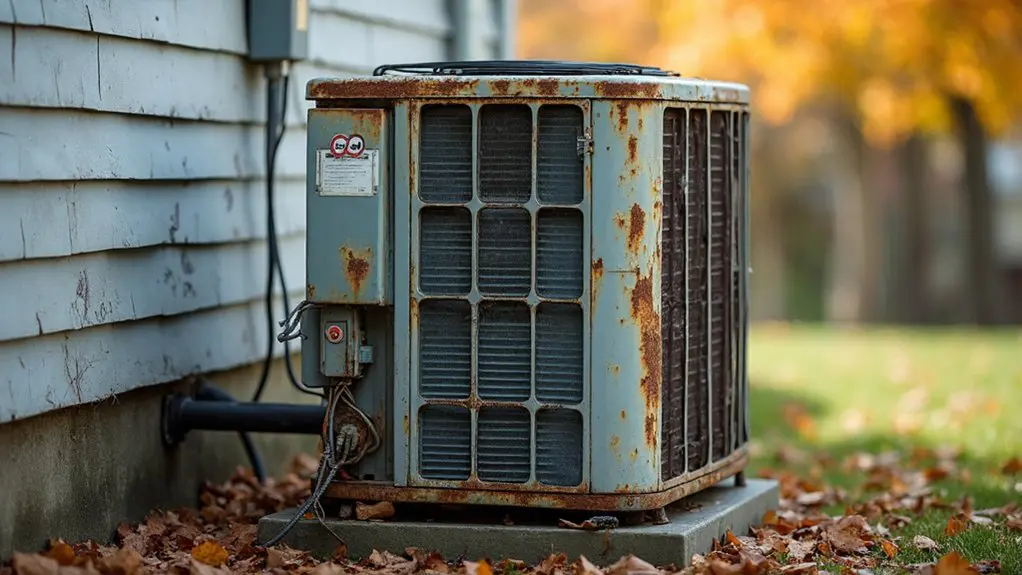
You’ll need a new heat pump if yours is over 10-15 years old and showing signs of decline. Watch for rising energy bills despite normal usage, frequent breakdowns requiring costly repairs, and inadequate heating or cooling performance with uneven temperatures throughout your home. Unusual noises like grinding or banging, poor humidity control, and systems that constantly cycle without effectively conditioning your space all indicate replacement time. Below, you’ll discover the specific warning signs and replacement considerations.
Key Takeaways
- Heat pumps over 15 years old are prone to sudden breakdowns and expensive repairs, requiring proactive replacement.
- Significant year-over-year increases in energy bills without usage changes indicate declining system efficiency and replacement needs.
- Repair frequency exceeding once annually with escalating costs approaching replacement value signals system deterioration beyond economic repair.
- Inability to maintain consistent temperatures with constant cycling despite operation indicates serious performance issues requiring replacement.
- Grinding, squealing, or banging sounds combined with poor humidity control signal internal component failure needing immediate attention.
Your Heat Pump Has Reached Its Expected Lifespan
While heat pumps are built to last, they don’t operate indefinitely, and most systems reach their expected lifespan between 10-15 years of service. If your heat pump system is approaching or exceeding this timeframe, it’s time to replace it before costly problems arise.
Heat pumps over 15 years old are particularly vulnerable to sudden breakdowns and expensive repairs. Your aging HVAC system won’t deliver the same energy efficiency as newer models, leading to higher utility bills and inconsistent comfort. When your heat pump replacement becomes necessary due to age, you’re not just avoiding emergency repairs—you’re investing in improved performance.
Systems nearing the end of their operational life often struggle to maintain desired temperatures and consume more energy. Rather than continuing costly repairs on an outdated unit, heat pump replacement offers long-term savings through enhanced efficiency and reliability. Proactive replacement guarantees uninterrupted comfort.
Energy Bills Continue Rising Despite Normal Usage
Why are your energy bills climbing month after month when your household habits haven’t changed? Your aging heat pump is likely losing efficiency, forcing it to work harder and consume more energy to maintain comfortable temperatures. When utility bills show significant year-over-year increases without corresponding changes in usage patterns, it’s a clear warning sign.
Less efficient heat pumps strain to deliver the same heating and cooling performance they once provided effortlessly. This declining efficiency translates directly into high energy costs that can shock homeowners. If your energy bills seem disproportionate to your home’s size and occupancy, your heat pump is probably the culprit.
While regular pump maintenance can help optimize performance temporarily, consistently rising costs often indicate you need a new unit. Replacing your outdated system with a high-SEER model will dramatically reduce monthly expenses and restore efficient operation to your home.
Frequent Breakdowns and Costly Repairs
Constantly calling repair technicians signals your heat pump needs have reached the point where replacement makes more financial sense than continued fixes. When your system breaks down multiple times per year, you’re dealing with an aging unit that’s costing you more than just heat pump repair bills.
Consider these warning signs that indicate replacement time:
- Repair frequency exceeds once annually – Multiple breakdowns suggest your system running capabilities are deteriorating beyond economic repair
- Parts failures become increasingly common – Especially older units experience cascading component problems that lead to repeated service calls
- Repair costs approach replacement value – When annual maintenance expenses rival new equipment pricing, you’re throwing money away
Each breakdown disrupts your comfort while generating increased energy costs from an inefficient, struggling system. Rather than enduring ongoing reliability issues and escalating expenses, investing in a new heat pump eliminates the hassle of recurring problems while providing dependable, efficient operation for years ahead.
Inadequate Heating and Cooling Performance
Struggling heat pumps often fail to maintain consistent temperatures throughout your home, leaving you with hot and cold spots that no amount of thermostat adjustments can fix. When your system runs constantly but can’t reach the set temperature, it’s signaling serious performance issues.
You’ll notice your heat pump cycling frequently without effectively heating or cooling your space. This inadequate performance becomes especially apparent during extreme weather when your system should work hardest. If your heat pump struggles to maintain comfort even after professional maintenance, it’s likely undersized for your home’s needs.
Diminishing capacity compared to when your system was new indicates it’s nearing its lifespan’s end. An older heat pump that can’t effectively condition your space despite constant operation needs replacement. When professional maintenance can’t restore adequate performance, consult an HVAC contractor about installing a new system with proper capacity for your home’s requirements.
Unusual Noises During Operation
When your heat pump starts producing grinding, squealing, or banging sounds, it’s signaling that internal components are wearing out or failing completely. These unusual noises are clear signs that your system requires immediate attention, as they indicate serious problems developing within your unit.
Strange sounds from your heat pump typically follow this progression:
- Minor squealing – Early warning of component wear that maintenance can often address
- Persistent grinding – Advanced deterioration requiring professional diagnosis to determine repair feasibility
- Loud banging – Critical failure suggesting immediate replacement consideration
Don’t ignore these auditory warnings. Schedule heat pump maintenance immediately when you notice unusual noises. A qualified technician can diagnose the source and determine whether repair or full replacement makes financial sense. Regular maintenance helps catch these issues early, preventing costly emergency situations that force premature system replacement. Acting quickly when noises first appear often saves money long-term.
Uneven Temperature Distribution Throughout Your Home
One of the most frustrating signs your heat pump needs replacement is when it can’t maintain consistent temperatures throughout your home. Uneven heating creates uncomfortable living conditions where some rooms feel like saunas while others remain freezing cold. This temperature inconsistency is a clear sign that your heat pump can’t effectively distribute air throughout your living space.
When your air conditioning and heating system struggles to circulate properly, you’ll notice significant temperature variations between rooms. Your heat pump might run constantly without reaching the thermostat’s set temperature, cycling frequently as it attempts to balance your home’s climate. This often means the system has lost its ability to manage your heating and cooling needs efficiently.
These performance issues don’t just affect comfort—they’ll drive up your energy bills as the struggling system works overtime. If you’re experiencing noticeable decreases in heating or cooling effectiveness, it’s time to evaluate replacing your aging heat pump with a more efficient model.
Poor Humidity Control and Indoor Air Quality
Another telltale sign your heat pump needs replacement is its inability to maintain proper humidity levels throughout your home. When your system can’t effectively control moisture in the air, you’ll notice a significant drop in your overall comfort level.
Older, inefficient heat pumps often struggle with humidity management, creating uncomfortable living conditions. During warmer months, excess moisture makes your home feel muggy and stuffy, while winter can bring overly dry air that irritates your skin and respiratory system.
- Persistent stuffiness despite running the system continuously
- Condensation buildup on windows and surfaces throughout your home
- Musty odors that won’t dissipate even with regular cleaning
Poor humidity control directly impacts your indoor air quality and daily comfort. If your heat pump can’t balance moisture levels effectively, it’s time to examine investing in a new, more efficient system.
Choosing the Right Replacement Heat Pump
Selecting the right replacement heat pump requires careful consideration of several key factors that directly impact your home’s comfort and energy efficiency. When you replace your heat pump, start by evaluating your home’s size, insulation, and heating needs to determine proper capacity.
Consider whether a traditional heat pump or mini-split system better suits your space. Mini-splits offer zoned control for specific areas, while whole-home systems work well for thorough heating and cooling.
Energy efficiency ratings vastly affect long-term costs. Look for ENERGY STAR certified models with high SEER and HSPF ratings to save energy and reduce utility bills. Many efficient HVAC systems qualify for federal tax credits and local rebates, offsetting initial installation costs.
Don’t forget compatibility with existing ductwork and electrical systems. Professional assessment guarantees you select equipment that integrates seamlessly with your home’s infrastructure while maximizing performance and efficiency for years ahead.
Benefits of Professional Heat Pump Installation
Why risk compromising your investment with improper installation when professional heat pump installation guarantees ideal performance from day one? Experienced technicians bring critical expertise that safeguards your system operates at peak capacity while maximizing long-term value.
Professional installation delivers three essential advantages:
- Proper System Sizing and Configuration – Technicians select the most appropriate heat pump model based on your home’s specific size, climate conditions, and energy requirements, ensuring consummate efficiency.
- Expert Installation Techniques – Professional refrigerant charging, air balancing, and control programming are executed correctly, preventing performance issues that plague DIY installations.
- Warranty Protection and Ongoing Support – You’ll receive thorough warranty coverage and maintenance support that protects your investment and prevents expensive future repairs.
Improperly installed heat pumps suffer from decreased energy efficiency, uneven heating and cooling, and premature system failure. Professional installation eliminates these risks while ensuring your heat pump delivers consistent comfort and maximum performance throughout its lifespan.
Conclusion
You shouldn’t ignore these warning signs when they appear. A failing heat pump can increase your energy costs by up to 30% compared to an efficient system, according to the Department of Energy. Don’t let mounting repair bills and uncomfortable temperatures drain your wallet and patience. When you’re experiencing multiple issues, it’s time to invest in a professional heat pump replacement that’ll restore your home’s comfort and efficiency.