
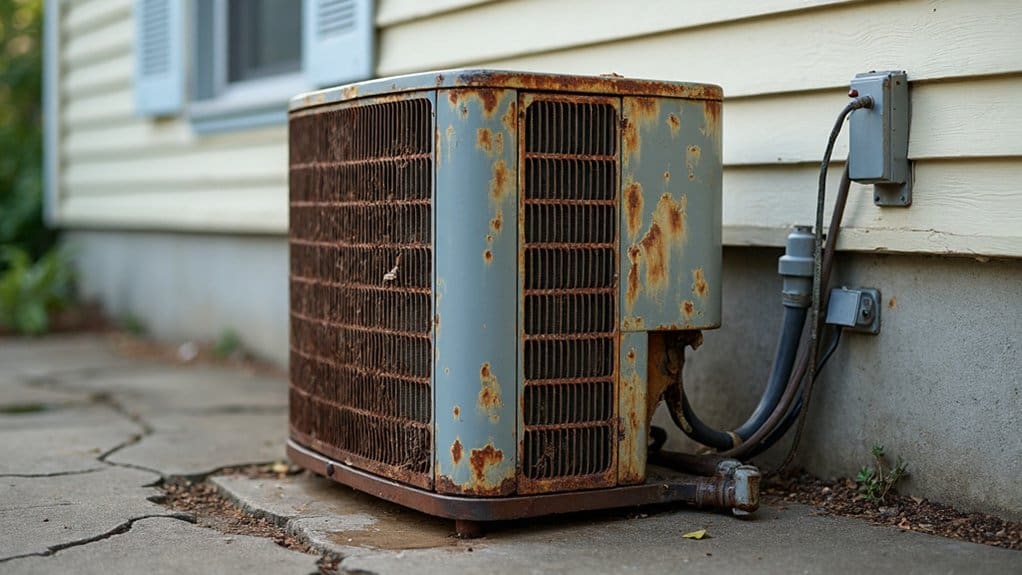
You’ll know it’s time for a new air conditioning system when your unit reaches 10-15 years old and starts blowing warm air instead of cool. Watch for weak airflow throughout your home, strange banging or grinding noises, and energy bills that suddenly spike despite normal usage. If you’re facing frequent repairs that cost more than 50% of a new system’s price, replacement makes better financial sense. These warning signs reveal deeper issues that’ll help you make the right decision.
Key Takeaways
- Your AC system is over 10 years old and requires frequent, expensive repairs exceeding 50% of replacement cost.
- Warm air blows from vents instead of cool air, indicating compressor failure or refrigerant leaks.
- Weak airflow throughout your home suggests clogged filters, damaged ductwork, or malfunctioning blower fans.
- Strange noises like banging, grinding, or buzzing indicate serious internal component damage or electrical issues.
- Energy bills surge unexpectedly as aging systems lose 5-10% efficiency due to wear and corrosion buildup.
Your HVAC System Is Over 10 Years Old
When your HVAC system reaches the 10-year mark, you’re entering territory where replacement often makes more financial sense than continued repairs. The typical lifespan of a central air conditioning system spans 10-15 years, meaning your aging unit will likely require replacement soon.
Older systems present several costly challenges. If your HVAC system is years old, it probably uses R-22 refrigerant, which is being phased out environmentally. This makes repairs increasingly expensive as the refrigerant becomes scarce. Additionally, aging systems lose energy efficiency over time, causing your utility bills to climb steadily.
You’ll notice more frequent breakdowns requiring expensive repairs as components wear out. Rather than throwing good money after bad, investing in a new system makes financial sense. A replacement air conditioning system offers improved energy efficiency, lower utility bills, enhanced comfort, and reduced maintenance costs compared to maintaining your aging unit.
Warm Air Coming From Your Vents
If your air conditioning system blows warm air through the vents instead of cool, invigorating air, you’re dealing with a serious malfunction that demands immediate attention. This AC problem typically indicates your compressor is failing or you’ve got a refrigerant leak that requires professional diagnosis.
- Continuing Operation Risks – Running your old AC unit while it’s blowing warm air can cause additional damage and spike your energy bills substantially.
- Escalating Repair Costs – Older air conditioning units using R-22 refrigerant face expensive repair costs due to refrigerant phase-outs.
- Repair or Replace Decision – If your system repeatedly experiences this issue, investing in new air conditioning installation often proves more cost-effective than continuous repairs on an inefficient unit.
Don’t ignore warm air from your vents—it’s your system’s cry for help.
Weak Airflow Throughout Your Home
Though your air conditioning system might be producing cool air, weak airflow throughout your home signals a critical problem that’s quietly sabotaging your comfort and wallet. When your air conditioner uses excessive energy to push air through compromised pathways, you’ll notice immediate differences in room temperatures and monthly bills.
Clogged air filters restrict airflow, forcing your HVAC system to work overtime. Similarly, blocked or damaged ductwork prevents proper air circulation, creating uncomfortable hot spots throughout your home. A malfunctioning blower fan can drastically reduce air movement, while ductwork leaks allow conditioned air to escape before reaching intended rooms.
These airflow issues don’t just affect comfort—they spike energy costs. When air conditioning systems struggle against restricted pathways, they consume substantially more power while delivering less cooling. If multiple rooms consistently feel stuffy despite your system running constantly, it’s time to examine replacing your aging conditioning unit with a properly sized, efficient model.
Strange Noises During Operation
Your air conditioning system should operate with minimal noise, so any banging, grinding, or whistling sounds indicate serious internal problems demanding immediate attention. These unusual noises signal that your system’s components are malfunctioning or deteriorating rapidly.
Different sounds reveal specific problems requiring professional evaluation:
- Banging and grinding noises typically indicate damaged internal components like worn bearings or broken fan blades
- Buzzing sounds often point to electrical issues or a failing motor that needs immediate replacement
- Rattling noises usually signal loose parts that can cause cascading damage if left unaddressed
Ignoring these warning signs leads to catastrophic system failure and considerably more expensive repairs. What starts as a simple loose component can quickly escalate into complete motor replacement or total system breakdown. Getting prompt professional evaluation helps identify the underlying issue before it destroys other components, potentially helping extend lifespan and avoid premature replacement costs.
Rising Energy Bills Despite Normal Usage
When energy bills suddenly surge despite maintaining consistent usage patterns, your air conditioning system is likely losing efficiency and struggling to perform its basic functions. As your HVAC unit ages, wear and tear naturally reduces its energy efficiency by 5-10% over time, directly impacting your monthly energy costs.
Dirt and corrosion buildup on critical components forces your system to work much harder than necessary, becoming progressively less efficient. You’ll notice your unit working harder to maintain comfortable temperatures, often running continuously without achieving desired results. This constant operation greatly increases energy consumption while delivering poor performance.
If you’re spending time dealing with frequent repairs alongside rising bills, your system needs replacement. Rather than continuing to pour money into an aging, inefficient unit, investing in a new, high-efficiency system provides immediate relief from escalating energy costs and delivers substantial long-term savings through improved performance.
Frequent and Costly Repair Bills
Escalating energy costs aren’t the only financial burden your failing AC system creates. Frequent repair bills can quickly drain your wallet, especially when you’re constantly calling technicians to keep your aging unit running. If your repair costs exceed 50% of what you’d spend on a new AC unit, it’s time to seriously consider replacement.
- Multiple breakdowns within a single season – Your AC shouldn’t need constant attention to function properly
- Repair bills exceeding half the cost of replacement – You’re fundamentally buying a new unit piece by piece
- Systems over 10 years old requiring frequent fixes – Aging components will continue failing, creating ongoing expenses
Instead of throwing good money after bad, investing in a new, energy-efficient system will eliminate those nagging repair costs while improving your home’s comfort and efficiency for years to come.
Persistent Humidity Problems Indoors
Beyond repair costs, a properly functioning air conditioning system should effectively control both temperature and humidity levels in your home. If you’re experiencing persistent indoor humidity problems, it’s a clear sign your HVAC system isn’t performing ideally. When your air conditioner can’t adequately dehumidify the air, you’ll notice sticky, uncomfortable conditions even when running continuously.
Persistent high humidity creates perfect conditions for mold and mildew growth, potentially causing serious health issues for your family. Your system should naturally remove moisture while keeping you cool, but older, less efficient units struggle with this dual function.
If your heating and cooling system consistently fails to maintain comfortable humidity levels despite regular maintenance, you need to consider replacement. Energy-efficient modern air conditioners are specifically designed for superior humidity control. When humidity problems persist regardless of repairs, it’s time to replace your outdated system with one that can properly manage both temperature and moisture levels.
Frequently Asked Questions
How Do I Know if I Need a New AC System?
You’ll know you need a new AC system if you’re experiencing frequent repairs, high energy bills, inadequate cooling, strange noises, refrigerant leaks, poor air quality, outdated technology, decreased efficiency, or your unit’s not turning on.
What Is the 3 Minute Rule for Air Conditioners?
Picture your AC cycling on like clockwork—the 3-minute rule prevents rapid startup/shutdown procedures that damage compressors. You’ll maintain cooling capacity efficiency by waiting three minutes between restarts, protecting your system through proper maintenance schedule adherence and expert technician consultations.
How Much Does It Cost to Fully Replace an HVAC System?
You’ll pay $5,000-$15,000 for complete system replacement cost, depending on unit capacity selection and ductwork modifications needed. Consider financing options, energy efficiency upgrades, and seasonal performance factors when planning your installation timeline and maintenance considerations.
Conclusion
Don’t let another sweltering summer torture your family with inadequate cooling. You’ve seen the warning signs—rising bills, constant repairs, and that ancient system gasping for breath. Why continue throwing money down the drain? You deserve comfort, efficiency, and peace of mind. Take control today and invest in a new air conditioning system. Your wallet will thank you, your family will embrace you, and you’ll finally reclaim your home’s sanctuary from the relentless heat.