
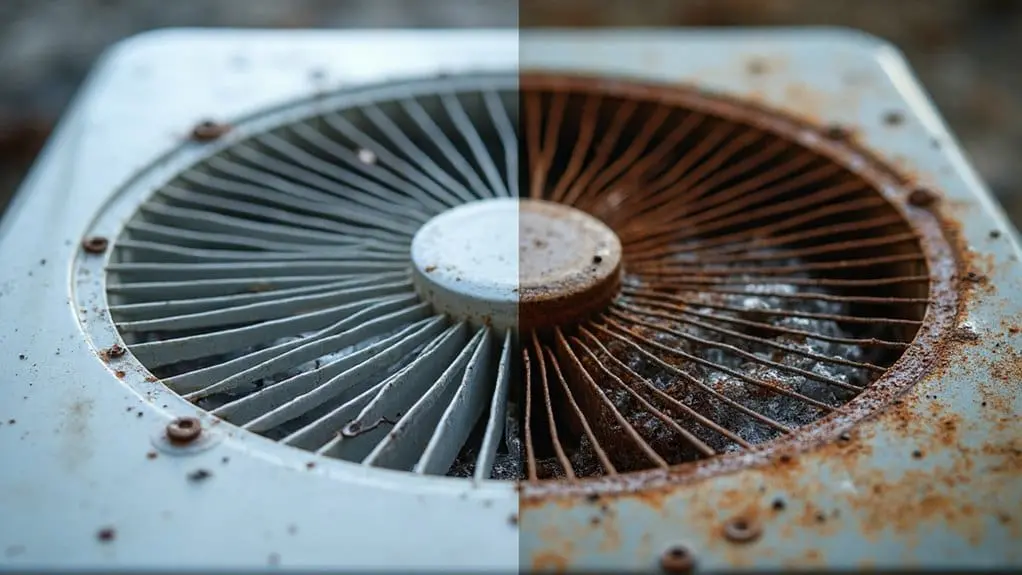
Your AC unit sends clear warning signals before catastrophic failure: strange knocking, clicking, or continuous humming sounds indicate electrical or motor problems; reduced airflow suggests clogged filters or compromised ductwork; unusual musty, burning, or sweet odors signal moisture buildup, overheating, or refrigerant leaks; unexplained 15-20% energy bill increases reveal system inefficiency; inconsistent cooling points to thermostat malfunctions or refrigerant issues. Professional intervention at these early stages prevents expensive emergency repairs and extends your system’s operational lifespan considerably.
Key Takeaways
- Strange sounds like knocking, clicking, or continuous humming indicate major operational problems requiring immediate professional intervention.
- Weak airflow throughout your home signals malfunctioning blower motors, clogged filters, or compromised ductwork that needs prompt attention.
- Unusual odors from vents—musty, burning, or sweet smells—point to specific system failures that worsen without professional intervention.
- Rising energy bills without increased usage indicate your cooling system is working harder due to aging or malfunctioning components.
- Inconsistent cooling and frequent temperature fluctuations suggest thermostat malfunctions, refrigerant issues, or ductwork problems requiring professional repair.
Strange Sounds Coming From Your AC Unit
When your air conditioning system begins producing sounds beyond its normal operational hum, you’re witnessing early warning signals of mechanical distress that demand immediate diagnostic attention. Strange noises serve as your system’s communication method for internal component failures.
Loud knocking or booming sounds indicate major operational problems requiring immediate professional intervention. These aggressive sounds typically signal loose components, damaged compressor parts, or motor bearing failures that’ll worsen without prompt repair.
Persistent clicking, humming, or rattling point to serious electrical or mechanical issues demanding expert diagnosis. Clicking suggests electrical relay problems, while continuous humming indicates motor strain or capacitor failure. Rattling typically means loose hardware or debris interference.
Don’t dismiss any unusual sounds as minor inconveniences. Your AC unit’s acoustic changes represent critical warning signals that require professional assessment before catastrophic failure occurs. Ignoring these auditory alerts leads to expensive system replacement rather than manageable repair costs. Schedule immediate professional maintenance when strange noises emerge.
Reduced Airflow Throughout Your Home
Although your air conditioning system operates quietly, reduced airflow throughout your home signals critical mechanical failures that’ll compromise your entire cooling system’s performance. Weak airflow indicates malfunctioning blower motors, clogged air filters, or compromised ductwork integrity that prevents effective air circulation.
When your AC can’t distribute conditioned air properly, you’ll experience uneven temperatures and hot spots throughout rooms. Your HVAC system compensates by running longer cycles, dramatically increasing energy consumption and operational strain. Clogged air filters restrict airflow while ductwork leaks allow conditioned air to escape before reaching living spaces.
Professional diagnosis identifies whether mechanical components or distribution systems require repair. Technicians assess blower motor functionality, inspect ductwork for leaks, and evaluate filter conditions. Without prompt maintenance intervention, restricted airflow forces your AC to operate inefficiently, escalating utility costs and accelerating component wear. Schedule regular HVAC system inspections to clean ducts, replace filters, and maintain ideal airflow for sustained cooling performance.
Unusual Odors From Vents or Unit
Strange odors emerging from your air conditioning vents or unit reveal serious underlying problems that demand immediate investigation. When you’re noticing an odd smell from your air vents, you’re detecting warning signs of potential system failures.
Musty or moldy odors indicate moisture accumulation that’s fostering harmful growth within internal components. Burning or acrid smells signal overheating parts or electrical malfunctions requiring urgent attention to prevent fire hazards. Sweet, pungent odors typically indicate refrigerant leaks that compromise cooling efficiency and pose health risks.
Each odor type points to specific system failures that’ll worsen without intervention. Mold growth spreads throughout ductwork, electrical problems escalate into complete system failure, and refrigerant leaks reduce performance while increasing operating costs.
Don’t ignore these diagnostic indicators. It’s time to consult an HVAC professional immediately when unusual odors appear. Delaying action transforms manageable repairs into expensive replacements. Consult an expert for thorough system inspection and targeted repairs.
Rising Energy Bills Without Increased Usage
Something’s wrong with your air conditioning system when energy bills spike unexpectedly despite maintaining identical usage patterns. Your AC unit shouldn’t consume substantially more electricity without corresponding increases in usage or temperature demands.
Sharp rises in utility bills typically indicate your cooling system is working harder to achieve the same results. This inefficiency stems from aging compressors, low refrigerant levels, or malfunctioning components that force your HVAC system to operate longer cycles. When your unit can’t maintain desired temperatures proficiently, it compensates by consuming excessive energy.
Don’t ignore these warning signs in your monthly statements. Unexplained cost increases of 15-20% warrant immediate attention. The longer you delay addressing these efficiency losses, the more expensive your repairs become.
Schedule an AC maintenance appointment immediately when you notice unusual utility bill patterns. Call a Professional to diagnose the root cause and restore your system’s ideal performance before minor issues escalate into major breakdowns.
Inconsistent Cooling and Temperature Control
Consistent temperature control represents the primary function of your air conditioning system, and deviations from uniform cooling patterns signal underlying mechanical problems. When your system can’t maintain steady temperatures, you’re experiencing clear signs of mechanical failure requiring immediate attention.
Uneven cooling throughout your home indicates compromised airflow or insufficient refrigerant levels within your air conditioner. Frequent temperature fluctuations suggest thermostat malfunctions or control component failures that disrupt system operation.
Notice certain rooms staying warmer or cooler than others? This points to ductwork leaks, blockages, or imbalanced system distribution affecting your indoor air circulation. Excessive humidity despite continuous cooling operation reveals low refrigerant levels or dehumidification component failures.
Can’t achieve desired thermostat settings? Your system requires professional calibration or repair to restore proper temperature control functionality. These cooling inconsistencies indicate your air conditioner needs immediate professional maintenance to prevent complete system breakdown and restore ideal temperature regulation throughout your home.
Excess Moisture or Humidity Issues
Why does your air conditioner run continuously yet leave your home feeling sticky and uncomfortable? Excess moisture indicates your cooling system isn’t dehumidifying properly, often pointing to refrigerant shortage that prevents ideal moisture removal.
High humidity makes your home feel warmer than the thermostat setting, forcing your system to work harder while failing to achieve comfortable conditions. When levels of humidity remain elevated despite continuous operation, you’re facing a mechanical issue requiring immediate attention.
Key indicators of humidity problems include:
- Indoor humidity consistently above 60% during cooling operation
- Condensation forming on windows and cold surfaces
- Musty odors or visible moisture accumulation
- Sticky, clammy feeling despite cool air circulation
Professional technicians can assess the problem through refrigerant testing, system pressure analysis, and humidity measurements. Addressing humidity inside your home promptly prevents mold growth, structural damage, and equipment strain that leads to costly repairs.
Frequent Cycling On and Off
When your air conditioner repeatedly turns on and off in rapid succession, you’re witnessing short cycling—a critical malfunction that signals underlying system inefficiencies demanding immediate diagnosis. This erratic cycling behavior compromises your system’s ability to maintain stable indoor temperatures while simultaneously placing excessive stress on critical components.
Short cycling represents one of the most telling signs your AC needs professional intervention. The constant starting and stopping overworks electrical components, compressors, and motors, accelerating wear patterns that lead to costly breakdowns. Your air conditioner can’t establish proper cooling cycles, resulting in inefficient operation and elevated energy consumption.
Don’t ignore this warning signal. Call a certified HVAC repair technician immediately to identify the root cause—whether it’s refrigerant issues, thermostat malfunctions, or airflow restrictions. Professional AC repair services can diagnose these complex problems accurately. Regular maintenance prevents short cycling by ensuring ideal system performance, extending equipment lifespan, and maintaining consistent comfort levels throughout your home.
Conclusion
You’ve ignored these seven warning signs long enough—congratulations, you’re now a certified HVAC diagnostician by procrastination. While you’ve been decoding mysterious rattles like ancient hieroglyphs and watching your energy bills climb Mount Everest, your AC’s been screaming for professional intervention. Here’s your preventative maintenance reality check: those “quirky” sounds aren’t personality traits, they’re expensive repair bills in disguise. Schedule that service call before your unit stages its final, costly revolt.