
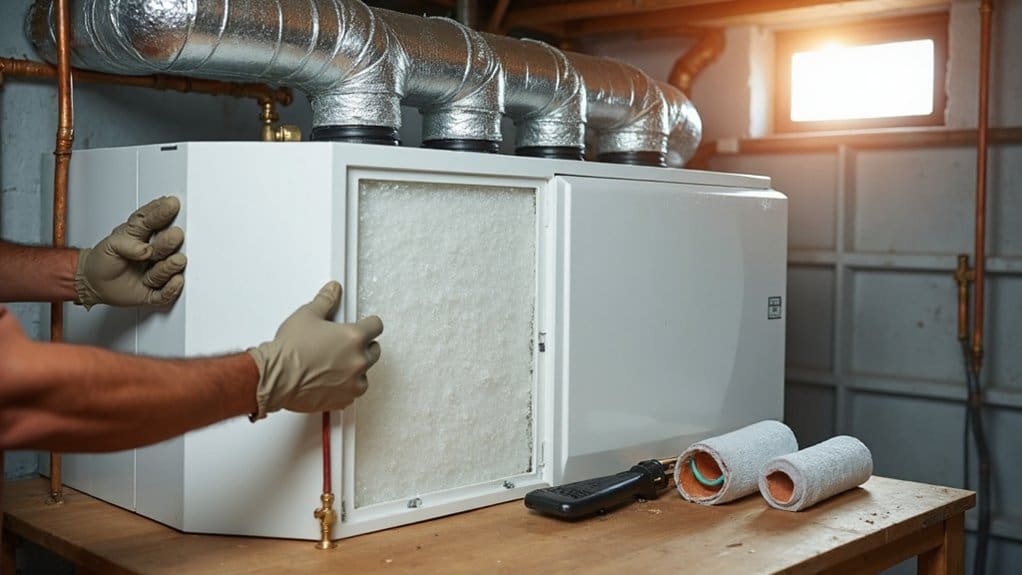
You’ll need to perform essential spring maintenance on your whole-house humidifier to prevent costly summer repairs that can reach thousands of dollars. Turn off your unit, disconnect the water supply, and thoroughly clean the housing while replacing the water panel. Inspect drain lines for clogs, check all seals and connections, and look for mineral buildup or mold growth. These simple steps protect against water damage, system failures, and expensive emergency repairs during peak summer months when you’ll discover extensive maintenance strategies.
Key Takeaways
- Clean or replace water panels every 1-3 months and flush drain lines to prevent clogs and expensive water damage repairs.
- Properly shut down humidifiers before summer by draining reservoirs and cleaning components to avoid mold growth and system malfunctions.
- Regular maintenance prevents mineral buildup that reduces efficiency and increases energy costs while extending equipment lifespan significantly.
- Address warning signs like musty odors, unusual noises, or leaks immediately to catch problems before they become costly repairs.
- Document all maintenance activities and inspect connections annually to protect your HVAC investment and home’s structural integrity.
Why Spring Maintenance Matters for Your Whole-House Humidifier
As winter shifts to spring, your whole-house humidifier needs attention to guarantee consistent moisture levels throughout your home. Without proper seasonal maintenance, you’ll face mineral buildup, dirt accumulation, and worn components that reduce your system’s effectiveness.
Spring maintenance prevents costly problems before they start. When you neglect basic home maintenance tips like cleaning water panels and inspecting supply lines, you’re inviting mold growth, musty odors, and system clogs that require expensive professional repairs. These issues don’t just affect your humidifier – they impact your indoor air quality and comfort.
Regular spring maintenance assures your system operates efficiently year-round. While you might also consider a whole-home dehumidifier for summer humidity control, maintaining your existing humidifier prevents unnecessary replacement costs. Clean components and fresh water panels help prevent mold while extending your equipment’s lifespan. Taking action now saves money and maintains the healthy indoor environment you’ve worked to create.
Essential Cleaning Tasks to Perform This Spring
When spring arrives, you’ll need to tackle specific cleaning tasks that keep your whole-house humidifier running smoothly. Start by thoroughly cleaning the housing unit, removing accumulated dust and mineral deposits that restrict airflow and reduce efficiency.
Next, replace or clean your water panel every 1-3 months during heating season to maintain proper moisture distribution throughout your home. A dirty evaporator pad considerably reduces humidity output and can harbor bacteria.
Don’t forget to inspect and flush the drain line, clearing any sediment buildup that causes clogs and potential water damage. Check your humidistat settings to guarantee you’re achieving ideal humidity levels for comfort and health.
Most importantly, clean all humidifier components before shutting down for summer. This prevents mold growth and eliminates musty odors that develop in stagnant moisture environments. These essential maintenance steps protect your investment while certifying clean, healthy air when you restart your system next fall.
Proper Shutdown Procedures for the Off-Season
Proper shutdown procedures protect your humidifier investment and guarantee trouble-free operation when heating season returns. Following these essential steps safeguards your equipment remains in excellent condition throughout the warmer months.
First, turn off your humidifier at both the unit and electrical panel. This prevents accidental activation during off-season periods. Next, disconnect the water supply line and drain all remaining water from the reservoir and internal components. Standing water creates breeding grounds for bacteria and mineral buildup.
Remove and thoroughly clean the water panel or evaporator pad, then store it in a dry location. Inspect all connections, seals, and mounting hardware for wear or damage. Replace any compromised components now rather than waiting until fall startup.
This seasonal maintenance routine prevents costly repairs while extending your humidifier’s lifespan. Document completion dates and any issues discovered for future reference. Proper shutdown procedures today save you significant time and expense tomorrow.
Warning Signs That Indicate Your Humidifier Needs Professional Service
Even with proper shutdown and maintenance routines, your humidifier may develop problems that require professional attention. Watch for excessive mineral buildup or dirt accumulation in the housing, which reduces moisture output and creates system clogs that you can’t easily resolve.
Pay attention to your water supply lines. Clogs or disconnections cause leaks that lead to serious water damage throughout your home’s structure. Don’t ignore these issues, as repair costs escalate quickly.
Musty odors or visible mold growth signal stagnant water problems and maintenance failures that need expert intervention. These conditions pose health risks and indicate deeper system issues.
If your humidistat malfunctions and can’t regulate humidity levels accurately, you’ll face over-humidification problems requiring professional calibration or replacement.
Finally, unusual noises, reduced airflow, or inconsistent humidity levels mean it’s time to call a technician. These symptoms often indicate complex mechanical problems beyond typical homeowner maintenance capabilities.
How Regular Maintenance Saves Money on Summer Repairs
While spring maintenance might feel like an unnecessary expense, investing in your humidifier’s upkeep now guarantees far costlier summer repairs down the road. When you neglect routine maintenance on your whole-home humidifier, you’re setting yourself up for expensive water damage, mold remediation, and HVAC system malfunctions during humid summer months.
Skipping simple tasks like cleaning or replacing the water panel creates mineral buildup that forces your system to work harder, driving up energy bills. If you don’t shut off the water supply at season’s end, you’ll face leaks and standing water that promote mold growth throughout your home.
Professional annual servicing verifies peak efficiency and catches problems before they become expensive disasters. The cost of proactive maintenance is always less than repairing water damage or fixing HVAC system problems caused by neglect. Regular upkeep protects both your equipment investment and your home’s structural integrity.
Frequently Asked Questions
Do You Need a Humidifier in Spring and Summer?
You don’t need a humidifier in spring and summer since outdoor humidity levels naturally increase. Turn yours off to maintain proper indoor air quality and make seasonal adjustments to prevent mold growth and equipment damage.
Do You Turn off Aprilaire Humidifier in Summer?
Yes, you should turn off your Aprilaire humidifier in summer. Adjust humidity settings to “off,” monitor water usage by disconnecting supply lines, and schedule cleaning of components to prevent mold growth during humid months.
Do Humidifiers Require Maintenance?
Yes, you’ll need to maintain your humidifier regularly. You should guarantee regular cleaning of the housing, monitor water quality for mineral buildup, and replace filters as needed every 1-3 months during heating season.
What to Do With a Humidifier in Summer?
During summer, you’ll want to turn off humidifier usage completely and shut off its water supply. Clean humidifier regularly before storage, drain remaining water, and store humidifier properly in a dry location to prevent mold growth.
Conclusion
Don’t let your whole-house humidifier become yesterday’s news by neglecting spring maintenance. You’ll save yourself from costly summer repairs by cleaning components now, following proper shutdown procedures, and watching for warning signs. Regular upkeep isn’t just smart—it’s essential for your system’s longevity. You’re investing in your home’s comfort and your wallet’s health when you prioritize these seasonal tasks. A little spring effort prevents major summer headaches and expensive service calls.