
You’ll want to schedule your heat pump installation before Missouri’s harsh winter temperatures arrive, as proper preparation guarantees your system can efficiently extract heat from outdoor air even when temperatures drop to -13°F or lower. Air-source heat pumps deliver 3x more energy efficiency than traditional furnaces while providing year-round heating and cooling for St. Louis homes. Professional installation, proper sizing, and pre-winter maintenance ensure premier performance throughout Missouri’s challenging weather conditions, and there’s much more to deliberate for winter-ready preparation.
Key Takeaways
- Heat pumps efficiently extract heat from outdoor air even when temperatures drop to -13°F or lower in Missouri.
- Professional installation takes 1-2 days and includes comprehensive home assessment, proper sizing, and performance testing.
- Pre-winter maintenance requires replacing air filters, clearing outdoor unit debris, and scheduling professional system inspections.
- Air-source heat pumps offer cost-effective year-round comfort, while geothermal systems provide superior long-term efficiency.
- Properly installed heat pumps deliver 300% greater efficiency than conventional furnaces, reducing heating costs significantly.
Understanding Heat Pump Technology for Missouri Climate Conditions
Most homeowners in Missouri don’t realize that heat pumps can efficiently extract heat from outdoor air even when temperatures plummet to -13°F or lower. Understanding how heat pumps work is indispensable when considering this technology for your St. Louis home. These systems operate by transferring heat rather than generating it, making them remarkably energy-efficient for Missouri’s variable climate.
Air-source heat pumps are designed to work efficiently in the St. Louis region, delivering three times more energy efficiency than traditional furnaces while providing both heating and cooling capabilities. This dual functionality ensures year-round comfort throughout Missouri’s hot, humid summers and cold, snowy winters.
Geothermal systems offer another option, utilizing stable underground temperatures for consistent performance. However, they require higher upfront investment compared to air-source models. Regardless of which type you choose, proper sizing and professional installation are paramount for ideal performance in Missouri’s challenging weather conditions.
Essential Pre-Winter Heat Pump Maintenance Tasks
Now that you understand how heat pumps perform in Missouri’s climate, preparing your system for winter becomes your next priority. Essential heat pump maintenance starts with replacing your air filter regularly to maintain ideal airflow and prevent efficiency drops.
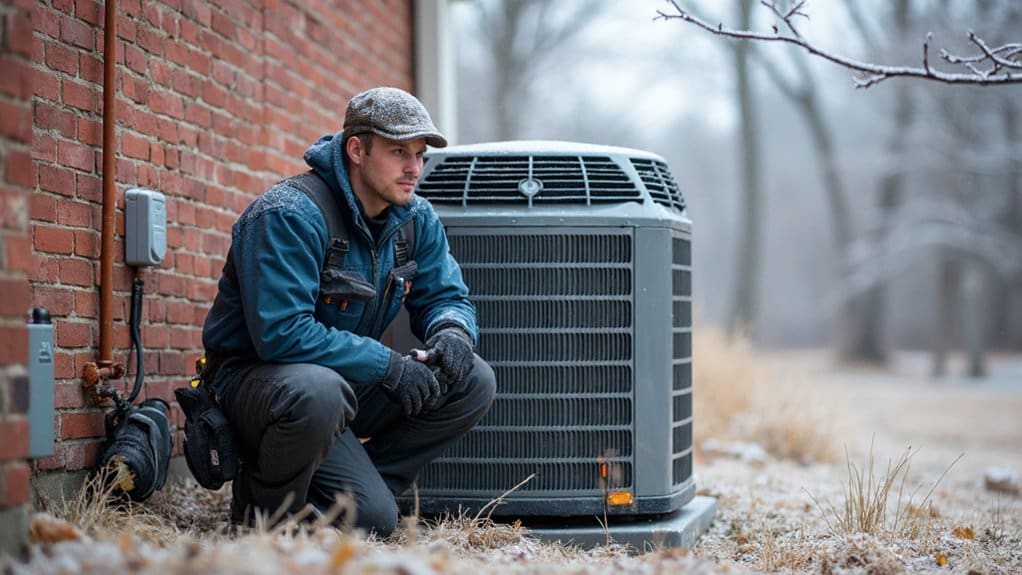
Clear debris like leaves and twigs from around your outdoor unit to guarantee unobstructed airflow for proper operation. Before temperatures drop, run a test cycle to verify your heat pump’s heating function works correctly. This simple step helps identify potential malfunctions early.
Monitor your system for warning signs throughout the season. If you notice cold air blowing when heat’s expected or detect unusual odors, address these issues immediately before they escalate into costly repairs.
Schedule professional maintenance with Galmiche & Sons before winter arrives. Their expertise ensures your winter-ready heat pump operates at peak heat pump efficiency, giving you confidence that your system will handle Missouri’s challenging weather conditions reliably.
Choosing the Right Heat Pump System for St. Louis Homes
Selecting the perfect heat pump for your St. Louis home requires careful consideration of several key factors that’ll determine your system’s performance and efficiency. You’ll need to evaluate size requirements, energy efficiency ratings like SEER2 and HSPF, and functionality options including single-stage, two-stage, or variable capacity systems.
Air source heat pumps represent the more cost-effective choice for most St. Louis homeowners, delivering reliable year-round comfort to heat or cool your space efficiently. While geothermal systems offer superior long-term efficiency and savings, they require higher upfront investment and work best for specific home configurations.
Don’t overlook available rebates and tax credits when budgeting for your new heat pump installation. The pre-installation assessment process is pivotal—professional evaluation confirms your chosen heat pump system aligns with your home’s specific heating and cooling demands. This meticulous approach guarantees ideal performance and maximum energy savings throughout Missouri’s challenging weather seasons.
Professional Installation Process and Timeline Considerations
Once you’ve identified your ideal heat pump system, professional installation becomes the foundation of your investment’s long-term success. You’ll typically need 1-2 days for complete installation, depending on your system’s complexity and required ductwork modifications.
Your HVAC technicians will start with a comprehensive evaluation of your home’s heating and cooling needs, guaranteeing they select the appropriate heat pump size and model. During installation, they’ll securely mount your unit, properly charge refrigerant lines, and establish safe electrical connections that meet local codes.
Post-installation testing verifies your heat pump’s consummate performance and efficiency before you take ownership. This thorough process confirms your system operates safely and effectively from day one.
Don’t forget about ongoing maintenance—you’ll need annual appointments to maintain peak efficiency and catch potential issues early. This proactive approach protects your investment and keeps your St. Louis home comfortable throughout Missouri’s challenging weather conditions.
Energy Efficiency Benefits During Cold Weather Operations
When Missouri’s winter temperatures drop below freezing, your heat pump continues delivering exceptional energy efficiency that traditional heating systems simply can’t match. You’ll experience up to 300% greater efficiency compared to conventional furnaces, translating to substantial savings on your heating costs throughout St. Louis’s coldest months.
By choosing an ENERGY STAR-certified model, you can reduce your heating expenses by over 20% compared to outdated systems. Variable-speed heat pumps automatically adjust their operation to meet your home’s exact heating demands, eliminating wasteful short-cycling while maintaining steady indoor temperatures.
For maximum cold-weather performance, consider geothermal heat pumps that tap into stable underground temperatures. These systems achieve remarkable 400% efficiency ratings, making them ideal for energy-conscious homeowners facing harsh Missouri winters. Proper sizing and professional installation guarantee your heat pump operates at peak efficiency, delivering reliable warmth and ideal energy savings when you need them most.
Maximizing Performance Through Proper Winter Preparation
Since your heat pump works harder during St. Louis winters, proper preparation guarantees optimal performance when you need it most. Taking proactive steps before cold weather arrives prevents costly breakdowns and maintains efficiency throughout Missouri’s harsh winter months.
Essential Winter Preparation Steps:
- Filter Maintenance – Clean or replace your air filter regularly to maintain proper airflow and prevent system strain during heavy heating demands.
- Outdoor Unit Care – Clear debris, leaves, and vegetation around your outdoor unit to ensure adequate heat transfer and prevent operational problems.
- Pre-Winter Test Run – Conduct a pre-winter test run early in the season to identify potential malfunctions before you’re dependent on heating.
- Professional Inspection – Schedule routine maintenance with qualified HVAC technicians who understand St. Louis climate challenges.
Watch for warning signs like cold air output or unusual odors, which indicate immediate attention needed. Regular maintenance protects your investment and ensures reliable comfort during Missouri’s unpredictable winter weather patterns.
Frequently Asked Questions
What Temperature Is Too Cold for Heat Pumps in Winter?
You’ll find heat pumps struggle with heating capacity limits when low outdoor temperatures drop below 20°F. Cold weather performance substantially decreases, and you’ll likely need backup heating when temperatures reach -13°F to -22°F.
How to Prep a Heat Pump for Winter?
Heat pumps lose 25% efficiency in freezing temperatures. You’ll need annual maintenance checking refrigerant levels, plus proper insulation around pipes. Clean filters, clear outdoor debris, and schedule professional tune-ups before winter hits.
How to Prepare a House for a Heat Pump?
You’ll need proper insulation throughout your home, including ductwork and walls. Install an efficient thermostat for ideal control. Schedule annual maintenance checks. Seal air leaks, upgrade windows, and guarantee adequate clearance around the outdoor unit for maximum performance.
How Cold Should It Be Outside Before the Heat Pump Stops Working?
Your heat pump performance typically declines below 40°F and may need supplemental heating options around 20-25°F. Consider winterization considerations like backup systems, as modern variable-speed models extend efficient operation compared to older units.
Conclusion
You’ve laid the groundwork for a winter-ready heat pump system that’ll serve as your home’s shield against Missouri’s harsh weather. By choosing the right equipment, scheduling professional installation, and completing essential maintenance tasks, you’re setting yourself up for efficient, reliable heating all season long. Don’t wait until the first freeze hits—take action now to guarantee your heat pump performs at its peak when you need it most.