
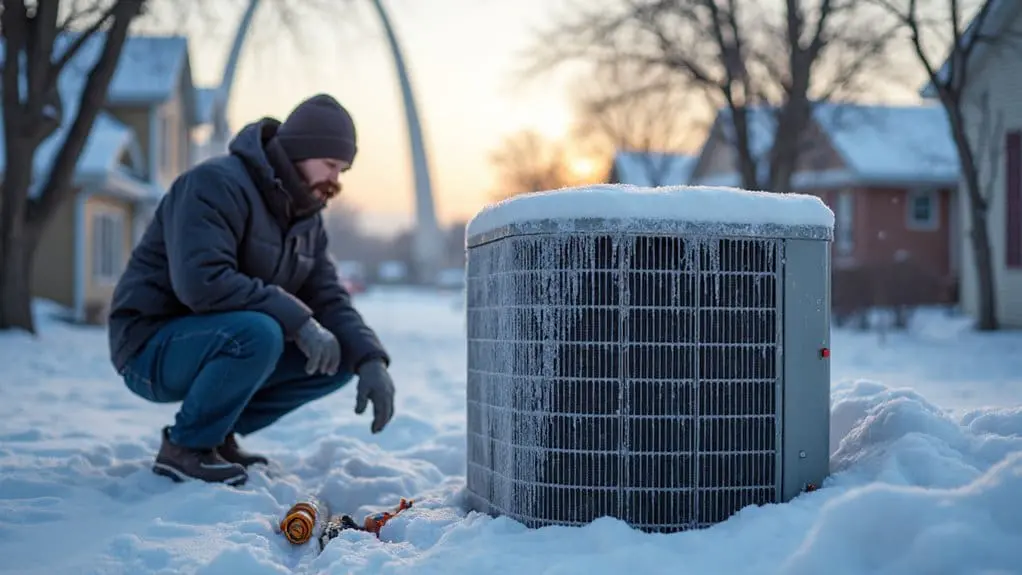
St. Louis’s humid subtropical climate wreaks havoc on your heat pump through extreme temperature swings from 90°F+ summers to sub-freezing winters. You’ll face refrigerant coil icing, compressor overheating, and accelerated corrosion from freeze-thaw cycles and high humidity. Watch for grinding noises, refrigerant leaks, frequent breaker trips, and inconsistent temperatures—these signal serious climate-related damage requiring immediate professional attention. Understanding these specific Midwest challenges will help you protect your investment and maintain ideal performance year-round.
Key Takeaways
- St. Louis heat pumps face efficiency drops below 40°F and ice buildup requiring specialized winter maintenance and defrost cycle management.
- Humid subtropical climate causes compressor strain, accelerated corrosion, and frequent freeze-thaw damage to electrical connections and refrigerant lines.
- Professional repair warning signs include strange noises, refrigerant leaks, electrical problems, inconsistent temperatures, and frequent system cycling.
- NATE-certified technicians with local climate expertise provide 24/7 emergency services and understand Missouri’s extreme temperature fluctuation impacts.
- Variable-speed compressor upgrades, proper sizing, smart thermostats, and regular maintenance help combat Midwest climate-related heat pump stress.
How St. Louis Weather Impacts Heat Pump Performance
Since St. Louis experiences a humid subtropical climate with extreme temperature fluctuations, your heat pumps face significant operational challenges that directly impact their heating and cooling performance. The region’s thermal swings—from 90°F+ summers to sub-freezing winters—force your system to work harder, reducing overall efficiency and increasing repair frequency.
During winter months, St. Louis climate conditions create persistent icing and freezing issues on your heat pump’s outdoor unit, compromising its ability to extract heat effectively. Summer brings its own problems: high temperatures and frequent thunderstorms overwork your compressor, accelerating component wear and potentially causing premature failure.
The area’s abundant rainfall and fluctuating humidity levels contribute to accelerated corrosion of essential heat pump components. These constant climate stresses mean your system operates outside its ideal efficiency range more often than in moderate climates, resulting in higher energy costs and more frequent repair needs throughout the year.
Common Heat Pump Problems Caused by Midwest Climate Conditions
When extreme Midwest temperature swings push your heat pump beyond its ideal operating range, several predictable failure patterns emerge that directly threaten your system’s dependability.
Refrigerant coil icing represents your most common cold-weather challenge. When outdoor temperatures drop below 32°F, moisture freezes on evaporator coils, blocking air circulation and forcing your system into constant defrost cycles. This process drastically reduces heating efficiency and accelerates compressor wear.
Summer humidity creates opposite problems. Your heat pump works overtime removing moisture from incoming air, causing compressor overheating and premature component failure. High electrical loads during peak humidity periods often trigger safety shutdowns.
Freeze-thaw cycling damages electrical connections, refrigerant lines, and fan motors through repeated expansion-contraction stress. These Midwest-specific conditions require targeted repair approaches rather than standard maintenance protocols.
Ice storms and heavy snow physically damage outdoor units, bending fan blades and blocking air intakes. Understanding these climate-driven failure patterns helps you identify problems before complete system breakdowns occur.
Signs Your Heat Pump Needs Professional Repair
How do you distinguish between minor heat pump hiccups and serious malfunctions that demand immediate professional intervention? Several warning signs indicate your system requires expert attention.
If your heat pump is making strange noises—grinding, squealing, or banging sounds—internal components may be failing. These aren’t normal operational sounds and signal mechanical problems requiring diagnosis.
Refrigerant leaks present another critical issue. You’ll notice reduced heating efficiency, ice formation on outdoor coils during winter, or hissing sounds near refrigerant lines. These leaks compromise system performance and need repair immediately.
Electrical problems manifest through frequent circuit breaker trips, flickering lights when the unit starts, or complete system failures. Don’t attempt DIY electrical fixes—these situations demand professional expertise.
When you’re experiencing issues like inconsistent temperatures, dramatically increased energy bills, or short cycling, you’re facing potential problems that require technical assessment. Professional technicians possess the tools and knowledge to diagnose complex system malfunctions accurately and safely.
Winter-Specific Heat Pump Issues in St. Louis
Why does your heat pump struggle more during St. Louis winters? When outdoor temperatures drop below 40°F, your heat pump’s efficiency plummets markedly. The outdoor coil accumulates ice buildup, restricting airflow and reducing your system’s heating capacity.
Your heat pump’s defrost cycle compounds these problems. While it melts ice from the outdoor coil, it diverts energy away from heating your home, creating noticeable temperature drops inside. During St. Louis’s harsh cold snaps, you’ll notice your system running constantly yet struggling to maintain comfort.
Extreme temperatures force your heat pump to activate backup heating elements. These electric resistance heaters consume substantially more energy, driving up your utility bills dramatically.
Proper system sizing prevents many winter performance issues. However, even correctly sized units require regular maintenance to handle St. Louis’s demanding climate. Clean filters, clear outdoor coils, and professional tune-ups guarantee your heat pump operates efficiently throughout winter’s challenging conditions.
Summer Heat and Humidity Effects on Heat Pump Systems
St. Louis summers create demanding conditions for your heat pump’s cooling system performance. The extreme heat and humidity force your air conditioner components to work harder, resulting in accelerated wear and reduced efficiency.
Your heat pump faces these critical summer challenges:
- Compressor strain – Higher outdoor temperatures require increased energy consumption to maintain indoor comfort
- Ice formation – Excessive humidity causes ice buildup on outdoor coils, blocking airflow and reducing system capacity
- Restricted airflow – Clogged filters and obstructed vents prevent proper air circulation during peak cooling demands
- System overheating – Extended operation periods can lead to component failure and costly repair needs
- Efficiency degradation – Poor maintenance compounds humidity effects, increasing utility costs
Regular maintenance guarantees most summer-related issues are addressed. Clean your outdoor unit monthly, replace filters every 30-60 days, and certify vents remain unobstructed. Professional heating services can identify problems before they cause system failure, keeping your St. Louis home comfortable throughout the demanding summer season.
Preventive Maintenance for Extreme Weather Conditions
Beyond addressing immediate summer challenges, implementing an extensive preventive maintenance strategy protects your heat pump system against St. Louis’s extreme weather conditions year-round. Annual tune-ups and filter changes maintain peak performance during scorching summers and frigid winters when your heating system and air conditioning work hardest.
You’ll need regular outdoor unit cleaning to remove debris that restricts airflow and reduces efficiency. Checking refrigerant levels prevents costly leaks that cause system failures during temperature extremes. Your trusted partner should inspect electrical connections, test safety controls, and calibrate thermostat settings for ideal seasonal operation.
Proactive maintenance minimizes unexpected breakdowns when you need Heat Pump Repair in St. Louis most. Professional technicians identify potential issues before they escalate into major problems requiring emergency Pump Repair services. Strategic seasonal adjustments optimize energy usage while extending your system’s lifespan, ensuring reliable climate control through Missouri’s unpredictable weather patterns.
Emergency Heat Pump Repair Services During Severe Weather
When severe weather strikes St. Louis, your heat pump faces extreme challenges that can lead to unexpected breakdowns. Emergency repair services become critical when power outages, ice storms, or heat waves cause system malfunctions. You need certified technicians who understand how Midwest weather impacts heat pump performance and can respond quickly to guarantee your comfort.
Emergency heat pump repair services in the St Louis area provide:
- 24/7 availability during severe weather events
- Rapid response times to minimize system downtime
- Expert diagnosis of weather-related equipment failures
- Emergency repairs to restore heating and cooling quickly
- Prevention of further damage through prompt intervention
Professional emergency repair certifies your heat pump can run efficiently despite harsh conditions. When your service area includes extreme weather patterns, having access to experienced technicians becomes essential. They’ll diagnose issues caused by heavy snowfall, ice accumulation, or excessive heat, getting your system operational to maintain safety and comfort.
Choosing Local St. Louis Heat Pump Repair Experts
Selecting the right heat pump repair expert in St. Louis requires evaluating technical expertise and local market knowledge. You’ll need professionals who understand Missouri’s climate fluctuations and their impact on heat pump systems performance.
NATE-certified technicians bring standardized competency to complex diagnostics. They’re trained on major brands like York, Goodman, Daikin, Carrier, and Trane, ensuring extensive system coverage. Local experts recognize regional installation patterns and common failure points specific to the St. Louis area.
Family-owned businesses often provide superior accountability compared to large corporate chains. They’ve built reputations through decades of consistent service delivery. You’ll receive personalized attention and faster response times when your home’s heating system fails.
Experience matters greatly in heat pump repair. Technicians familiar with Midwest weather patterns can identify climate-related issues that inexperienced providers might miss. This expertise translates to accurate diagnoses, efficient repairs, and preventative solutions that extend equipment lifespan while reducing long-term operational costs.
Energy Efficiency Solutions for Climate-Related Wear
Experienced local technicians understand that St. Louis’s demanding climate requires strategic efficiency solutions to combat heat pump wear. You’ll find that implementing targeted upgrades addresses climate-related stress while using less energy and reducing operational costs.
Professional efficiency solutions include:
- Variable-speed compressor installation – Eliminates harsh cycling between heating/cooling modes, helping extend system lifespan
- Proper system sizing analysis – Guarantees ideal performance during extreme temperature swings, saving you money on energy bills
- Smart thermostat integration – Automatically adjusts operation based on weather patterns, keeping your home comfortable year-round
- Refrigerant optimization – Maintains proper levels to prevent efficiency loss during frequent mode changes
- Enhanced filtration upgrades – Reduces strain on components while improving air quality
These solutions help keep your heat pump operating efficiently despite Midwest weather challenges. When technicians get your system back to peak performance through targeted efficiency improvements, you’ll notice immediate reductions in energy consumption and long-term protection against climate-induced wear patterns.
Extending Heat Pump Lifespan in Variable Weather Conditions
Although St. Louis’s variable weather conditions create significant stress on HVAC systems, you can take specific steps to extend your heat pump’s lifespan. The region’s hot summers and cold winters demand proper maintenance to keep your system running efficiently through seasonal extremes.
Regular tune-ups and filter changes are essential. Make sure you’re scheduling professional maintenance at least twice yearly with expert technicians who understand Midwest climate challenges. Proper sizing and installation by experienced professionals maximize performance and longevity in these demanding conditions.
Consider upgrading to high-efficiency, variable-speed models that better adapt to rapid temperature changes. These systems handle St. Louis’s climate variability more effectively than standard units. When selecting us as your service provider, you’re choosing a trusted name that understands local climate impacts on heat pump operation. Correct installation and ongoing maintenance prevent premature system failure, ensuring your investment withstands Missouri’s challenging weather patterns for years.
Conclusion
You can’t control St. Louis’s unpredictable weather, but you can control your heat pump’s response to it. As they say, an ounce of prevention is worth a pound of cure—schedule regular maintenance, monitor performance indicators, and address issues immediately. When climate-related problems arise, partner with experienced local technicians who understand Midwest conditions. You’ll maximize efficiency, extend equipment lifespan, and guarantee reliable comfort despite temperature swings, humidity spikes, and severe weather events that challenge your system year-round.