
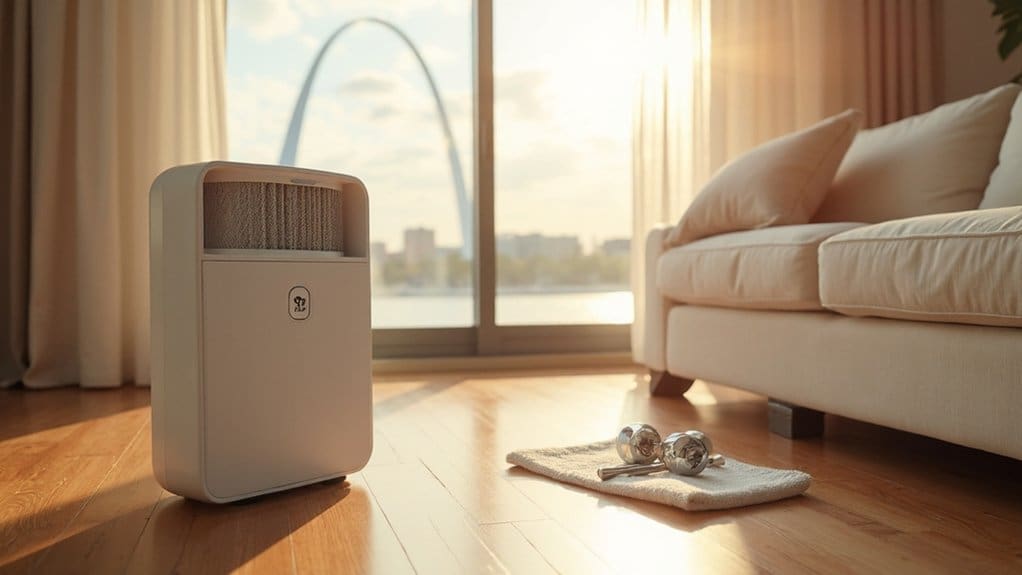
You’ll need to replace your air cleaner’s filters every 1-3 months depending on household size, pets, and usage frequency. Watch for warning signs like decreased airflow, unusual noises, persistent odors, or visible dust buildup inside the unit. While you can handle basic filter changes yourself, UV lamp replacements and complex internal cleaning require professional expertise every 1-2 years. Proper maintenance guarantees ideal air quality, prevents costly repairs, and optimizes your system’s energy efficiency and lifespan for thorough protection.
Key Takeaways
- Replace air filters every 1-3 months depending on household factors like pets, occupancy, and system usage frequency.
- Monitor for maintenance signs including decreased airflow, unusual noises, persistent odors, and visible dust or debris buildup.
- Schedule professional annual maintenance for UV lamp replacement, carbon filter changes, and complex internal system cleaning.
- Choose appropriate filtration systems based on needs: portable units for single rooms or whole-house HVAC-integrated systems.
- Handle basic filter replacements yourself but rely on professionals for specialized components to avoid equipment damage.
Understanding Different Types of Air Cleaning Systems for Your Home
Indoor air quality directly impacts your family’s health and comfort, making the choice of air cleaning system crucial for your home. You’ll encounter two main categories: portable units and thorough whole-house air filtration systems that integrate with your HVAC system.
Portable air purifiers target single rooms, while whole-house systems provide extensive protection throughout your entire home. When selecting air filters, you’ll need to understand MERV ratings, which measure filtration effectiveness. Higher MERV ratings capture smaller particles more efficiently.
Your air purification system can include multiple technologies. Activated carbon filters chemically neutralize volatile organic compounds and odors that standard particle filters miss. Germicidal UV lamps installed in your HVAC system deactivate bacteria and viruses by disrupting their DNA structure.
Each system type requires specific maintenance approaches. Understanding your system’s components helps you maintain optimal performance and safeguards your family’s ability to breathe cleaner air year-round.
Signs Your Air Cleaner Needs Professional Attention
Even the best air cleaning system won’t perform effectively when it needs professional maintenance. You’ll notice decreased airflow when dirty air filters can restrict airflow throughout your system. This reduced cleaning effectiveness signals it’s time for HVAC Maintenance from qualified technicians.
Listen for unusual noises, vibrations, or check if indicator lights aren’t functioning properly. These symptoms require professional inspection to prevent costly repairs. Check and Clean your system regularly, but persistent odors or inability to remove pollutants means you should replace filters immediately.
Visual inspection reveals important clues too. If you see dust, debris, or mold growth inside your unit, professional cleaning becomes essential. Don’t ignore your filter replacement schedule – failing to Clean or Replace air filters regularly reduces performance and shortens your system’s lifespan.
Professional attention guarantees your air cleaner operates efficiently, protecting your St. Louis home’s indoor air quality year-round.
Essential Filter Replacement and Cleaning Schedules
While professional maintenance addresses major issues, maintaining your air cleaner’s peak performance depends on following consistent filter replacement and cleaning schedules.
You should replace air filters every 1-3 months to maintain proper airflow and optimize your HVAC system’s efficiency. Dirty filters restrict airflow, forcing your system to work harder and reducing energy efficiency while compromising indoor air quality.
Your replacement schedule varies based on specific factors. If you have multiple occupants or pets, you’ll need more frequent changes. Heavy system usage during peak seasons also demands closer attention to filter condition.
Don’t guess when to replace filters. Check your manufacturer’s recommendations for your specific system, or consult an HVAC professional for personalized guidance. This simple maintenance task delivers significant returns – improved air quality, enhanced energy efficiency, and extended system lifespan.
Regular filter maintenance isn’t just recommended; it’s essential for protecting your investment and ensuring clean, healthy air throughout your St. Louis home.
Maintaining UV Light Components and Carbon Filters
Beyond standard filter maintenance, many air cleaning systems include specialized components like UV lights and carbon filters that require their own maintenance schedules. Your HVAC system’s UV lamps need replacement every 1-2 years because their disinfecting ability gradually weakens over time. These lamps deactivate harmful microbes, but neglecting their maintenance reduces your system’s air purification effectiveness.
Carbon filters require attention every 6-12 months as they become saturated with captured volatile organic compounds and lose their adsorption capacity. When these filters reach saturation, they can’t effectively remove VOCs from your indoor air.
Professional HVAC technicians should inspect and service these specialized components to guarantee ideal performance. Proper maintenance of UV lamps and carbon filters is essential for protecting your equipment and maintaining superior indoor air quality. Skipping this maintenance decreases your system’s overall air purification capabilities and can negatively impact energy efficiency throughout your home.
Troubleshooting Common Air Purification System Problems
Why does your air purification system suddenly seem less effective at cleaning your home’s air? Several common issues can compromise your system’s performance, but you can identify and address most problems yourself.
First, check your air filters. Dirty or clogged filters restrict airflow and reduce your air purification system’s efficiency. Replace them according to manufacturer guidelines to maintain ideal performance.
Next, inspect your air purifiers’ motors and fans. Malfunctioning components prevent proper air circulation and filtration throughout your home. Listen for unusual noises or reduced airflow that indicate mechanical problems.
Examine your ductwork connections carefully. Loose or damaged joints allow unfiltered air to bypass your purification system entirely, reducing overall effectiveness.
Clean dust and debris from UV-C lamps regularly, as accumulation impairs their sanitizing capabilities.
Finally, don’t forget your carbon filters. When you fail to replace them as recommended, your system loses its ability to eliminate odors and volatile organic compounds effectively.
Professional vs. DIY Air Cleaner Maintenance Tasks
Maintaining your air cleaner effectively requires understanding which tasks you can handle yourself and which ones need professional expertise. You can easily change filters every 1-3 months at home, which keeps your HVAC system running smoothly. This simple DIY task doesn’t require special tools or training.
However, complex internal cleaning, UV bulb replacements, and thorough inspections need professional attention. During a maintenance check, technicians will inspect components you can’t safely access, identifying issues like clogs, loose connections, or wear patterns. They’ll clean internal parts and ensure maximum performance using specialized equipment.
Professional maintenance should occur annually to extend your system’s lifespan and maintain efficiency. Regular maintenance by qualified HVAC professionals prevents costly repairs and protects your warranty. Attempting complex repairs without proper training can damage equipment and create safety hazards. While you’ll handle basic filter changes, leave technical work to experts who understand your system’s intricate components.
Maximizing Energy Efficiency Through Proper Air Cleaner Care
Proper air cleaner maintenance directly impacts your energy bills and system performance. When you replace air filters every 1-3 months, you’ll boost your HVAC system efficiency by up to 15% through improved airflow. Don’t overlook your outdoor condenser unit – annual cleaning increases efficiency by 10% and extends equipment lifespan.
Schedule professional HVAC inspections yearly to maintain 95% of your system’s efficiency by catching issues early. Your air ducts also need attention every 3-5 years, as professional cleaning improves airflow by 20% while enhancing indoor air quality.
Consider upgrading to a smart thermostat for maximum energy savings – you can reduce consumption by up to 30% through automatic temperature adjustments based on occupancy patterns. These maintenance practices work together to optimize your air conditioning system’s performance. When you consistently maintain your air cleaner and related components, you’ll see lower energy bills and better comfort throughout your St. Louis home.
When to Upgrade Your Current Air Cleaning Equipment
When should you consider replacing your air cleaning equipment? If your current system can’t effectively remove particulate matter or has exceeded its 5-10 year lifespan, it’s time for an upgrade. You’ll notice decreased performance when your HVAC system running longer cycles or indoor air quality declining despite regular filter changes.
Whole-house air purification systems integrated with your existing HVAC offer superior coverage compared to portable units. These systems better improve your homes’ overall air quality by treating all circulated air. Consider upgrading to a smart air cleaning system that monitors your home’s air quality automatically and adjusts accordingly.
Your household’s changing needs also warrant upgrades. Additional occupants, new pets, or increased sensitivity to allergens may exceed your current system’s capacity. Schedule a maintenance consultation to evaluate whether your equipment meets current demands. Professional assessment helps determine if repairs suffice or if upgrading provides better long-term value for extensive air cleaning.
Frequently Asked Questions
What Maintenance Does an Air Purifier Need?
You’ll need regular filter replacement every 6-12 months, monthly pre-filter cleaning, fan motor servicing, filter condition monitoring, and inlet/outlet cleaning. These energy efficiency measures maintain ideal odor removal effectiveness and prevent noise level issues.
How Much Does a Home Air Purification System Cost?
Like Goldilocks seeking the perfect fit, you’ll find air purification systems ranging from $600-$4,000 including average installation fees. Factor in monthly operating costs, energy efficiency ratings, HEPA filter replacement, and maintenance service contracts when budgeting.
Are Whole Home Air Cleaners Worth It?
You’ll find whole home air cleaners worthwhile if you prioritize air cleaner effectiveness and energy efficiency. Consider air cleaner installation requirements, filter replacement costs, noise levels, and performance testing before deciding based on your environmental impact priorities.
What Is the Lifespan of an Air Purifier?
Your air purifier won’t last forever, but you’ll typically get 5-10 years before device performance degradation occurs. HEPA filter lifespan runs 6-12 months, while filter replacement duration varies by usage and maintenance schedule.
Conclusion
You’ll breathe easier knowing that properly maintained air cleaners can remove up to 99.97% of airborne particles from your St. Louis home. Don’t let neglected filters and dirty components compromise your family’s health or spike your energy bills. Whether you’re tackling basic maintenance yourself or calling professionals for complex repairs, consistent care keeps your air purification system running efficiently. Stay proactive with regular upkeep, and you’ll enjoy cleaner indoor air year-round while protecting your investment.