
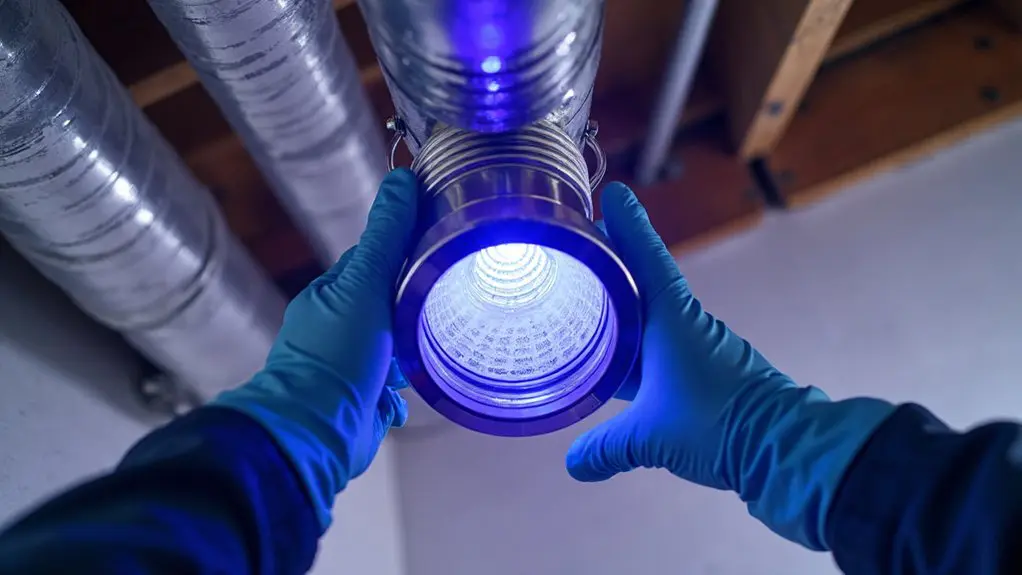
St. Louis homeowners face year-round allergen challenges as Missouri’s climate creates ideal conditions for tree pollen, mold spores, and ragweed that infiltrate your home through HVAC systems. UV light installation in your ductwork eliminates over 99% of these airborne contaminants by destroying their DNA structure, preventing reproduction and circulation throughout your living spaces. Professional installation guarantees favorable positioning for peak effectiveness against Missouri’s seasonal allergens while extending your HVAC system’s lifespan and reducing maintenance costs through continuous air purification.
Key Takeaways
- UV light systems eliminate over 99% of mold, bacteria, and pollen circulating through HVAC ducts in Missouri homes.
- Professional installation positions UV lamps strategically within air systems to maximize effectiveness against seasonal allergens year-round.
- In-duct and coil-mounted UV lights continuously disinfect air while preventing microbial buildup that reduces system efficiency.
- UV technology addresses St. Louis’s extended allergy season by destroying airborne contaminants from early spring through late fall.
- Regular bulb replacement every 12-24 months maintains optimal disinfection power against Missouri’s persistent mold spores and pollen.
Understanding Missouri’s Seasonal Allergen Challenges
Missouri’s unique climate creates a perfect storm for allergy sufferers, with hot, humid summers and cold winters fostering ideal conditions for tree, grass, and weed pollens alongside persistent mold spores. If you’re living in St. Louis, you’re facing one of the nation’s most challenging environments for seasonal allergies, ranking 15th worst for spring allergens according to the Asthma and Allergy Foundation of America.
Your allergy season extends from early spring through late fall, exposing you to relentless airborne allergens. Urban development, increased vehicle emissions, and climate change have intensified pollen and mold concentrations throughout the region. These outdoor allergens don’t stay outside—they infiltrate your home through windows, doors, and HVAC systems, compromising your indoor air quality.
When your HVAC systems circulate contaminated air, mold and other allergens spread throughout your living spaces, making every breath a potential trigger for allergic reactions.
How HVAC UV Light Technology Works Against Airborne Contaminants
The science behind HVAC UV light technology targets airborne contaminants at their most vulnerable point—their genetic structure. When you install UV lights in your air conditioning systems, they emit ultraviolet radiation that destroys the DNA of bacteria, viruses, and mold spores. This prevents these harmful microorganisms from reproducing and spreading throughout your air ducts.
Your HVAC system’s UV lights work continuously, providing round-the-clock disinfection that considerably improves your indoor air quality. They’re particularly effective against Missouri’s seasonal allergens like pollen, dust, and pet dander that commonly circulate through ductwork. The technology also keeps your HVAC coils clean by eliminating contaminants that would otherwise accumulate on these surfaces.
This cleaning action enhances airflow efficiency, reducing your energy costs while preventing mold and mildew growth. Unlike complex air purification systems, UV lights require minimal maintenance—you’ll only need to replace the bulb periodically for continued protection.
Benefits of UV Light Installation for St. Louis Homeowners
Since St. Louis experiences challenging seasonal allergens and humidity fluctuations, installing UV lights in your HVAC system delivers significant benefits for your home’s Indoor Air Quality. You’ll eliminate over 99% of mold, bacteria, and viruses passing through your air system, creating healthier breathing conditions for your family.
UV technology breaks down chemicals from tobacco smoke and pet odors, keeping your home’s air fresh and clean. Your HVAC system will operate more efficiently since UV lights prevent mold, mildew, and bacteria buildup in ductwork, extending equipment lifespan and reducing maintenance costs.
If you’re sensitive to indoor air contaminants, UV air purification helps prevent air conditioning-related illnesses that commonly affect St. Louis residents. The system effectively addresses Missouri’s high pollen counts and mold spores that infiltrate homes throughout spring and summer months. You’ll breathe easier knowing your Indoor Air Quality remains consistently protected year-round.
Types of UV Light Systems for HVAC Integration
Understanding these benefits helps you make informed decisions about which UV light system best fits your St. Louis home’s heating and cooling needs. Several UV light configurations integrate seamlessly with your HVAC system to enhance indoor air quality beyond traditional air filters.
In-duct UV lights install directly into your ductwork, continuously disinfecting circulating air as it moves through your home. These systems eliminate bacteria, viruses, and mold spores that standard air filters can’t capture.
Coil-mounted UV lights target your air conditioning coil, preventing microbial buildup that reduces system efficiency. This placement keeps your HVAC components cleaner while improving performance.
Three primary UV air purifier technologies include:
- Germicidal UV-C systems – Destroy airborne microorganisms using specific wavelengths
- Photocatalytic oxidation units – Combine UV light with titanium dioxide catalysts to eliminate volatile organic compounds and odors
- Whole-home integration systems – Use multiple UV lamps for extensive air cleaning throughout your living space
Professional Installation Process and Placement Considerations
Proper UV light placement requires professional expertise to guarantee maximum effectiveness and safety within your HVAC system. Certified technicians evaluate your specific system configuration to determine ideal UV lamp positioning within the ductwork or air handler. They’ll assess airflow patterns, coil accessibility, and electrical requirements before installation.
Professional installers secure UV systems target critical areas where mold, bacteria, and allergens accumulate—typically near evaporator coils and drain pans. They’ll position lamps to maximize air exposure time while protecting system components from UV damage. Proper electrical connections and safety switches prevent accidental exposure during maintenance.
In the St. Louis area, experienced HVAC professionals understand local humidity challenges that affect UV system performance. They’ll integrate purification systems seamlessly with your existing equipment, ensuring treated air circulates effectively throughout your home. Professional installation includes system testing, airflow verification, and maintenance scheduling to keep your UV purification systems operating at peak efficiency against Missouri’s seasonal allergens.
Maintenance Requirements and Replacement Schedules
Once your UV light system is professionally installed, ongoing maintenance becomes your responsibility to preserve its air purification capabilities. Your UV air purifier requires consistent attention to combat Missouri’s challenging allergen seasons effectively.
UV bulbs typically need replacement every 12-24 months to maintain their disinfection power. Following your manufacturer’s maintenance schedule guarantees optimal performance and maximizes your investment’s lifespan. Neglecting timely replacement dramatically reduces air purification efficacy when you need it most.
Essential maintenance tasks include:
- Regular bulb and housing cleaning – Remove dust and debris that accumulate and block UV light transmission
- Professional HVAC system inspections – Schedule annual checkups to identify potential issues before they compromise performance
- Timely UV bulb replacement – Don’t wait beyond recommended intervals, as diminished output occurs gradually and isn’t visually apparent
Professional technicians can integrate UV maintenance into your regular HVAC service appointments, ensuring your system continues protecting your family from Missouri’s seasonal allergens year-round.
Choosing the Right UV Light System for Your Home’s Needs
When selecting a UV light system for your home, you’ll need to evaluate several essential factors that directly impact your air purification results. Your home’s size and HVAC system capacity determine the wattage requirements for effective microbial elimination. Larger homes need higher-wattage UV light air purifiers to accommodate increased airflow and coverage areas.
Consider your specific air quality challenges. If you’re battling Missouri’s seasonal allergens, mold issues, or persistent odors, you’ll want a more robust UV light system. The placement within your home’s HVAC system ductwork is equally vital—proper positioning ensures maximum exposure to circulating air.
Higher wattage units provide stronger germicidal power, eliminating up to 99% of airborne bacteria, viruses, and mold spores. This enhanced performance translates to better results when you Improve Indoor Air Quality throughout your living space. Evaluate your family’s health needs, existing air quality problems, and budget to select the most appropriate system for ideal indoor air quality enhancement.
Conclusion
You’ll transform your home into an allergen-fighting fortress that’ll make Missouri’s brutal pollen seasons feel like gentle spring breezes. With UV light technology blazing through your HVAC system, you’re wielding a microscopic sword that slashes through millions of airborne invaders every single minute. Don’t let another season turn your sanctuary into a sneeze-fest nightmare—install UV lights and breathe like you’ve escaped to the cleanest mountain peak on Earth.