
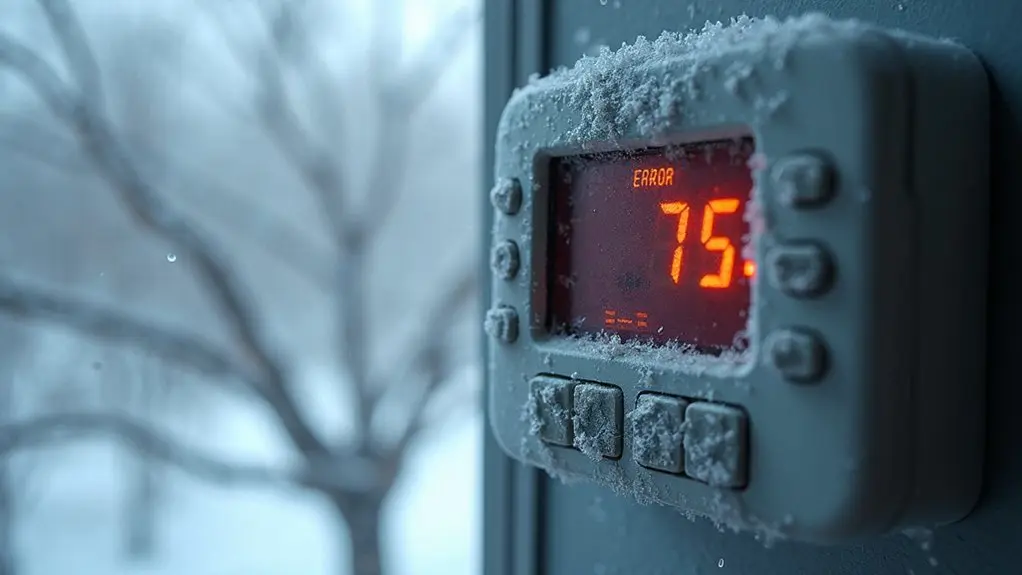
Your thermostat fails during Missouri winters due to inaccurate temperature readings caused by extreme cold fluctuations, dead batteries from increased system usage, and calibration issues that prevent proper HVAC communication. These problems strain your heating system when you need it most, leading to uncomfortable temperatures and potential system breakdowns. Poor air filtration and neglected maintenance compound these issues, creating thermostat signal errors that impact your home’s comfort and energy efficiency throughout St. Louis’s harsh winter months.
Key Takeaways
- Inaccurate temperature readings prevent heat exchangers from optimizing performance during Missouri’s harsh winter conditions.
- Neglected air filter changes reduce airflow and strain HVAC components, affecting thermostat accuracy in cold weather.
- Thermostat calibration issues become more pronounced during winter months, leading to system failures and reduced comfort.
- Lack of annual HVAC tune-ups allows thermostat problems to go undetected until winter system breakdowns occur.
- Outdated thermostats struggle with Missouri’s temperature fluctuations, making upgrades essential for reliable winter operation.
Common Thermostat Problems That Plague St. Louis Homes in Winter
Missouri’s harsh winter conditions create a perfect storm of thermostat malfunctions that’ll leave you shivering in your own home. Dead batteries top the list of culprits—your thermostat’s display dims or goes blank entirely, preventing your heating system from receiving essential temperature commands. You’ll notice uneven heating throughout rooms when calibration drifts occur, forcing your HVAC systems to work inefficiently.
Wiring connections loosen from temperature fluctuations, disrupting communication between your thermostat and furnace. Dust accumulation blocks sensors, causing inaccurate temperature readings that trigger constant cycling. Programming glitches reset your schedule settings, leaving you with unexpected temperature drops during cold months.
These seemingly minor issues compound quickly, preventing your system from working properly when you need it most. Installing new batteries at season’s start addresses the most common failure point. Regular sensor cleaning and professional calibration checks guarantee accurate operation throughout winter’s demanding conditions.
How Missouri’s Extreme Cold Weather Affects Thermostat Performance
When temperatures plummet below freezing, your thermostat’s electronic components face unprecedented stress that disrupts normal operation. Missouri’s harsh winter conditions create multiple failure points that compromise your heating systems’ essential reliability.
Battery-powered thermostats experience rapid power drain in extreme cold, causing complete shutdowns when you need air circulation most. Temperature sensors lose accuracy during sudden drops, delivering false readings that prevent your HVAC system from maintaining proper indoor climate control.
Condensation becomes a critical threat when Missouri’s fluctuating winter temperatures create moisture buildup inside your thermostat housing. This moisture interferes with delicate electronic circuits, causing erratic behavior and communication failures between your thermostat and heating equipment.
The cold also makes thermostat wiring brittle and prone to cracking, severing the crucial connection between your temperature control device and HVAC systems. Older, low-quality thermostats prove especially vulnerable to Missouri’s punishing winter conditions, often requiring immediate replacement to restore reliable heating operation.
Dead Batteries and Power Issues: The Leading Cause of Winter Thermostat Failures
Although your heating system may appear perfectly functional, dead batteries represent the primary culprit behind 70% of winter thermostat failures in St. Louis. When battery power drops, your thermostat display shuts off completely, severing communication between your heating and cooling system components.
Power surges during Missouri’s winter storms particularly damage older thermostats that lack surge protection. These electrical disruptions interfere with electronic ignition systems, preventing your HVAC system work from operating efficiently. You’ll notice inconsistent temperature readings when wiring connections deteriorate in freezing conditions.
To guarantee reliable operation, replace thermostat batteries twice yearly before winter arrives. Install a new surge protector specifically designed for heating systems if you’re using an older model. Consider upgrading to a battery backup thermostat that maintains system communication during power outages. Regular battery maintenance prevents costly service calls and guarantees your Louis home stays warm when temperatures plummet unexpectedly.
Calibration Problems That Leave Your Home Uncomfortable During Cold Snaps
Beyond battery failures, thermostat calibration errors create temperature discrepancies that can leave your St. Louis heating system running inefficiently when you need it most. When your thermostat reads temperatures incorrectly, it triggers unnecessary cycles that increase energy consumption while failing to maintain comfort levels.
Common calibration issues include:
- Temperature sensor drift – Internal sensors lose accuracy over time, reading 3-5 degrees off actual room temperature
- Placement problems – Thermostats near heat sources or drafts receive false readings that affect your new furnace’s operation
- Dust accumulation – Debris on internal components disrupts sensor functionality during HVAC maintenance intervals
- Age-related deterioration – Older units struggle with precise temperature control as seasons change
You’ll notice these problems when your home feels cold despite the thermostat showing your desired temperature. Professional HVAC repair technicians can recalibrate your system, ensuring accurate readings that help you stay comfortable while optimizing heating performance throughout Missouri’s harsh winter months.
Wiring Issues and Electrical Malfunctions in Freezing Temperatures
As Missouri’s winter temperatures plummet below freezing, your thermostat’s wiring becomes vulnerable to electrical malfunctions that can disable your entire heating system.
Cold weather causes wire insulation to contract and become brittle, creating micro-cracks that disrupt electrical connections. You’ll notice symptoms like intermittent heating cycles, unresponsive controls, or complete system shutdown. The blower motor may fail to activate, while your AC unit’s control circuits can experience voltage drops that affect heating mode operation.
Corroded connections worsen in freezing conditions, particularly affecting pilot lights and ignition systems. These electrical failures often indicate serious underlying wiring degradation that compromises safety and efficiency. Loose wire nuts, damaged thermostat cables, and failing transformers can lead to significant repair costs if left unaddressed.
Don’t attempt DIY electrical repairs on heating systems. Contact professional heating technicians who can diagnose wiring problems using specialized equipment and safely get your system back up and running before temperatures drop further.
Signs Your Thermostat Needs Emergency HVAC Service This Winter
When should you call for emergency HVAC service instead of waiting until morning? Certain thermostat failures demand immediate St. Louis HVAC attention to prevent system damage and maintain safe indoor temperatures.
Call us immediately if you experience these critical warning signs:
- Complete system shutdown – Your heating system won’t respond to thermostat commands, leaving you without warm air for extended periods of time
- Erratic temperature swings – Thermostat displays show wildly fluctuating readings while actual temperatures remain dangerously cold
- No air flow detection – Your system runs continuously but produces zero heated air circulation throughout your St. Louis area home
- Electrical burning odors – Any smell of burning plastic or wiring near your thermostat indicates potential fire hazards
Don’t risk frozen pipes or system failure during Missouri’s harsh winter nights. When your thermostat exhibits these emergency symptoms, contact us for immediate professional intervention. Waiting until morning can result in costly repairs and dangerous living conditions.
Preventing Thermostat Failures Through Proper Maintenance and Care
The most effective defense against winter thermostat failures lies in consistent preventive maintenance throughout the year. You’ll prevent costly breakdowns by replacing thermostat batteries regularly and inspecting wiring connections before Missouri’s harsh winter conditions stress your system.
Proper thermostat placement away from direct sunlight and drafts guarantees accurate temperature readings, preventing your heat exchanger from overworking. When your thermostat reads incorrectly, it can’t properly regulate air throughout your home, affecting both heating and air conditioning efficiency.
Replace your air filter monthly to maintain ideal indoor air quality and prevent system strain that impacts thermostat performance. Clean air filters guarantee proper airflow, reducing stress on components. Air conditioners and heating systems depend on accurate thermostat signals to function efficiently.
Schedule annual HVAC tune-ups to identify thermostat calibration issues before they cause failures. Upgrading to programmable or smart thermostats improves system reliability and energy efficiency, giving you better control over your home’s comfort during winter months.
Conclusion
You’ve mastered the art of thermostat neglect—congratulations! You’ll continue experiencing midnight heating failures, astronomical energy bills, and Arctic living room temperatures until you acknowledge that your thermostat isn’t immortal. You can’t expect decade-old batteries and corroded wiring to perform miracles during Missouri’s brutal winters. Schedule preventive maintenance, replace components proactively, and monitor calibration regularly. Otherwise, you’ll keep funding emergency HVAC repairs while shivering in your own home.