
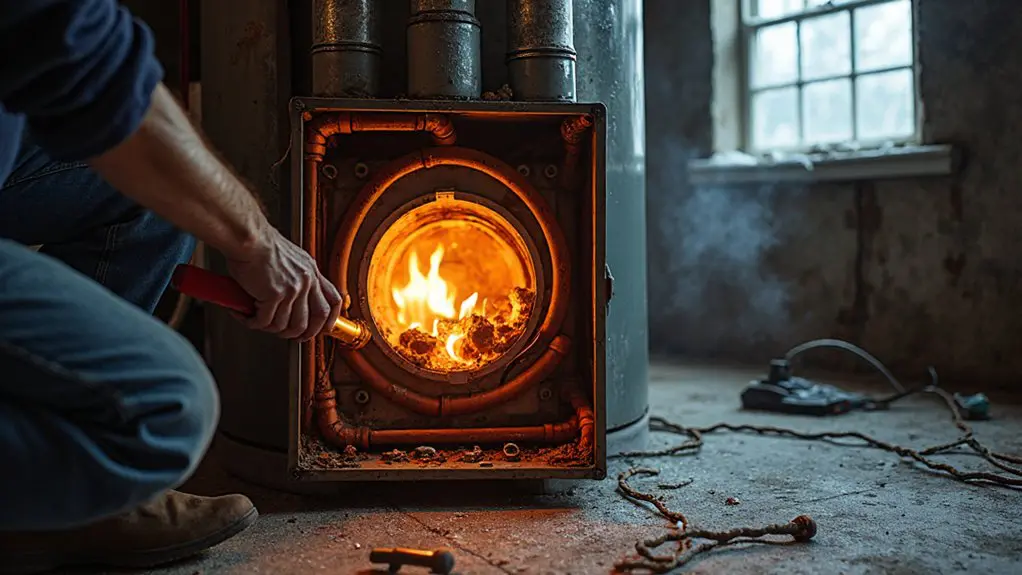
You’ll need to schedule a professional HVAC inspection with a NATE-certified technician to guarantee your furnace runs efficiently this winter. Replace air filters every 1-3 months, test your thermostat’s accuracy, and have the heat exchanger cleaned and inspected for cracks that could cause dangerous carbon monoxide leaks. Don’t forget to check ventilation systems and replace carbon monoxide detector batteries. These essential steps will help you avoid costly emergency repairs and discover additional maintenance strategies.
Key Takeaways
- Schedule annual HVAC inspection with NATE-certified technician to boost furnace efficiency up to 30% and prevent winter breakdowns.
- Replace air filters every 1-3 months and inspect blower components to maintain efficient airflow and improved indoor air quality.
- Test thermostat programming, calibrate temperature readings, and replace batteries to ensure reliable heating system operation throughout winter.
- Have heat exchanger professionally cleaned and inspected for cracks annually to prevent dangerous carbon monoxide leaks.
- Examine furnace vents for blockages and replace carbon monoxide detector batteries to maintain safe heating system operation.
Schedule Professional HVAC System Inspection and Tune-Up
Before temperatures plummet, you’ll want to schedule an annual HVAC system inspection and tune-up with a licensed, NATE-certified technician. This professional maintenance guarantees your furnace operates safely and efficiently throughout winter’s harsh months.
During the inspection, technicians check for wear and tear, clean critical components, calibrate controls, and identify potential issues that could cause breakdowns when you need heating most. They’ll examine your entire system, including air filters, ductwork, and safety mechanisms.
Professional tune-ups can boost your furnace efficiency by up to 30%, directly reducing energy costs while extending your system’s lifespan. More importantly, routine inspections detect dangerous safety hazards like gas leaks or carbon monoxide issues, protecting your family’s well-being.
Don’t wait until cold weather arrives to call for HVAC maintenance. This investment pays for itself through improved performance, energy savings, and prevention of costly emergency repairs during St. Louis’s coldest days.
Replace Air Filters and Check System Components
While professional maintenance covers thorough system checks, you can tackle several important maintenance tasks yourself to maintain your furnace running smoothly. Replace air filters every 1-3 months to guarantee efficient airflow and improve indoor air quality. Dirty filters force your heating system to work harder, wasting energy and reducing performance.
Regular Furnace maintenance in St. Louis should include inspecting blower components like the fan and motor for proper operation. Check your thermostat to confirm it’s accurately reading and controlling room temperature. Small calibration issues can substantially impact energy efficiency.
Examine your ductwork for leaks or blockages that could compromise system performance. Look for disconnected joints, holes, or debris that restricts airflow. These routine maintenance tasks help keep your HVAC system ready for winter’s demands.
However, don’t skip professional inspections entirely. Technicians can identify complex issues with furnace maintenance in St. Louis that require specialized knowledge and tools to address safely.
Test and Calibrate Your Thermostat Settings
Accuracy in thermostat operation directly impacts your heating system’s efficiency and your comfort throughout St. Louis’s cold winter months. Your home’s heating and cooling control center requires proper calibration to prevent your furnace running inefficiently or cycling on and off unnecessarily.
Start by switching your thermostat from cooling to heating mode. Verify the programming matches your desired schedule and temperature preferences for ideal heating systems performance. Replace the batteries to guarantee reliable operation when you need it most.
Test calibration by comparing your thermostat’s reading with a separate thermometer placed nearby. If there’s a significant difference, recalibration may be necessary. This routine furnace maintenance is crucial for preventing energy waste and maintaining consistent temperatures.
Check that your thermostat responds properly to temperature adjustments. If it’s unresponsive or displaying error messages, contact an HVAC professional immediately. Proper thermostat function guarantees Safe Operation of your entire heating system throughout winter.
Clean Heat Exchanger and Check for Cracks
The heart of your furnace system, the heat exchanger, demands professional attention to maintain safe and reliable operation during St. Louis winters. You’ll need annual cleaning by a qualified technician to guarantee your well-maintained furnace delivers dependable heating throughout the cold season.
Routine maintenance includes thorough inspection for cracks or deterioration that could cause dangerous carbon monoxide leaks. These invisible threats pose serious health risks, making professional detection and repair absolutely critical. Your technician will examine every surface, identifying potential problems before they become hazardous.
Neglecting this essential maintenance drastically reduces your furnace’s lifespan and effectiveness. Poor efficiency means higher energy bills and inadequate heating when you need it most. Crucial for St. Louis homeowners, proper heat exchanger care prevents costly furnace repair emergencies during peak winter months.
Don’t compromise on safety or comfort—schedule your annual heat exchanger cleaning and inspection before temperatures drop. This investment protects your family while ensuring optimal furnace performance all season long.
Inspect Ventilation Systems and Carbon Monoxide Detectors
Beyond heat exchanger maintenance, your furnace’s ventilation system requires equally thorough inspection to prevent deadly carbon monoxide from entering your home. Furnace vents can develop cracks or become clogged over time, creating dangerous leaks that threaten your family’s safety.
During professional Maintenance Service visits, technicians must examine all ventilation components for damage and blockages. Your furnace requires proper airflow to operate safely, and compromised vents can redirect harmful gases into living spaces instead of outside.
Don’t overlook carbon monoxide detector maintenance. Replace batteries annually to guarantee these life-saving devices function properly. Regular maintenance of both your heating and air conditioning systems includes checking all safety equipment.
Routine maintenance keeps your ventilation system operating correctly and prevents serious health risks. Neglecting these essential safety checks can lead to carbon monoxide poisoning. Schedule annual inspections to confirm that your furnace and its ventilation components protect rather than endanger your household throughout winter months.
Weatherproof Your Home to Maximize Efficiency
While proper ventilation safeguards your family’s security, maximizing your furnace’s efficiency requires extensive weatherproofing throughout your home. You’ll dramatically reduce energy costs by sealing gaps around windows, doors, and entry points that create drafts and force your system to work harder.
Proper attic insulation prevents heat loss, improving energy efficiency while minimizing wear and tear on your furnace components. When your HVAC system doesn’t struggle against air leaks, you’ll extend the life of expensive equipment and avoid costly repairs from overworked motors and heating elements.
Comprehensive weatherproofing can reduce energy consumption by up to 30%, making it one of the most effective maintenance strategies available. Meyer Heating & Air conducts thorough inspections to identify ductwork leaks and provides professional sealing solutions.
Schedule a maintenance appointment before winter arrives to assess your home’s weatherproofing needs. This proactive approach guarantees ideal furnace performance throughout St. Louis’s coldest months.
Listen for Unusual Sounds and Check for Strange Odors
As your furnace cycles through its heating process, unusual sounds can reveal critical mechanical issues before they escalate into expensive repairs. Pay attention to banging, rattling, or grinding noises when your system is operating—these warning signs indicate problems requiring immediate attention during the colder months.
Strong or persistent odors demand equal vigilance. A rotten egg smell signals a potential gas leak, requiring you to call in the professionals immediately for safety reasons. Don’t ignore these warning signs, as delayed maintenance can lead to dangerous situations and costly damage.
Monitor your furnace regularly to catch issues before they become major failures. This proactive approach prevents unexpected breakdowns when you need heat most. Professional technicians can diagnose problems early, keeping your system in top condition throughout winter. Remember, addressing unusual sounds and odors promptly protects your family’s safety while avoiding expensive emergency repairs during St. Louis’s coldest weather.
Service Oil-Powered Furnace Filters and Nozzles
Oil-powered furnaces consistently demand more intensive maintenance than their gas counterparts, particularly when it comes to filter and nozzle servicing. You’ll need to replace both components at least once a year to maintain optimal performance. Oil doesn’t burn as cleanly as gas, creating more residue that clogs filters and nozzles over time.
Neglecting this maintenance reduces your furnace’s efficiency and lifespan while increasing energy bills. Clean filters and nozzles guarantee proper oil flow and combustion, helping keep your home warm throughout St. Louis winters. Replace the filter first, then install a new nozzle following manufacturer specifications.
Schedule Furnace maintenance before cold weather arrives to avoid emergency repairs. Professional technicians can service these components alongside other HVAC systems checks. This field is for validation purposes only – proper maintenance validates your investment in reliable heating equipment and prevents costly breakdowns when you need warmth most.
Evaluate Signs Your Furnace May Need Replacement
How can you tell when your furnace has reached the end of its useful life? If your furnace is over 15-20 years old, it’s likely experiencing declining efficiency and mounting repair costs. You’ll notice reduced heating capacity and inconsistent temperatures throughout your home, especially during the coldest days when you need reliable warmth most.
Watch for frequent breakdowns, unusual noises, or electrical malfunctions that indicate your system isn’t running smoothly. Unexpectedly high energy bills often signal declining efficiency. Poor air quality, excessive dust, or carbon monoxide presence are serious warning signs your system needs immediate attention.
When repair costs exceed 50% of a new furnace’s value, replacement becomes more economical. Don’t wait until the cold season arrives to address these issues. Guaranteeing an aging furnace your system is in top condition and ready for winter’s demands, giving you peace of mind throughout the heating season.
Benefits of Preventative Maintenance for Winter Reliability
Preventative maintenance transforms your furnace from a potential winter liability into a reliable heating partner that delivers consistent warmth when you need it most. You’ll boost efficiency by up to 30%, saving money on energy bills while guaranteeing consistent temperatures throughout your home. Regular tune-ups prevent unexpected breakdowns during St. Louis’s harshest winter days, keeping your home cozy when temperatures plummet.
Professional maintenance improves indoor air quality by removing dust, dander, and pollutants that circulate through your system. You’ll also reduce safety risks like gas leaks, electrical malfunctions, and fire hazards. Well-maintained furnaces from top brands operate more reliably and increase your home’s resale value.
This investment pays for itself through lower repair costs and extended equipment life. Brothers heating professionals provide thorough maintenance services that assure winter reliability. Call us today to schedule your preventative maintenance appointment. Standard data rates may apply for scheduling confirmations.
Conclusion
You’ve scheduled your inspection, you’ve replaced your filters, and you’ve tested your thermostat. You’ve cleaned your heat exchanger, you’ve checked your detectors, and you’ve listened for warning signs. You’ve serviced your oil system, you’ve evaluated replacement needs, and you’ve invested in preventative care. Now you’re ready for St. Louis winter’s harshest days. Your furnace won’t fail when temperatures drop, your family won’t shiver through cold nights, and you won’t face emergency repair costs.