
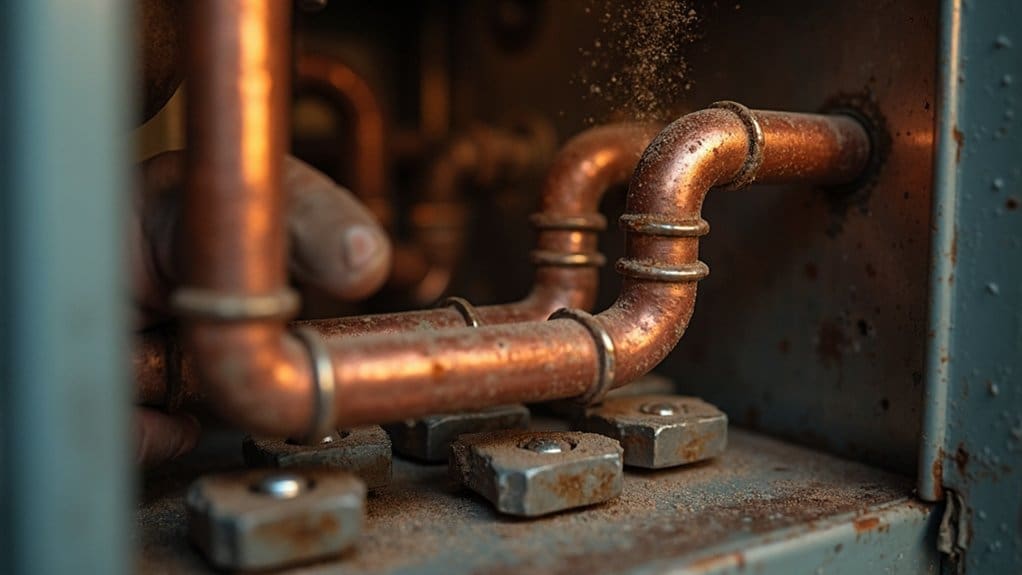
Strange furnace noises shouldn’t be ignored, as they’re warning signs of potential problems. Banging sounds indicate delayed ignition that can crack your heat exchanger, while squealing suggests blower motor issues. Rattling typically means loose components, and continuous clicking points to ignition system problems. Whistling usually indicates restricted airflow from clogged filters, but hissing could signal dangerous gas leaks. You’ll need professional repair for safety hazards like cracked heat exchangers or gas leaks, though understanding each noise’s meaning helps you prioritize urgency.
Key Takeaways
- Banging or booming sounds indicate delayed ignition, which can crack heat exchangers and requires immediate professional repair.
- Squealing and screeching noises typically signal blower motor problems, including worn bearings, slipping belts, or electrical issues.
- Rattling or vibrating sounds usually mean loose components or potentially dangerous cracked heat exchangers with carbon monoxide risks.
- Clicking or ticking noises indicate ignition system problems, such as faulty gas valves or worn ignition components.
- Whistling suggests restricted airflow from clogged filters, while hissing sounds may indicate serious gas leaks requiring immediate attention.
Banging or Booming Sounds From Your Furnace
When your furnace produces loud banging or booming sounds, you’re likely dealing with delayed ignition that causes dangerous gas buildup in the system. This gas accumulation creates explosive combustion that can crack your heat exchanger, resulting in expensive repairs requiring immediate professional attention.
The banging and booming noises indicate your furnace isn’t igniting properly, allowing gas to collect before suddenly combusting. This delayed ignition puts tremendous stress on your heat exchanger, potentially causing it to develop cracks that compromise your system’s safety and efficiency.
However, these sounds aren’t always related to gas issues. Sometimes expanding and shifting ductwork creates similar noises as metal components heat up and cool down during operation.
Regardless of the cause, you shouldn’t ignore banging or booming sounds from your furnace. Contact a professional repair technician immediately to diagnose the problem and prevent further damage to your heating system.
Squealing, Screeching, and High-Pitched Noises
High-pitched squealing and screeching sounds from your furnace typically signal problems with the blower motor or its components. These noises often indicate worn motor bearings, a slipping belt, or issues with electrical components that control the motor’s operation.
When you hear squealing or screeching, the problem might originate from the blower motor struggling to maintain proper airflow. Damaged bearings create friction, producing these sharp sounds. Sometimes, the control board sends incorrect signals to the motor, causing operational stress.
Don’t ignore these warning signs. While some cases involve simple belt adjustments, others point to serious issues like cracks in the combustion chamber or problems with the gas valve and ignition system. These components work together, and failure in one area can cascade into expensive damage.
Professional attention is essential for proper diagnosis. An experienced heating contractor can identify whether you’re dealing with minor maintenance or critical repairs requiring immediate intervention.
Rattling and Vibrating Sounds
Why does your furnace sound like a maraca shaking in the basement? That rattling or vibrating noise typically signals loose components inside your system. Common culprits include screws, panels, or other hardware that’ve worked themselves free over time.
Don’t ignore these sounds—they’re warning signs. When parts continue rattling, they can shift further and cause costly damage to your furnace. What starts as a simple fix can quickly escalate into an expensive repair if you wait.
More concerning is when rattling occurs near your heat pump or furnace unit itself. This could indicate a cracked heat exchanger, creating serious safety risks due to potential carbon monoxide leaks.
While you might tighten some loose screws yourself, this situation demands professional attention. A technician can properly diagnose whether you’re dealing with minor hardware issues or dangerous problems like heat exchanger damage. Addressing rattling sounds promptly prevents minor issues from becoming major headaches.
Clicking and Ticking Noises
If your furnace sounds like a cricket orchestra, you’re likely hearing clicking or ticking noises from the ignition system. These sounds typically indicate problems with components like a failing gas valve or weak ignition mechanism.
Normal clicking occurs briefly when your furnace starts up, but continuous clicking without successful ignition signals trouble. When you hear clicking sounds that fail to ignite the furnace, it’s a clear red flag that something’s malfunctioning. The ignition system isn’t completing its cycle properly.
Several culprits can cause this issue. A faulty gas valve might not open correctly, preventing fuel from reaching the burner. Worn ignition components can struggle to create the necessary spark. An electrical issue within the furnace can also trigger persistent clicking sounds.
Don’t ignore these warning signs. Continuous clicking without ignition requires immediate attention from a qualified technician. Addressing the problem promptly secures your furnace operates safely.
Whistling and Hissing Sounds
Two distinct high-frequency sounds from your furnace—whistling and hissing—demand immediate attention for different reasons.
A whistling noise typically indicates restricted airflow within your heating system. This sound commonly stems from a clogged air filter that’s blocking proper air circulation. However, ductwork issues like damaged vents or loose connections can also create these sharp, piercing sounds. When you hear whistling, check your filter first—it’s often the source.
Hissing sounds present a more serious concern, potentially signaling a gas leak or other safety hazard. Never ignore these noises, as they require immediate professional inspection to prevent dangerous situations.
Both sounds can lead to reduced system efficiency and higher energy costs if left unaddressed. Whistling forces your furnace to work harder, while hissing may indicate compromised system integrity. Schedule a thorough HVAC inspection promptly when you notice either sound to guarantee safe, reliable operation and prevent costly damage.
Rumbling, Humming, and Buzzing Noises
While high-frequency sounds like whistling and hissing grab your attention immediately, lower-frequency furnace noises can be equally troublesome. A constant humming noise or buzzing noise typically indicates problems with your blower motor, capacitor, or other electrical parts. Don’t dismiss these sounds as normal background noise—they’re warning signs that components may be failing.
A rumbling noise presents different concerns, often pointing to issues with your burner or heat exchanger. These low rumbling sounds shouldn’t be ignored, as they may signal serious wear and tear within your furnace system. When rumbling becomes persistent, it’s time for professional inspection to prevent potential safety hazards.
Loud or disruptive humming warrants immediate attention, as it often signals impending electrical component failure. Whether you’re hearing buzzing, humming, or rumbling, addressing these noises early prevents more serious and expensive furnace repair down the road.
When to Call a Professional for Furnace Repair
How do you know when strange furnace noises require professional intervention rather than simple troubleshooting? Persistent loud noises like buzzing, banging at startup, hissing near gas lines, or scraping metal sounds demand prompt attention from skilled HVAC technicians. These strange sounds often indicate serious issues with your blower motor, heat exchanger, or airflow systems that you can’t safely address yourself.
Don’t ignore concerning furnace noises—they can create safety hazards and lead to expensive repairs if left untreated. Professional service providers perform thorough diagnostics to identify root causes accurately. They’ll thoroughly inspect your furnace components, including the blower motor, heat exchanger, and airflow systems to determine what’s causing the problem.
Calling for professional help when you first notice persistent strange sounds prevents minor issues from escalating into major system failures. Expert technicians provide long-term solutions that restore your furnace’s safe, efficient operation while protecting your investment.
Frequently Asked Questions
When Should I Worry About My Furnace Noise?
You should worry when you notice unusual vibration patterns, abnormal airflow disruptions, or sounds from worn blower components, malfunctioning ignition systems, or faulty electrical connections. Don’t delay periodic maintenance checks.
Why Is My Furnace Making a Weird Sound?
Don’t beat around the bush—your furnace’s weird sounds likely stem from blower motor irregularities, air filter obstructions, or ductwork alignment issues causing unusual vibration patterns that you’ll need professional diagnosis to resolve safely.
What Sounds Were Coming From the Furnace?
You didn’t specify what sounds you’re hearing from your furnace. Common noises include knocking sounds, clicking noises, rumbling vibrations, whistling air flow, buzzing electrical issues, banging metal components, grinding gears, squealing blower fans, rattling ductwork, or clanking exhaust pipes.
What Does a Bad Bearing Sound Like on a Furnace?
Like a banshee’s wail, you’ll hear high pitched squealing sounds and metal on metal screeching sounds from bad bearings. You’ll also notice loud grinding noises, rumbling vibration noises, and labored blower motor noises indicating bearing failure.
Conclusion
Your furnace shouldn’t sound like a haunted house or construction site. While some operational noises are normal, the strange sounds we’ve covered signal potential problems that won’t fix themselves. Here’s a sobering fact: according to HVAC technicians, 73% of emergency furnace calls could’ve been prevented with earlier attention to unusual noises. Don’t wait until you’re shivering in the dark—when you hear persistent banging, squealing, or rattling, it’s time to call a professional before minor issues become major expenses.