
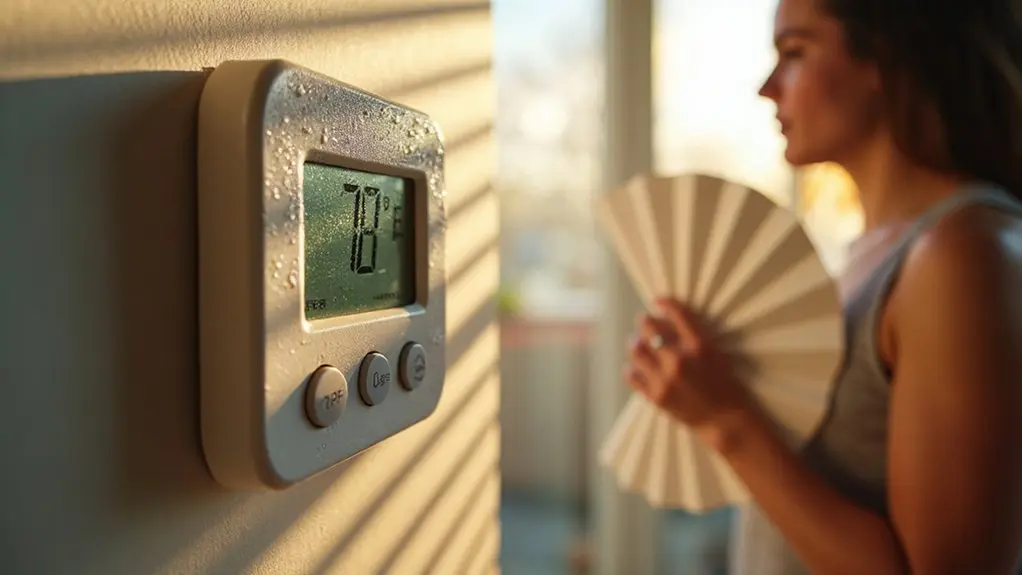
Your thermostat could be sabotaging your summer comfort without you realizing it. Common culprits include poor placement near heat sources or direct sunlight, causing inaccurate temperature readings that make your AC work harder. Dust buildup, faulty wiring, dead batteries, and aging components can also trigger short cycling and inconsistent cooling throughout your home. Even a perfectly functioning AC system can’t maintain comfortable temperatures when your thermostat isn’t communicating properly, but there are solutions you can implement.
Key Takeaways
- Thermostats in direct sunlight or near heat sources cause inaccurate temperature readings and poor cooling performance.
- Short cycling and inconsistent room temperatures often indicate thermostat placement or calibration issues affecting your AC system.
- Dust buildup on thermostat sensors leads to incorrect temperature readings and inefficient HVAC operation during summer months.
- Dead batteries and faulty wiring connections prevent proper communication between your thermostat and cooling system.
- Regular monthly cleaning and proper central placement away from drafts ensures accurate thermostat readings and optimal cooling.
Signs Your Thermostat May Be Causing Cooling Issues
When your home refuses to reach that perfect cool temperature despite your air conditioner running constantly, your thermostat might be the hidden culprit. Several warning signs indicate your thermostat is sabotaging your air conditioning system’s performance.
Notice if your HVAC system experiences short cycling, turning on and off frequently without reaching your desired temperature. This pattern suggests inaccurate temperature readings that confuse your cooling systems performance.
Check if rooms feel inconsistently cooled despite your thermostat’s settings. A faulty thermostat can’t properly communicate with your equipment, leading to uneven cooling efficiency throughout your home.
Observe whether your thermostat sits in direct sunlight or near heat sources. These locations cause false high readings, making your system overwork unnecessarily.
Finally, examine your thermostat for dust buildup or physical damage. Like dirty air filters, an obstructed thermostat can’t accurately sense your environment, resulting in poor temperature control and increased energy consumption.
How Poor Thermostat Placement Affects Your AC Performance
Where you place your thermostat dramatically impacts your air conditioner‘s ability to cool your home effectively. Poor placement creates inaccurate temperature readings that force your HVAC system to work harder than necessary.
When your thermostat’s exposed to direct sunlight, it registers artificially high temperatures, causing your cooling system to over-compensate and run continuously. This leads to skyrocketing energy bills and unnecessary wear on your equipment.
Conversely, positioning your thermostat near drafts or vents creates the opposite problem. Cold air circulation tricks the device into reading lower temperatures, causing your AC to shut off prematurely while other areas remain uncomfortably warm.
Strategic placement in a central, draft-free location guarantees accurate readings and optimal performance. This simple maintenance consideration prevents uneven temperature distribution throughout your home. When your thermostat accurately reflects your indoor climate, your HVAC system operates efficiently, maintaining consistent comfort while keeping energy costs manageable.
Common Thermostat Malfunctions That Impact Summer Comfort
Beyond placement issues, several internal malfunctions can sabotage your thermostat’s ability to maintain comfortable temperatures during hot summer months. Dust buildup around sensors creates incorrect temperature readings, forcing your air conditioning system to work harder than necessary. This contamination interferes with the thermostat’s calibration, leading to inconsistent air temperatures throughout your home.
Faulty wiring connections can cause your air conditioner to cycle on and off unpredictably, wasting energy and failing to reach desired temperatures. A malfunctioning thermostat may also lose its programming, reverting to default settings that don’t match your cooling preferences.
Dead batteries in older units prevent proper communication with HVAC systems, while aging components can drift from accurate temperature sensing. Thermostats placed in drafty areas compound these problems by providing false readings to your cooling system.
Upgrading to a smart thermostat can help diagnose and fix many issues through self-monitoring features and maintenance alerts.
Essential Thermostat Maintenance for Optimal Cooling
The most effective way to prevent thermostat-related cooling problems is through consistent, proactive maintenance that keeps your device functioning at peak performance. Regular maintenance helps identify thermostat issues before they compromise your cooling system’s efficiency.
Essential maintenance tasks include:
- Clean regularly – Cover and clean your programmable thermostat monthly, removing dust and debris that accumulates on sensors and affects temperature readings
- Clear surroundings – Guarantee your thermostat isn’t exposed to direct sunlight or blocked by furniture, which can cause inaccurate temperature monitoring
- Inspect connections – Check the thermostat’s wiring periodically to guarantee secure connections that prevent system disruptions
- Replace batteries – Change batteries annually and calibrate settings to maintain ideal performance
Don’t forget to clean the inside components when accessible. These simple steps guarantee your thermostat communicates effectively with your cooling system, delivering consistent comfort throughout summer while extending your device’s lifespan and preventing costly repairs.
When to Upgrade Your Thermostat for Better Climate Control
Several clear indicators signal it’s time to upgrade your thermostat for superior climate control and energy efficiency. If your current unit lacks thermostat accuracy or requires frequent thermostat calibration, replacement becomes essential. Outdated models without programmable thermostats capabilities can’t optimize energy usage through customized scheduling.
Smart thermostats offer advanced thermostat features like remote access, learning algorithms, and integration with other home automation systems. These devices enhance energy optimization by automatically adjusting temperatures based on occupancy patterns and preferences.
Consider thermostat compatibility with your HVAC system before purchasing. Modern units improve HVAC efficiency through precise temperature control and system monitoring capabilities.
Evaluate thermostat placement during upgrades—central locations away from heat sources and drafts guarantee accurate readings. If you’re experiencing inconsistent temperatures, high energy bills, or limited scheduling options, upgrading delivers better climate control performance.
Integration with smart home ecosystems creates automated environments that maximize comfort while minimizing energy consumption throughout summer cooling seasons.
Conclusion
Don’t let a faulty thermostat turn your summer into a sweltering nightmare. You’ve learned the warning signs, placement problems, and maintenance essentials that keep your cooling system running smoothly. Remember, an ounce of prevention is worth a pound of cure – regular thermostat care saves you from costly repairs and uncomfortable heat waves. If you’re still struggling with temperature control, it’s time to upgrade to a modern, programmable unit that’ll keep you cool all season long.