
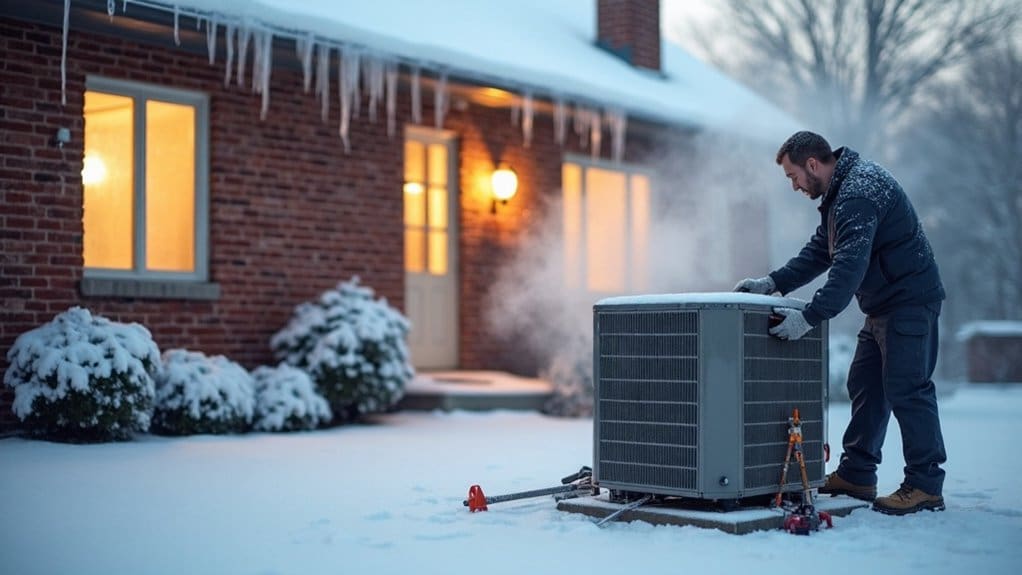
You’ll face furnace breakdowns during St. Louis’s harshest winter months when temperatures drop below freezing and your heating system works overtime. Watch for warning signs like cold air blowing, yellow pilot lights, strange noises, or short cycling patterns. Common problems include clogged burners, dirty filters, and thermostat malfunctions that create uneven heating. Don’t attempt DIY repairs due to gas leak risks and carbon monoxide dangers. Below, you’ll discover how to choose reliable local technicians and prevent costly emergencies.
Key Takeaways
- Watch for warning signs like cold air, yellow pilot lights, strange noises, and short cycling that require immediate professional attention.
- Common St. Louis winter furnace problems include clogged burners, dirty filters, ductwork issues, and thermostat malfunctions causing uneven heating.
- Avoid DIY furnace repairs due to gas leak risks, carbon monoxide exposure, and potential warranty voiding from improper fixes.
- Choose certified local technicians offering transparent pricing, emergency services, written estimates, and strong neighborhood reviews for reliable repairs.
- Prevent heating emergencies through regular tune-ups, filter changes, clearing outdoor vents, and addressing minor issues before they escalate.
Warning Signs Your Furnace Needs Professional Attention
Your furnace works overtime during St. Louis’s harsh winters, making it imperative to recognize warning signs that indicate professional attention is needed. If you notice your system blowing cold air instead of warm, it’s time to call an expert. A yellow pilot light instead of blue signals incomplete combustion and potential carbon monoxide risks.
Strange noises like squeaking noises, banging, or grinding indicate mechanical problems that shouldn’t be disregarded. Inadequate airflow through your vents suggests blocked ducts or failing components. Short cycling, where your furnace turns on and off frequently, wastes energy and stresses the system.
Most importantly, a cracked heat exchanger can leak deadly carbon monoxide into your home. This colorless, odorless gas poses serious health risks. Other concerning signs include unusual odors, higher energy bills, and inconsistent temperatures throughout your home. Don’t wait until complete system failure – addressing these warning signs promptly guarantees safe, efficient heating all winter long.
Most Common Winter Furnace Problems in St. Louis
When frigid St. Louis temperatures arrive, you’ll likely encounter several common furnace issues that can disrupt your home’s comfort. Your heating system needs regular attention to prevent these problems from escalating.
A clogged burner ranks among the most frequent culprits, often causing incomplete combustion and reduced efficiency. Dirty filters create another major headache, restricting airflow and forcing your blower motor to work harder. You’ll notice this issue when your energy bills spike unexpectedly.
Uneven heating throughout your home typically signals ductwork problems, where blocked vents or leaky ducts prevent proper air circulation. Your gas furnace may also struggle with thermostat malfunctions, causing temperature inconsistencies.
Don’t overlook your furnace filter – it’s your first line of defense against debris and dust buildup. When neglected, these issues compound quickly during St. Louis’s harsh winter months, leaving you with costly repairs and uncomfortable living conditions.
Why DIY Furnace Repairs Put Your Family at Risk
The urge to fix your own furnace might seem like a money-saving solution, but DIY repairs create serious safety hazards that can endanger your entire household. When you attempt furnace repair without proper training, you risk gas leaks, electrical hazards, and carbon monoxide exposure—all potentially fatal consequences.
Your HVAC system contains complex components requiring specialized knowledge and tools. Without understanding these intricate mechanisms, you can’t properly diagnose and fix underlying issues. What appears as a simple problem often masks deeper complications that lead to costly breakdowns if mismanaged.
Improper maintenance also voids manufacturer warranties, leaving you financially vulnerable when major failures occur. Certified technicians possess the expertise to identify wear and tear patterns, address root causes, and guarantee your system operates safely.
Professional repair services protect your family’s well-being while preventing expensive future repairs. Don’t gamble with your household’s safety—trust qualified professionals to handle your heating system’s maintenance and repairs.
Choosing the Right Local Furnace Repair Company
Finding a reliable furnace repair company requires careful evaluation of several key factors that separate trustworthy professionals from inexperienced contractors. When searching for Furnace Repair in St. Louis, prioritize companies with expert technicians who’ve earned proper certifications and licensing. Call a professional who offers transparent pricing without hidden fees or surprise charges.
Look for all-encompassing Services in St. Louis that include emergency repairs, routine HVAC maintenance, heating repair, and furnace installation. Companies serving the greater St. Louis area should provide detailed written estimates and warranty their work. Check online reviews and ask neighbors which contractors they’d highly recommend based on actual experience.
Verify the company carries proper insurance and bonding to protect your property. Established businesses with local roots typically offer better accountability and customer service. Choose a contractor who explains problems clearly and presents multiple solution options. This approach guarantees peace of mind during those brutal Missouri winters.
Preventive Maintenance to Avoid Winter Heating Emergencies
Most heating emergencies stem from neglected maintenance issues that could’ve been prevented with simple, proactive care. Regular furnace tune-ups and filter changes will extend your system’s lifespan while maintaining peak efficiency throughout St. Louis’s harsh winter temperatures.
Don’t forget to clear snow and ice from your home’s outdoor vents – blocked airflow forces your heating system to work harder and creates safety hazards. Upgrading to a smart thermostat gives you better temperature control and reduces energy consumption when you need reliable heat most.
Seal your ductwork and add insulation to prevent costly heat loss that drives up utility bills. Address minor issues immediately – dirty burners, worn belts, and clogged air filters seem insignificant but often trigger expensive emergency repairs during the coldest months.
These preventive maintenance steps cost far less than emergency service calls and keep your family comfortable when winter weather hits hardest.
Frequently Asked Questions
Is It Normal for a Furnace to Struggling in Cold Weather?
Yes, it’s normal for furnaces to struggle in extreme cold. You’ll need thermostat settings adjustments, regular air filter replacement frequency, and proper furnace capacity sizing considerations to maintain efficiency during harsh winter conditions.
What Is the Most Common Furnace Failure?
Short cycling’s the most common furnace failure you’ll encounter. It’s typically caused by dirty air filters, faulty thermocouples, worn blower motors, or tripped circuit breakers that make your system turn on and off repeatedly.
What Is the Most Common Reason a Furnace Stops Working?
Dirty air filters cause the most common furnace failures you’ll encounter. When clogged, they restrict airflow, making your system work harder. Improper maintenance worsens this issue, leading to overheating and costly breakdowns.
What Is the First Thing to Check When the Furnace Goes Out?
When your furnace goes out, you’ll want to check thermostat settings first. Guarantee it’s set to heat mode and the desired temperature. Next, inspect furnace filters for clogs before examining electrical connections.
Conclusion
You’re 70% more likely to experience a furnace breakdown during St. Louis’s coldest weeks when temperatures drop below 20°F. Don’t let your family become part of this statistic. By recognizing warning signs early, avoiding risky DIY repairs, and partnering with trusted local professionals for regular maintenance, you’ll keep your home warm and safe all winter long. Remember, preventing heating emergencies is always more affordable than emergency repairs during peak season.