
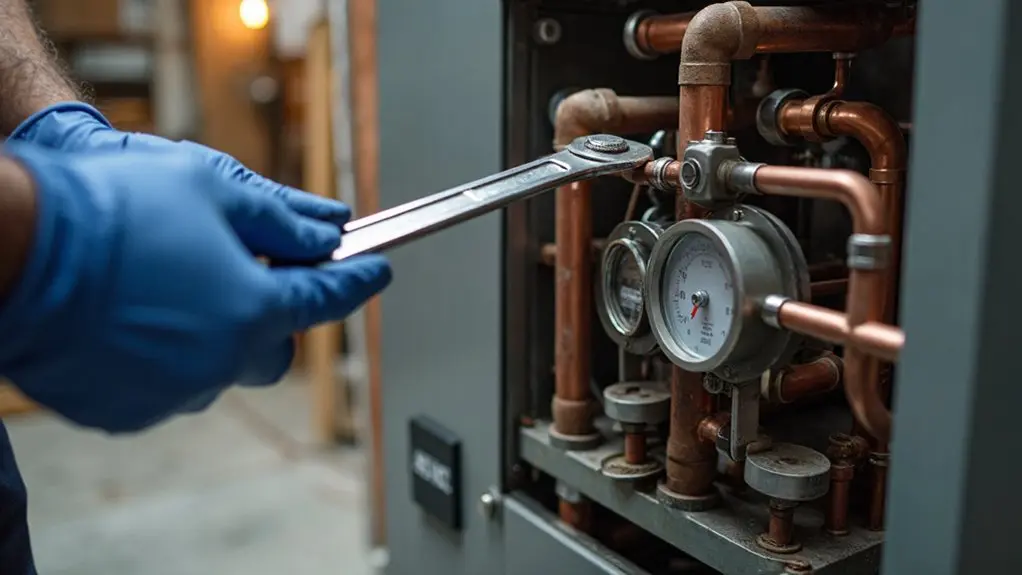
Your furnace needs professional maintenance annually to guarantee safe, efficient operation throughout winter. An HVAC technician will inspect critical components, clean essential parts like the heat exchanger and burners, and test safety systems. This proactive approach prevents costly breakdowns, reduces energy bills by up to 30%, and extends your system’s lifespan by 2-5 years. Schedule your tune-up each fall before heating season begins. The following guide covers everything you need to know about maximizing your furnace’s performance.
Key Takeaways
- Annual furnace tune-ups involve thorough inspection, cleaning, and adjustment of critical components by licensed HVAC technicians for optimal performance.
- Professional maintenance prevents costly breakdowns, extends furnace lifespan by 2-5 years, and can reduce energy costs by up to 30%.
- Schedule tune-ups in fall before heating season begins to ensure safe operation and address any issues before peak usage.
- Technicians inspect heat exchangers, clean burners and blowers, replace filters, and lubricate moving parts to maintain efficient operation.
- Regular maintenance ensures safe operation by preventing gas leaks and carbon monoxide risks while improving indoor air quality.
What Is an Annual Furnace Tune-Up and Why Does It Matter?
An annual furnace tune-up is a thorough maintenance service where a professional HVAC technician inspects, cleans, and adjusts your heating system to guarantee it’s running at peak performance. This exhaustive service involves examining critical components, making necessary adjustments, and ensuring your furnace operates safely throughout winter.
You can’t afford to skip this essential maintenance. Regular tune-ups extend your heating system’s lifespan while maximizing energy efficiency, which translates to lower utility bills. When you invest in professional annual maintenance, you’re taking proactive steps to prevent breakdowns during the coldest months when you need heat most.
Without proper HVAC maintenance, you’ll face increased energy costs, reduced comfort, and expensive emergency repairs. A well-maintained furnace runs more efficiently, burns less fuel, and provides consistent warmth. Professional technicians catch small issues before they become major problems, saving you money and ensuring your family stays comfortable all winter long.
Signs Your Furnace Needs Professional Maintenance
While scheduling regular maintenance is the best approach, your furnace will often signal when it needs professional attention before problems escalate. These warning signs indicate it’s time to contact an HVAC professional for a furnace tune-up.
Higher energy bills typically mean your furnace isn’t operating efficiently. When your system works harder to maintain comfortable temperatures, it consumes more energy and drives up costs. Professional maintenance can restore ideal performance and keep your furnace running smoothly.
Watch for these critical warning signs:
- Unusual noises like banging, rattling, or squealing suggest internal components need inspection
- Frequent cycling where your furnace turns on and off repeatedly often indicates clogged filters or thermostat issues
- Inconsistent heating throughout your home creates uncomfortable temperature variations between rooms
Additionally, a yellow or flickering pilot light signals combustion system problems requiring immediate professional attention. Don’t ignore these signs—prompt maintenance prevents costly repairs and guarantees your HVAC system operates efficiently year-round.
Optimal Timing for Scheduling Your Furnace Tune-Up
Timing your furnace tune-up correctly safeguards peak performance when you need it most. Schedule your annual furnace maintenance in fall, before heating season begins. This proactive approach guarantees your heating system operates safely and effectively when temperatures drop.
Professional HVAC technicians recommend yearly furnace tune-up timing to prevent costly breakdowns during peak usage. Your furnace maintenance schedule should account for system age, usage patterns, and home environmental conditions. Older units may require more frequent HVAC service to maintain prime performance.
Don’t wait until your furnace stops working to call for HVAC maintenance. Fall scheduling allows professional HVAC contractors adequate time to address any issues discovered during inspection. This timing keeps your furnace running efficiently throughout winter months when you depend on consistent heating.
Key Components Inspected During Professional Maintenance
Professional HVAC technicians conduct thorough inspections of numerous furnace components to secure your heating system operates safely and effectively. During your annual tune-up, these skilled professionals systematically examine critical parts that directly impact your furnace’s performance and longevity.
The professional inspection focuses on three essential safety and efficiency areas:
- Heat exchanger examination – Technicians meticulously check for cracks or damage that could create dangerous carbon monoxide leaks or compromise heating efficiency.
- Electrical connections assessment – All wiring is tightened and inspected for wear, corrosion, or damage to prevent electrical hazards and guarantee reliable operation.
- Ignition system verification – Whether you have a traditional pilot light or modern electronic ignition, technicians confirm consistent burner lighting and proper flame characteristics.
Additionally, HVAC technicians clean your blower motor and fan assembly, removing accumulated dust and debris that restricts airflow. They’ll also inspect and clean burners to optimize combustion. This inclusive furnace maintenance approach maximizes system efficiency while preventing costly repairs.
Critical Cleaning Tasks Performed by HVAC Technicians
Several essential cleaning tasks distinguish professional furnace maintenance from basic homeowner care, targeting components that directly affect your system’s efficiency and air quality. Your technician will check and replace or clean the air filter first, guaranteeing proper airflow throughout your system. They’ll perform good cleaning of the blower assembly, removing dust and debris that accumulates on fan blades and housing.
The heat exchanger receives thorough cleaning to eliminate buildup that reduces heat transfer effectiveness. Your technician will check all moving parts, lubricating bearings and motors while cleaning surrounding areas. Clean vents and ductwork connections get attention to improve airflow and indoor air quality.
Burner components undergo detailed cleaning to ensure proper combustion and flame patterns. The furnace filter area gets cleaned even after replacement to prevent future contamination. These maintenance tasks require specialized tools and expertise that homeowners typically don’t possess, making professional service crucial for maximum performance.
Lubrication and Calibration Services for Peak Performance
Beyond these thorough cleaning procedures, your HVAC technician will focus on lubrication and calibration services that keep your furnace running at peak efficiency. Proper lubrication of bearings, belts, and motors prevents premature wear while guaranteeing smooth operation throughout the heating season. This critical maintenance extends your system’s lifespan and reduces breakdown risks.
Calibration services involve three essential adjustments:
- Thermostat calibration – Guarantees accurate temperature readings for ideal energy efficiency and consistent comfort levels
- Control adjustments – Fine-tunes airflow and gas pressure settings for safe, efficient operation
- Safety system verification – Calibrates limit switches and sensors to confirm your furnace operates within proper safety parameters
These precision adjustments optimize your system’s performance while maintaining safety standards. Without regular lubrication and calibration, you’ll experience reduced efficiency, higher energy costs, and increased component failure. Professional technicians have the expertise and tools necessary to perform these technical services correctly.
Comprehensive Testing and Safety Checks
Safety takes center stage during the thorough testing phase of your annual furnace tune-up. Your HVAC technician conducts extensive evaluations of your heating system’s critical components to guarantee everything operates safely and productively.
During this maintenance phase, the technician tests your furnace’s ignition system, verifies proper gas pressure levels, and checks airflow patterns throughout the system. They’ll inspect electrical connections for potential hazards and examine the heat exchanger, burners, and blower motor for signs of wear or damage.
Carbon monoxide testing is essential for your safety and air quality. The technician measures CO levels and may recommend updating your carbon monoxide detectors if needed. This testing identifies dangerous gas leaks before they compromise your family’s health.
Thermostat calibration ensures accurate temperature readings and ideal performance. The technician also lubricates bearings, belts, and motors to extend component lifespan. These comprehensive safety checks maximize your furnace’s efficiency while safeguarding your home and family.
DIY Maintenance Tasks vs. Professional Services
Many homeowners wonder which furnace maintenance tasks they can handle themselves versus when they need professional expertise. While you can perform basic DIY maintenance like replacing air filters and inspecting vents, these convenient tasks can’t replace exhaustive professional service.
- Scope of Work – You can handle filter changes and visual inspections, but technicians perform in-depth cleaning, calibration, and testing of critical heat system components.
- Tools and Expertise – HVAC professionals have specialized equipment and training to thoroughly inspect your furnace for potential safety issues.
- Safety and Warranty Protection – Attempting complex repairs without proper knowledge can void your warranty and create dangerous situations.
Professional tune-up service guarantees your HVAC system operates at peak efficiency while extending its lifespan. Technicians provide the thorough inspection and maintenance your furnace needs for ideal performance and safety.
Benefits of Regular Furnace Tune-Ups for Your Home
When you invest in regular furnace tune-ups, you’re setting your home up for improved efficiency, safety, and long-term savings. A qualified HVAC technician will clean critical components and guarantee optimal performance throughout your heating system. This regular maintenance helps your furnace operate at peak efficiency, potentially reducing energy costs by up to 30% on monthly utility bills.
Annual maintenance extends your furnace’s lifespan by 2-5 years, delaying expensive replacement costs. When your furnace runs efficiently, it prevents unexpected breakdowns during cold months when you need heat most. A well-maintained furnace operates more safely, reducing risks of gas leaks and carbon monoxide exposure that threaten your family’s health.
Professional tune-ups also improve indoor air quality by ensuring proper airflow and removing accumulated debris. Early detection of potential issues saves you from costly emergency repairs. Regular maintenance transforms your heating system into a reliable, efficient, and safe source of comfort for your home.
How to Choose the Right HVAC Professional for Your Needs
Finding the right HVAC professional can make the difference between a thorough furnace tune-up and a costly mistake. When selecting an HVAC contractor for your Professional Furnace maintenance, you’ll want to prioritize experienced technicians with proper licensing and strong customer reviews. These credentials demonstrate their ability to handle your heating system safely and effectively.
Look for companies that provide transparent pricing with upfront estimates, eliminating surprise costs. The best contractors use advanced diagnostic tools to thoroughly inspect your furnace and identify potential issues before they become expensive repairs.
Essential qualities to evaluate include:
- Service reliability – Choose providers offering 24/7 emergency services for unexpected breakdowns
- Protection coverage – Guarantee they provide an all-encompassing warranty on their work
- Specialized expertise – Select contractors who can create customized maintenance plans based on your system’s specific needs
These factors guarantee you’re investing in quality service that’ll keep your furnace running efficiently year-round.
Conclusion
Don’t let your furnace leave you out in the cold when winter arrives. You’ve learned that annual tune-ups aren’t just maintenance—they’re essential investments in your home’s comfort, safety, and efficiency. By scheduling professional service, completing basic DIY tasks, and choosing qualified technicians, you’re protecting your family and wallet. Your furnace works hard all season long, so give it the professional attention it deserves to keep running smoothly.