
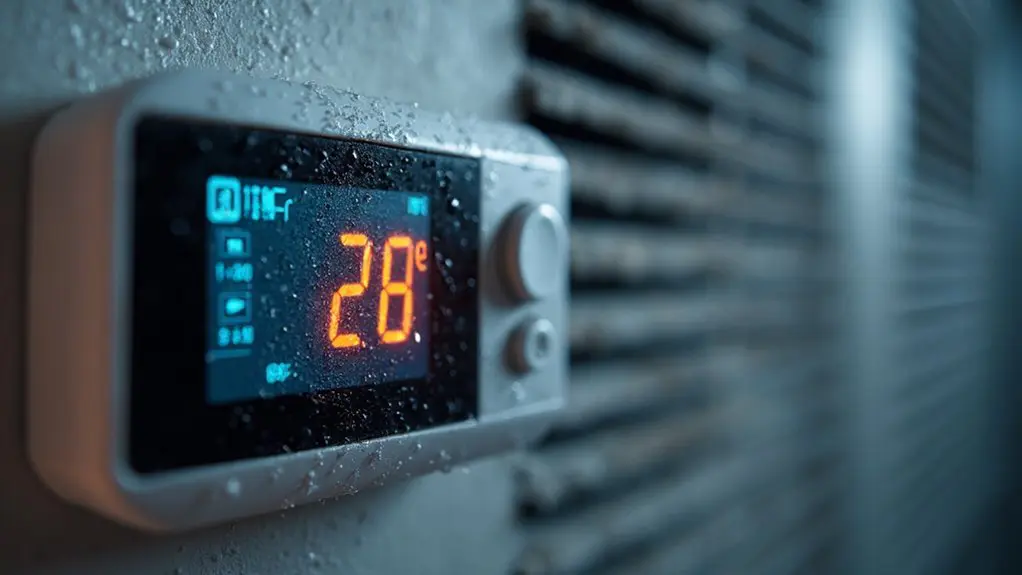
You’ll notice thermostat calibration issues through inconsistent temperature readings, frequent HVAC cycling, and difficulty maintaining your desired temperature settings. These problems stem from improper installation, worn components, or electronic interference. Test your thermostat’s accuracy using a calibrated thermometer, check for proper wiring, and clean dust from components regularly. You can often recalibrate using manufacturer instructions or onboard settings, but faulty components may need replacement. Below, you’ll discover thorough diagnostic techniques and professional solutions.
Key Takeaways
- Signs include inconsistent temperature readings, frequent system cycling, inability to reach set temperature, and uneven home temperature distribution.
- Common causes are improper installation, component wear, electronic interference, power fluctuations, and environmental changes affecting the thermostat.
- Diagnose issues by visually inspecting for damage, testing accuracy with a calibrated thermometer, and checking wiring connections.
- Adjust calibration using manufacturer instructions, onboard settings, sensor recalibration, or replacing faulty components as needed.
- Prevent future issues through regular cleaning, periodic functionality checks, proper placement, and considering professional maintenance services.
Temperature Inconsistencies Throughout Your Home
When your thermostat isn’t properly calibrated, you’ll notice uncomfortable temperature variations from room to room throughout your home. These temperature inconsistencies occur because your thermostat provides inaccurate temperature readings to your HVAC system, preventing proper temperature control.
You might find one room considerably warmer while another feels uncomfortably cool, even without zoning systems. Your bedroom could become stuffy, making sleep difficult, while your living room remains chilly. These temperature fluctuations indicate your thermostat isn’t accurately measuring room temperature or communicating effectively with your heating and cooling equipment.
When thermostat calibration is off, your HVAC system receives false signals about your home’s actual temperature needs. It might run too long in some areas while neglecting others entirely. Properly calibrated thermostats eliminate these problems by ensuring accurate temperature readings and consistent comfort throughout every room in your home.
HVAC System Short Cycling and Constant Running
Thermostat calibration problems don’t just create temperature variations—they also disrupt your HVAC system’s normal operating cycles. Your HVAC system should turn on and off 2-3 times per hour, running for 15-20 minute intervals. When thermostat calibration is off, you’ll notice frequent on/off cycling or constant running as the system struggles to reach the set temperature.
This disrupted cycling pattern forces your HVAC system to work harder than necessary. A miscalibrated thermostat constantly tries to compensate for inaccurate temperature readings, leading to increased energy consumption and higher energy bills. The excessive strain also accelerates wear and tear on your equipment.
You might find yourself frequently adjusting the thermostat settings, which only compounds the energy waste. If you’re experiencing short cycling or constant running, contact an HVAC technician immediately. They can check your thermostat calibration and adjust the calibration screw if needed, restoring proper system function and efficiency.
Rising Energy Bills and Reduced Efficiency
Because miscalibrated thermostats force HVAC systems into inefficient operating patterns, you’ll likely notice a significant spike in your monthly energy bills. When your thermostat provides inaccurate temperature readings, your HVAC system must work harder to compensate for the discrepancy between actual room temperature and your desired settings.
These thermostat calibration issues create a vicious cycle of energy waste. You’ll find yourself constantly adjusting settings because the room never feels comfortable, while your system runs continuously trying to reach an impossible target. This inefficient operation dramatically reduces your home’s energy efficiency.
Watch for these signs of thermostat problems: month-to-month bill increases without changes in usage patterns, year-over-year cost jumps, and rooms that never match your set temperature. If you’re experiencing higher energy bills alongside comfort issues, it’s time to calibrate your thermostat. Addressing calibration problems quickly prevents your system from overworking and helps restore ideal efficiency.
Mismatched Room Temperature and Thermostat Settings
One of the clearest indicators that your thermostat needs calibration is when the room temperature consistently differs from your thermostat’s display. If you’ve set your thermostat to 72°F but the room feels noticeably warmer or cooler, you’re likely dealing with an accuracy problem that won’t resolve itself.
This temperature mismatch can stem from calibration drift or faulty wiring connections affecting your thermostat’s ability to read conditions properly. When left unchecked, these discrepancies force your HVAC system to work harder, creating additional strain and potential equipment problems.
You can verify calibration issues by placing a reliable room thermometer near your thermostat and comparing readings. If there’s a consistent difference of more than two degrees, calibration is needed.
Don’t ignore persistent temperature mismatches. Contact professional help to inspect wiring connections and recalibrate your thermostat. Annual calibration checks during routine HVAC maintenance prevent these issues from developing.
How to Test Your Thermostat’s Accuracy
How can you determine if your thermostat’s temperature readings are accurate? Testing your system’s accuracy requires a simple but methodical approach. Place a calibrated room thermometer near your thermostat and wait 15 minutes for both readings to stabilize. This waiting period guarantees you’re getting accurate measurements from both devices.
Compare the two readings carefully. For proper calibration, the discrepancy between your thermostat and room thermometer shouldn’t exceed 1°F. If you notice a larger difference, your thermostat needs attention.
When accuracy issues arise, check if your thermostat has built-in calibration features. Many models allow you to make adjustments through their settings menu. Follow your manufacturer’s instructions to rectify any temperature discrepancies.
If calibration adjustments don’t resolve the problem, you’ll need to replace your thermostat. A consistently inaccurate thermostat can’t maintain proper temperature control, leading to comfort issues and increased energy costs throughout your home.
DIY Calibration Methods and Maintenance Tips
When your thermostat shows calibration problems, you can often fix them yourself with the right approach. Address Thermostat Calibration issues by first checking your thermostat’s position—ensure it’s away from heat sources that could skew temperature readings. Use a level to confirm proper alignment, as misaligned units affect accuracy.
Clean the thermostat’s interior thoroughly, removing dust and debris that interfere with temperature sensing. This simple maintenance step can dramatically improve your entire HVAC system’s performance. If your unit has a calibration screw, adjust it according to manufacturer instructions for precise temperature control.
Calibrating your thermostat requires testing afterward. Use an accurate thermometer to verify displayed temperatures match actual room conditions. Signs of successful calibration include consistent heating and cooling cycles that maintain your desired temperature. Energy efficiency improves when calibration is correct. However, if these DIY methods don’t resolve the issue, contact a professional for advanced diagnostics and repairs.
When to Call Professional HVAC Technicians
Why struggle with persistent thermostat problems when professional expertise can save you time and money? You should seek professional help when DIY calibration attempts fail to resolve temperature inconsistencies or when your thermostat displays error codes you can’t interpret.
Smart thermostats and programmable thermostats often require specialized diagnostic equipment that only trained technicians possess. If your unit repeatedly loses programming, shows wiring issues, or doesn’t communicate properly with your HVAC system, professional intervention becomes necessary.
Seek professional assistance when calibration problems cause your HVAC system to cycle excessively or run continuously. These behaviors indicate potential problems beyond simple calibration adjustments. Normal wear and tear can affect internal sensors and components that aren’t user-accessible.
HVAC systems are complex, and incorrect troubleshooting can create costly damage. Professional technicians guarantee your thermostat is functioning correctly while identifying underlying issues that could compromise your system’s efficiency and longevity.
Conclusion
You’ve learned to identify calibration warning signs and basic troubleshooting steps, but why let a faulty thermostat drain your wallet through wasted energy? Don’t ignore temperature inconsistencies, short cycling, or rising bills—they’re costly red flags. You can attempt DIY calibration using a separate thermometer and adjusting settings accordingly. However, if problems persist after basic maintenance, you’ll need professional HVAC technicians. They’ll guarantee accurate calibration, ideal system performance, and long-term energy savings for your home.