
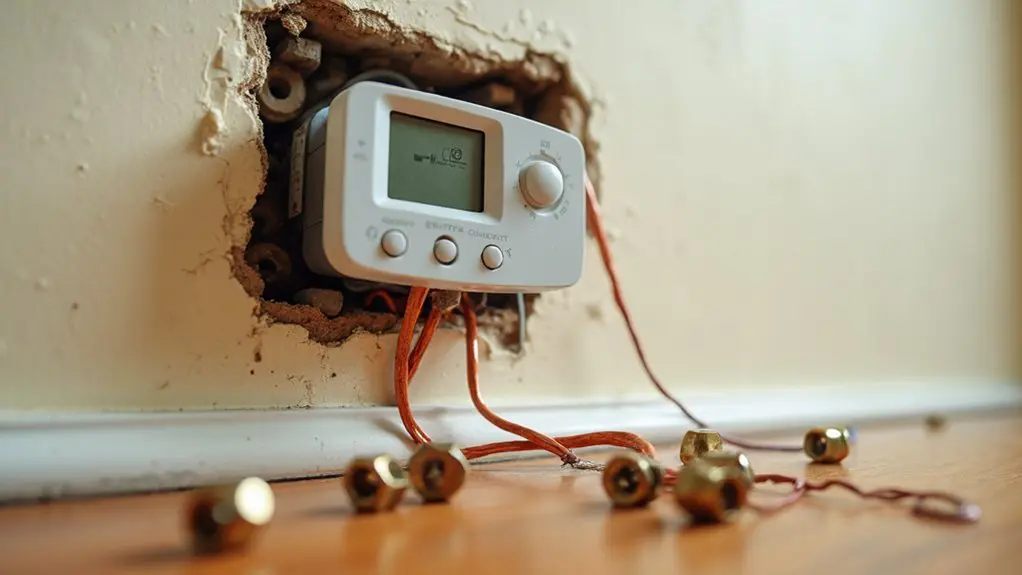
Common thermostat installation mistakes can damage your HVAC system and void warranties. You risk blown fuses and component damage by installing incompatible thermostats or failing to turn off power during installation. Improper wiring creates short circuits, while incorrect placement near heat sources causes inaccurate readings and unnecessary system cycling. Skipping post-installation testing means you won’t catch problems until costly failures occur during peak seasons. Understanding these specific pitfalls will help you avoid expensive repairs.
Key Takeaways
- Installing an incompatible thermostat type can cause complete system shutdown and damage critical HVAC components not covered by warranty.
- Improper wiring connections and disregarding color-coded standards create short circuits that blow fuses and permanently damage system components.
- Working on live wires without turning off power risks electric shock and causes blown fuses, tripped breakers, and costly repairs.
- Poor placement near heat sources or drafts triggers unnecessary system cycling, reducing equipment lifespan and causing inaccurate temperature readings.
- Skipping thorough testing of heating and cooling modes after installation can create safety hazards and lead to expensive failures.
Installing the Wrong Thermostat Type for Your System
Why does your HVAC system suddenly refuse to heat or cool properly after installing what seemed like the perfect new thermostat? You’ve likely installed the wrong thermostat type for your heating and cooling system.
Installing an incompatible thermostat—like mounting a gas thermostat on an electrical HVAC system—prevents proper operation. Your system might only cycle the fan without activating actual heating or cooling functions. What’s worse, you might think you’ve fixed the problem when the thermostat briefly works after reinstallation, only to watch your entire system shut down completely.
This mistake can go wrong in expensive ways. Improper installation damages critical components like transformers, leading to costly repairs or complete system replacement. Your home warranty probably won’t cover damage from installing incorrect equipment, leaving you responsible for all repair costs.
Before purchasing any thermostat, verify compatibility with your specific HVAC system type to avoid these devastating consequences.
Improper Wiring and Electrical Connections
How can something as simple as connecting a few wires turn your thermostat installation into a nightmare? When you replace the thermostat, improper wiring creates dangerous situations that’ll damage your entire system. Your thermostat must connect to designated terminals correctly—failing to do so causes blown fuses, erratic functions, or complete HVAC shutdown.
Don’t ignore the color-coded wiring system. Disregarding these standards leads to improper connections that compromise your heating and cooling costs and create safety hazards. Even small wiring mistakes have significant consequences for system performance.
Strip wire insulation carefully—removing too much rubber causes wires to touch, creating short circuits that blow fuses and disable your HVAC system. Replace corroded wire connections instead of leaving old ones in place, as deteriorated connections compromise reliability and performance.
Pay meticulous attention to wire placement during installation. Your system’s functionality depends on precise connections, and cutting corners on electrical work will cost you more in repairs than doing it right initially.
Failing to Turn Off Power During Installation
Before you even touch your old thermostat, you must shut off power to the circuit—skipping this critical step transforms a routine installation into a dangerous gamble with your safety and HVAC system. Working on live wires puts you at serious risk of electric shock while simultaneously threatening your heating and cooling equipment with potential damage.
When you leave power connected during installation, you’re inviting blown fuses, tripped breakers, and costly system malfunctions. Your air conditioning and heating components can suffer permanent damage from electrical surges caused by improper connections on energized circuits.
Thermostat Problems often stem from this fundamental oversight, creating expensive repairs that could’ve been easily prevented. Always locate your HVAC system’s circuit breaker and switch it off before beginning any installation work. Use a voltage tester to confirm power is completely disconnected. This simple precaution protects both you and your valuable heating and cooling equipment from unnecessary harm.
Poor Mounting and Incorrect Placement
Even when you’ve safely disconnected power, your thermostat installation can still fail if you mount it poorly or choose the wrong location. This common mistake affects both traditional HVAC systems and heat pump installations, leading to inaccurate temperature readings and inefficient operation.
Your new thermostat needs proper positioning to function correctly. When placed near heat sources, drafts, or windows, it’ll detect false temperatures and trigger unnecessary system cycling. This reduces your equipment’s lifespan and prevents you from achieving the energy savings you’re hoping for.
Key placement guidelines include:
- Mount on interior walls away from windows and vents
- Avoid areas near heat sources like lamps or appliances
- Ensure the wall surface is level and sturdy
- Keep away from drafty areas like doorways
Secure mounting is equally essential. A loose thermostat creates inconsistent connections and unreliable temperature control, ultimately costing you comfort and preventing you from maximizing your investment to save money.
Skipping System Function Testing After Installation
After mounting your thermostat correctly, you must test all system functions to confirm everything operates as expected. Don’t assume your heating and air conditioning will work properly just because the thermostat powers on. You need to verify both heating and cooling modes operate correctly, as issues often surface when switching between different functions.
Test your air conditioner first, then switch to heating mode. Check that your system responds appropriately to temperature adjustments and scheduling changes. Run several different test cycles to guarantee consistent performance. This exhaustive testing helps identify problems before they escalate into costly HVAC failures.
Skipping this indispensable step can leave you with undetected issues that only appear during peak usage seasons. You might discover your heating doesn’t work during winter’s coldest days. Additionally, ensure Carbon Monoxide Detectors function properly if you have gas heating equipment, as faulty installations can create safety hazards alongside operational problems.
Conclusion
Don’t let your HVAC system become a casualty of careless installation. You’ve learned the critical mistakes that can turn a simple thermostat upgrade into an expensive repair nightmare. Like a house of cards, one wrong move—incorrect wiring, poor placement, or skipping power shutoff—can bring down your entire system’s efficiency and longevity. Take time to do it right, or you’ll pay the price later.