
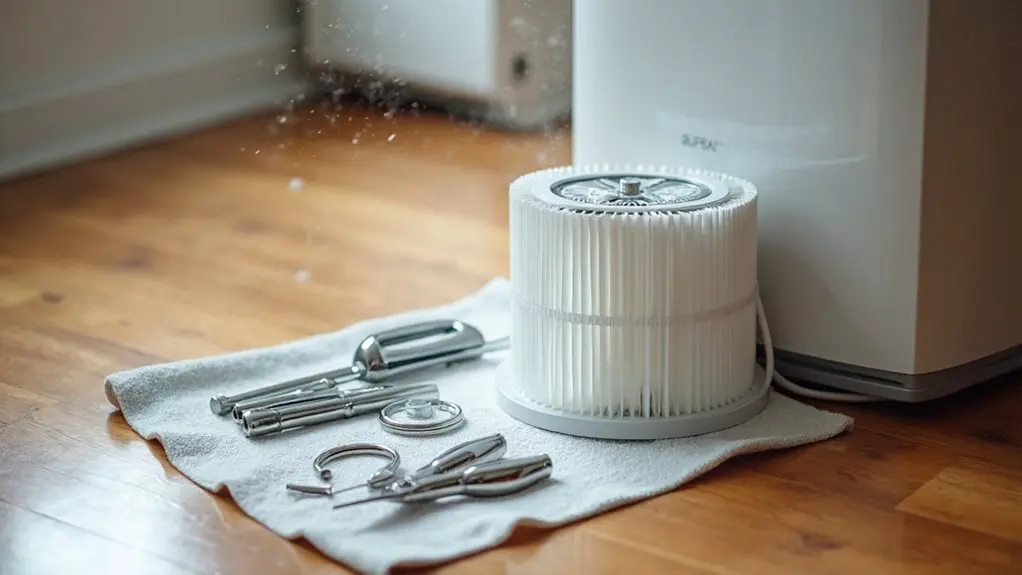
You’ll need to maintain your air cleaner regularly to prevent costly breakdowns and guarantee satisfactory indoor air quality. Watch for warning signs like reduced airflow, strange noises, or rising energy bills that signal immediate attention’s required. Essential maintenance includes monthly filter replacements, quarterly thorough cleaning, and annual professional inspections of electrical systems. You can handle basic tasks like vacuuming exterior grills and washing pre-filters, but complex electrical repairs need professional expertise. This all-encompassing approach will reveal proven strategies to optimize your system’s performance and longevity.
Key Takeaways
- Regular filter replacement and component cleaning prevents equipment breakdown and maintains optimal indoor air quality.
- Warning signs like reduced airflow, strange noises, and rising energy bills require immediate professional attention.
- Professional maintenance includes filter replacement, airflow testing, electrical diagnostics, and component cleaning with documentation.
- DIY tasks include weekly exterior cleaning, monthly pre-filter washing, and quarterly filter replacements.
- Common problems like dirty filters and loose components can be troubleshot, but electrical issues need professionals.
Why Air Cleaner Maintenance Is Critical for System Performance
Why does proper air cleaner maintenance matter so much for your system’s performance? When you neglect air filters, you’re setting yourself up for serious problems. A clogged filter restricts airflow, forcing your HVAC system to work harder and consume more energy. This increased workload leads to faster equipment wear-out and potential breakdowns that’ll cost you substantially.
Without regular maintenance, you’ll notice system slowdowns and overheating issues. Your indoor air quality drops dramatically, creating uncomfortable conditions that affect employee health and productivity. Dust accumulates throughout your space, creating an unprofessional environment.
Air purifier maintenance isn’t optional—it’s essential for ideal performance. When you skip filter replacement, pressure drops occur and your system struggles to maintain proper air quality. Regular maintenance prevents energy consumption spikes and extends equipment life. By conducting visual inspections, airflow testing, and timely filter changes, you’ll guarantee your system operates efficiently while maintaining excellent indoor air quality.
Warning Signs Your Air Cleaner Needs Immediate Attention
Understanding maintenance importance is one thing, but recognizing when your air cleaner demands immediate action is what prevents costly breakdowns. Watch for these critical warning signs that demand your attention.
Reduced airflow through your vents signals trouble. When your system has to work harder than normal, it’s struggling against restrictions. An old filter clogged with dust and debris forces your equipment into overdrive, dramatically increasing energy consumption.
Strange noises, unusual odors, or visible dust accumulation around vents indicate something goes wrong internally. High levels of dust in your home despite running the air cleaner suggest filter failure or system malfunctions.
If you notice frequent cycling, inconsistent performance, or rising energy bills, it’s time to replace components before minor issues become costly repairs. Don’t ignore these signals—addressing problems immediately protects your investment and maintains healthy indoor air quality.
Essential Components of Professional Air Cleaner Maintenance
What separates effective air cleaner maintenance from basic upkeep? Professional maintenance goes beyond simple air filter changes to encompass thorough system care that guarantees peak performance.
Regular filter replacements form the foundation, but experienced technicians clean internal components thoroughly, removing accumulated dust and debris that can compromise your system’s efficiency. They’ll inspect mechanical parts, test airflow patterns, and measure particle removal capabilities to verify your air quality standards are met.
Professional maintenance includes electrical system diagnostics and control system evaluations. Technicians use specialized tools to identify potential issues before they become costly failures. This proactive approach extends your equipment’s lifespan while maintaining consistent indoor air quality.
Comprehensive service packages typically include scheduled visits, emergency support, and access to manufacturer-approved parts. You’ll receive documented maintenance records that demonstrate your commitment to guest health and safety, providing valuable evidence of proper equipment care that protects both your investment and reputation.
Step-by-Step DIY Maintenance Tasks You Can Handle
While professional maintenance provides thorough system care, you can handle several routine tasks yourself to keep your air cleaner running efficiently between service visits.
Start by vacuuming exterior grills and air intake areas weekly to prevent dust buildup that restricts airflow. This simple step helps your unit combat air pollution more effectively while reducing strain on internal components.
Monthly, remove and wash pre-filters under cool water, allowing them complete drying before reinstallation. Clean filters guarantee maximum performance against dust mites and other allergens.
Replace your air filter quarterly, including HEPA filters and carbon elements. Don’t wait beyond manufacturer recommendations, as worn filters compromise clean air delivery and system efficiency.
Schedule annual deep cleaning sessions where you’ll clean internal fan blades and housing components. These maintenance tips prevent costly repairs while maximizing your air purifiers’ lifespan.
Mark all maintenance dates on your calendar to establish consistent routines that keep your system operating at peak performance year-round.
Common Air Cleaner Problems and Troubleshooting Solutions
Even well-maintained air cleaners can develop issues that affect their performance and air quality output. When your system runs poorly, start by checking the most common culprit: dirty filters. Clogged filters restrict airflow and force your unit to work harder. You’ll need to replace them every 3-6 months depending on usage.
If your air cleaner isn’t running efficiently after filter replacement, examine the pre-filter and HEPA filter separately. Strange noises often indicate loose components or debris inside the unit. Power issues might stem from faulty electrical connections or blown fuses.
When troubleshooting doesn’t resolve the problem, don’t hesitate to clean or replace additional components like fan motors or control panels. However, complex electrical repairs require professional expertise. If you’re uncomfortable with any repair, qualified technicians are ready to provide ideal air solutions. They’ll diagnose issues quickly and restore your system’s best performance safely.
When to Call Professional Repair Services vs. DIY Fixes
Although some air cleaner issues require professional attention, you can handle many maintenance tasks yourself with the right knowledge. You should attempt DIY tasks like weekly exterior vacuuming, monthly pre-filter washing, and quarterly HEPA and carbon filters replacement. Regular air filter maintenance helps keep your unit running efficiently, improving overall air quality and supporting healthier living while reducing energy bills.
However, call professional repair services immediately if your air cleaner produces unusual noises, emits burning smells, or experiences considerably reduced airflow despite clean filters. These symptoms often affect the air purification effectiveness and may indicate serious mechanical problems. Avoid complex repairs that could void your warranty—trained technicians should handle these issues.
Mark maintenance dates on your calendar to guarantee consistent upkeep and proactively address problems before they escalate. Always consult your owner’s manual for brand-specific guidelines to determine when professional intervention becomes essential for ideal performance.
Replacement Schedules for Filters and Key Components
Because different air cleaner components have varying lifespans, you’ll need to establish a systematic replacement schedule to maintain peak performance.
- Standard Air Filters (1-3 months) – The type of filter and your environment determine frequency. High-traffic homes need monthly changes to keep your air clean from airborne particles.
- HEPA Filters (6-12 months) – These premium filters last longer but must be cleaned or replaced according to manufacturer guidelines. Make sure you’re monitoring performance indicators.
- Activated Carbon Filters (3-6 months) – Heavy usage situations require more frequent replacement to maintain odor elimination effectiveness.
- UV Lamps (annually) – Replace yearly for ideal sanitization. Use compressed air to clean surrounding components during replacement.
Regular cleaning of ionizer brushes and reusable parts will help keep your system running efficiently. Contact us if you’re unsure about replacement timing or need professional assessment of your air cleaner’s maintenance needs.
Cost-Effective Strategies to Extend Air Cleaner Lifespan
While following a proper replacement schedule keeps your air cleaner functioning, smart maintenance strategies can considerably reduce your long-term costs and maximize your investment. Start by turning to ENERGY STAR-certified models, which deliver 25-35% lower operating costs over their lifetime compared to standard units.
Hold the filter up to light monthly to check for dirt buildup—this simple inspection prevents 80% of unexpected breakdowns. Clean filters allow your system to circulate air efficiently, reducing energy consumption by up to 15%. Using washable pre-filters cuts replacement costs by 40-60% while still capturing pet dander and larger particulate matter.
Schedule biannual deep cleaning and UV lamp replacements to boost efficiency by 20% and reduce repair costs by 30%. These proactive steps guarantee your system continues delivering high-quality air and cleaner air throughout your home. Regular maintenance extends equipment lifespan by 50%, providing better air quality while protecting your investment.
Conclusion
You’ve now got the tools to keep your air cleaner running smoothly. Remember, an ounce of prevention is worth a pound of cure—regular maintenance beats costly repairs every time. You’ll save money by staying on top of filter changes and basic upkeep, but don’t hesitate to call professionals when you’re out of your depth. Your air cleaner’s longevity depends on the care you give it today.