
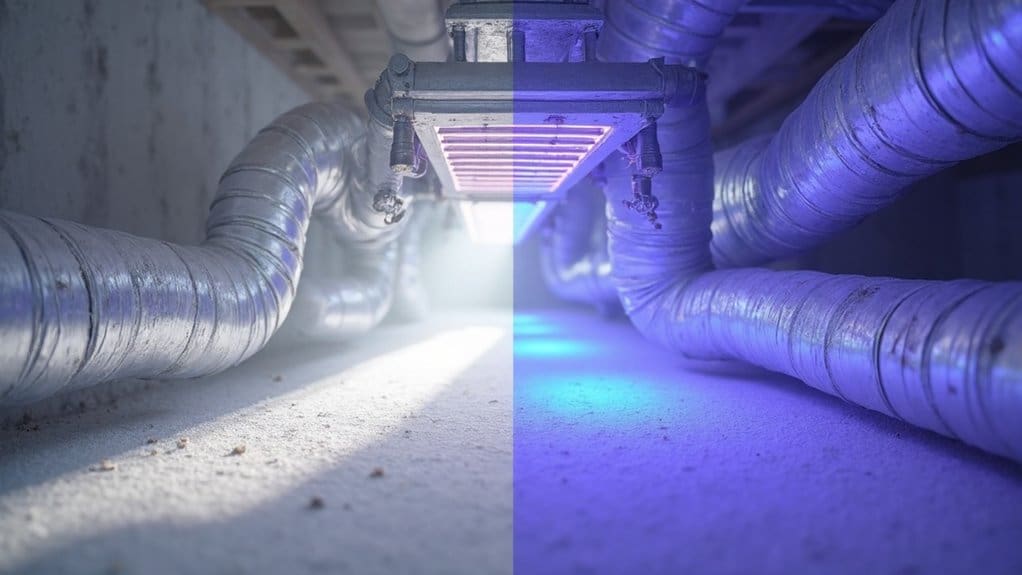
UV lights in your HVAC system dramatically improve indoor air quality by eliminating up to 97% of harmful bacteria and mold while reducing viruses by over 90%. You’ll experience a 75% decrease in allergens like dust mites and pet dander, plus up to 30% fewer respiratory issues. Your system’s energy efficiency increases by 25% as cleaner components improve airflow by 35%. These measurable improvements create healthier indoor environments that you’ll notice immediately, and there’s much more to discover about this transformative technology.
Key Takeaways
- Before installation, traditional HVAC filtration fails to address mold, bacteria, and airborne pathogens circulating through compromised systems.
- UV lights eliminate up to 97% of mold and bacteria while reducing viruses by over 90% after installation.
- Air quality improvements include 90-99% reduction in harmful microorganisms and up to 75% decrease in common allergens.
- Energy efficiency increases up to 25% as UV lights prevent microbial buildup and improve airflow by 35%.
- Health benefits include 30% reduction in respiratory issues and increased occupant satisfaction by 30-50% after installation.
Understanding UV Light Technology in HVAC Systems
UV-C light technology harnesses the germicidal power of ultraviolet radiation to eliminate harmful microorganisms in your HVAC system. When you understand how UV Lights Work, you’ll see why they’re increasingly popular for HVAC applications. These Germicidal UV systems disrupt DNA and RNA in bacteria, viruses, and mold spores, preventing reproduction and neutralizing threats.
Installing HVAC UV lights offers multiple placement options. You can position them near evaporator coils to prevent mold growth and maintain system efficiency, or install them in ductwork to disinfect circulating air. UV light for HVAC systems provides continuous protection during heating and cooling operations.
The benefits of UV lights extend beyond basic disinfection. They help Improve Indoor Air Quality by eliminating airborne pathogens that traditional filters can’t catch. This technology delivers Improved Indoor Air Quality results similar to professional medical and water treatment facilities, making your home environment healthier and safer.
Air Quality Challenges Before UV Light Installation
Before installing UV light technology, many homeowners struggle with persistent indoor air quality issues that traditional HVAC filtration can’t adequately address. You’ll likely notice mold and bacteria thriving in your system’s dark, moist components, particularly if you live in humid climates where conditions favor microbial growth.
Mold spores circulate throughout your home, triggering allergic reactions and respiratory problems. Your HVAC systems become breeding grounds for airborne pathogens that spread illnesses from room to room through compromised air circulation. Dust mites, pet dander, and other airborne allergens accumulate in ductwork, creating ongoing discomfort for sensitive family members.
You’re also dealing with reduced system efficiency as microbial buildup coats evaporator coils and other components, forcing your equipment to work harder and increasing energy costs. Musty odors from mold and mildew permeate your living spaces, making your home feel less comfortable despite proper temperature control.
How UV Lights Transform HVAC System Performance
Installing UV lights in your HVAC system creates immediate and measurable improvements that address these persistent air quality problems head-on. UV-C technology eliminates up to 97% of mold and bacteria while destroying over 90% of viruses circulating through your system. This powerful germicidal action prevents microbial growth on critical components, resulting in improved airflow of up to 35%.
The installation of UV lights transforms your system’s efficiency considerably. You’ll experience enhanced heat exchange as UV technology keeps coils and surfaces clean from biological contamination. This improved performance translates to energy efficiency gains of up to 25%, reducing your monthly utility costs substantially.
Beyond pathogen control, UV lights effectively eliminate dust mites, providing substantial relief for allergy and asthma sufferers. Your HVAC system operates more smoothly with cleaner components, while professional installation guarantees maximum effectiveness in delivering consistently superior air quality throughout your home.
Measurable Air Quality Improvements After Installation
Documentation reveals striking transformations in indoor air environments following UV light integration. When you install UV lights in your HVAC system, you’ll witness dramatic improvements across multiple air quality metrics that directly impact your home’s health and performance.
The measurable changes you can expect include:
- Pathogen Elimination – Your system will achieve 90-99% reduction in bacteria and viruses, while mold spores practically disappear from circulating air
- Allergen Control – You’ll see up to 75% decrease in allergens like dust mites and pet dander, creating relief for sensitive occupants
- Environmental Optimization – Relative humidity drops 5-10%, establishing conditions that prevent microbial growth
Beyond indoor air quality improvements, you’ll notice enhanced energy efficiency as cleaner heat exchange components operate more effectively, reducing HVAC energy consumption by 25%. Most importantly, occupant satisfaction increases 30-50% as people experience noticeably cleaner, fresher air throughout their living spaces.
Health Benefits and Allergen Reduction Results
While air quality metrics provide compelling evidence of UV light effectiveness, the real-world health benefits you’ll experience transform daily living for your entire household. You’ll notice immediate relief from allergy and asthma symptoms, with studies showing up to 30% reduction in respiratory issues after UV lights installation in your HVAC system.
Your family’s exposure to harmful bacteria and mold drops dramatically—UV technology eliminates up to 97% of these contaminants. Common allergens like dust mites, pet dander, and pollen become neutralized, providing substantial relief for sensitive household members. You’ll breathe cleaner indoor air quality as UV disinfection prevents microbial growth throughout your HVAC components.
Enhanced air circulation results from cleaner system components, creating a healthier environment overall. The reduction of airborne pathogens by over 90% means fewer sick days and improved wellbeing. These measurable health benefits make UV light installation a worthwhile investment in your family’s long-term respiratory health.
Long-Term Maintenance and Performance Expectations
Success with your UV light HVAC system depends on understanding the maintenance requirements that’ll keep it operating at peak performance levels.
Your UV disinfection system requires consistent attention to maintain ideal wavelength output and air quality benefits. Regular cleaning of the fixture prevents dust buildup that reduces effectiveness, while timely replacement guarantees continuous performance.
- Bulb Replacement – Replace UV bulbs every 9-12 months to maintain full disinfection capabilities, even if they still appear to be working
- Fixture Cleaning – Clean the UV light fixture regularly to prevent debris from blocking the disinfecting wavelength output
- Performance Monitoring – Track UV light output levels to confirm your system operates at peak disinfection strength
You’ll notice a 20-25% improvement in HVAC efficiency after installation due to reduced coil fouling. With proper maintenance, your fixture will last 5-10 years before requiring complete replacement, making ongoing monitoring critical for long-term success.
Conclusion
You’ve transformed your home’s air into a crystal-clear mountain stream flowing through every room. The UV light installation doesn’t just filter your air—it purifies it at the molecular level, eliminating harmful microorganisms before they can circulate. You’ll breathe easier knowing you’ve invested in technology that continuously works behind the scenes, delivering cleaner air and protecting your family’s health for years to come without constant intervention.