
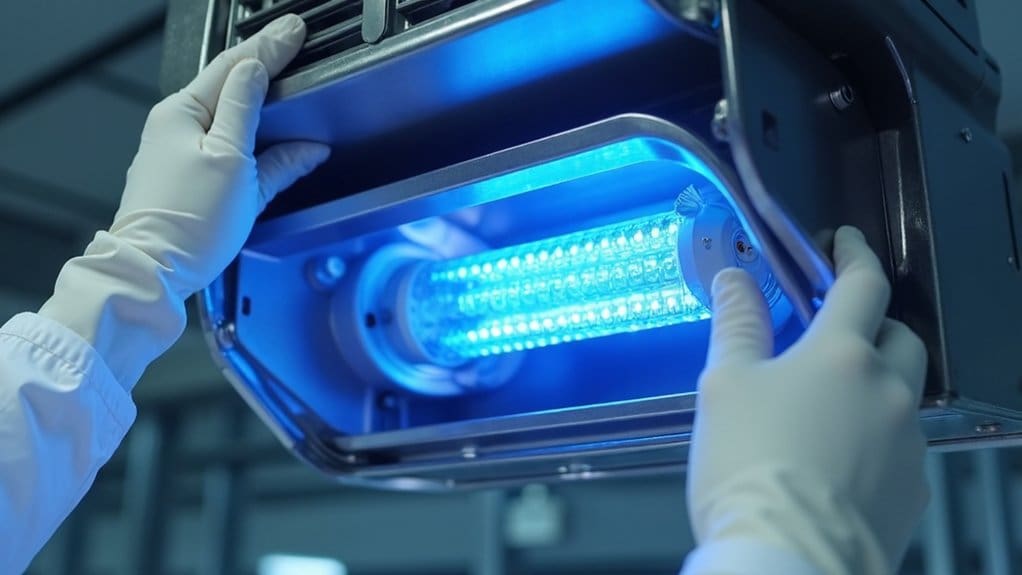
You can install UV-C light sanitizers in your HVAC system to dramatically improve indoor air quality by destroying bacteria, viruses, and mold at the cellular level. These chemical-free devices use 200-280 nanometer wavelengths to disrupt microbial DNA, preventing pathogen replication. Installation involves positioning units near evaporator coils or return air ducts, requiring proper safety gear and electrical connections. With regular maintenance like quarterly bulb cleaning, you’ll enjoy continuous pathogen protection and fresher air throughout your home.
Key Takeaways
- UV-C light sanitizers use 200-280 nanometer wavelengths to disrupt microbial DNA and prevent pathogen replication.
- HVAC UV light installation involves positioning units near evaporator coils and return air ducts for optimal sterilization.
- UV sanitizers dramatically improve indoor air quality by eliminating bacteria, mold spores, and allergens beyond traditional filtration.
- Proper installation requires UV-protective gear, system shutdown, secure mounting, and electrical connection verification for safe operation.
- Regular maintenance includes quarterly bulb cleaning, annual UV bulb replacement, and ballast inspection for continued effectiveness.
Understanding How UV Light Sanitizers Work
How exactly does ultraviolet light eliminate harmful microorganisms from your environment? UV light sanitizers utilize UV-C light with wavelengths between 200-280 nanometers to achieve effective sterilization. This specific wavelength penetrates bacterial and viral cell walls, directly disrupting their DNA and RNA structures. Once damaged, these microorganisms can’t replicate or survive, making UV-C light an incredibly powerful disinfection instrument.
You’ll find that UV light sanitizers offer a chemical-free alternative to traditional cleaning methods while maintaining exceptional effectiveness against various pathogens, including influenza viruses. However, the sterilization process depends on several critical factors you need to consider: UV light intensity, exposure time, and your proximity to the UV source all impact effectiveness.
Remember that proper safety precautions are essential when operating UV sanitizers. Prolonged exposure can seriously damage your skin and eyes, so you must follow manufacturer guidelines carefully to protect yourself while achieving ideal disinfection results.
Types of UV Light Sanitizers for Home Use
When choosing UV light sanitizers for your home, you’ll discover several distinct types designed for different disinfection needs and spaces. These UV-C light systems effectively eliminate bacteria, mold, and airborne pathogens to improve your air quality.
- Straight-tube ceiling-mounted UV lights – Hospital-grade 36W systems perfect for integrating with HVAC units to sterilize circulating air throughout your home
- Wall-mounted dual-tube units – 60W powerhouses featuring parallel UV bulb configurations that tackle surface disinfection and provide thorough insect control
- High-power U-shaped desktop models – 100W focused sanitizers ideal for countertops, appliances, and large household items requiring intensive sterilization
- UV shoe sanitizer deodorizers – Specialized units using UV-C light to eliminate fungi, bacteria, and viruses inside footwear without harsh chemicals
- Portable sterilization wands – Handheld devices offering convenient spot-cleaning capabilities for small surfaces and hard-to-reach areas around your home
Benefits of Installing UV Lights in Your HVAC System
While traditional air filters capture larger particles, UV lights integrated into your HVAC system destroy microscopic threats at the cellular level, providing a powerful secondary defense against harmful pathogens circulating through your home’s air supply.
The benefits of UV technology extend far beyond basic filtration. You’ll dramatically improve indoor air quality as these systems kill bacteria and neutralize mold spores that would otherwise multiply in your ductwork. UV air disinfection also helps reduce allergens like dust mites and pet dander, creating a healthier environment for family members with respiratory sensitivities.
Installation within HVAC systems offers continuous protection without ongoing maintenance costs associated with replacement filters. This cost-effective solution operates silently and efficiently, treating air as it circulates through your home. You’ll notice reduced odors, fewer allergy symptoms, and cleaner surfaces throughout your living space. The result is thorough air purification that works around the clock.
Step-by-Step UV Light Installation Process
Installing a UV light sanitizer requires careful preparation and attention to safety protocols. You’ll need to turn off your HVAC system at the breaker and wear UV-protective eyewear before handling UVC rays. Position coil sterilization UV lamps inside the air handler near your evaporator coil, while air sterilization units go in the return air duct before your system.
Follow these essential steps when installing a UV light:
- Gather your UV light kit, drill, hole saw, screwdriver, foil tape, and protective eyewear
- Drill a 2-3 inch diameter hole at the appropriate location for your UV lights
- Mount the unit securely using provided hardware
- Connect the electrical components, guaranteeing compatibility with your transformer capacity
- Test the installation to verify proper UVC ray emission
Proper placement maximizes air purification as contaminated air passes through the UV treatment zone, enhancing your indoor air quality considerably.
Safety Considerations and Risk Management
Proper safety measures come into play the moment you begin working with UV light sanitizers, as exposure to UVC radiation poses serious health risks to your eyes and skin. You’ll need UV-resistant eyewear and protective clothing throughout the installation process to prevent corneal damage and skin lesions from prolonged exposure.
Professional HVAC technicians understand that many ultraviolet (UV) systems generate ozone, which can irritate your respiratory system. Guarantee adequate ventilation before activating the power supply and after operation to clear airborne ozone from your space.
Install automated safety features like motion-activated kill switches to prevent accidental exposure when someone enters areas where they could be exposed to UV-C light. These systems effectively eliminate mold and bacteria while protecting occupants.
Never attempt to disinfect masks with UV light, as it compromises their electrostatic filtration layers. Restrict your exposure time during maintenance and always turn off the system before entering the treatment area.
Maintenance Requirements for Optimal Performance
Although UV light sanitizers provide powerful disinfection capabilities, they’ll only maintain peak effectiveness through consistent maintenance practices. When you install a UV light in your air conditioning system for coil sterilization and preventing mold growth, regular upkeep becomes indispensable. UV sanitizers require specific attention to keep your air handler functioning ideally.
To make sure your ultraviolet light system delivers consistent performance, follow these maintenance requirements:
- Replace UV bulbs every 12-24 months – Even if they appear functional, bulbs lose disinfection power over time
- Clean bulbs quarterly with alcohol wipes – Remove dust buildup that reduces light output and effectiveness
- Inspect ballast and wiring annually – Check for loose connections or wear signs that could disrupt operation
- Follow manufacturer’s maintenance schedule – Each system has specific requirements based on design and usage
- Choose the right type of maintenance approach – Proactive care prevents system failures and maintains air quality
Consistent maintenance guarantees your UV light sanitizer continues protecting your indoor environment effectively.
Frequently Asked Questions
Do UV Lights Really Make Indoor Air Quality Better?
Yes, you’ll find UV lights drastically improve indoor air quality by reducing airborne pathogens, alleviating allergies, mitigating mold growth, neutralizing odors, disinfecting surfaces, enhancing ventilation, and promoting healthier indoor environments throughout your home.
Is It Worth Installing UV Light in HVAC?
Coincidentally, you’re considering this just as HVAC efficiency matters most. Installing UV lights reduces microbial growth, enhances air purification, and extends equipment lifespan while boosting energy savings. You’ll enjoy improved health in a safer environment.
Where Is the Best Place to Install a UV Light in an HVAC System?
You’ll find the best air duct location depends on your goals. For coil placement, install near evaporator coils. For airflow considerations and germicidal effectiveness, choose the return duct’s system entry point for most favorable microbial reduction.
How Much Does It Cost to Install UV Light in HVAC?
You’ll spend $300-$800 for UV light installation, with cost factors including system compatibility, installation complexity, and equipment quality. Consider maintenance requirements, energy consumption, and health impact benefits when calculating your payback period.
Conclusion
You’ve seen how something as invisible as UV light can create such visible changes in your home’s air quality. While the installation process might seem complex, the daily maintenance is surprisingly simple. You’ll invest time upfront learning safety protocols, but you’ll save countless hours dealing with airborne illnesses later. Don’t let microscopic threats control your family’s health—take control with technology that’s both cutting-edge and time-tested.