
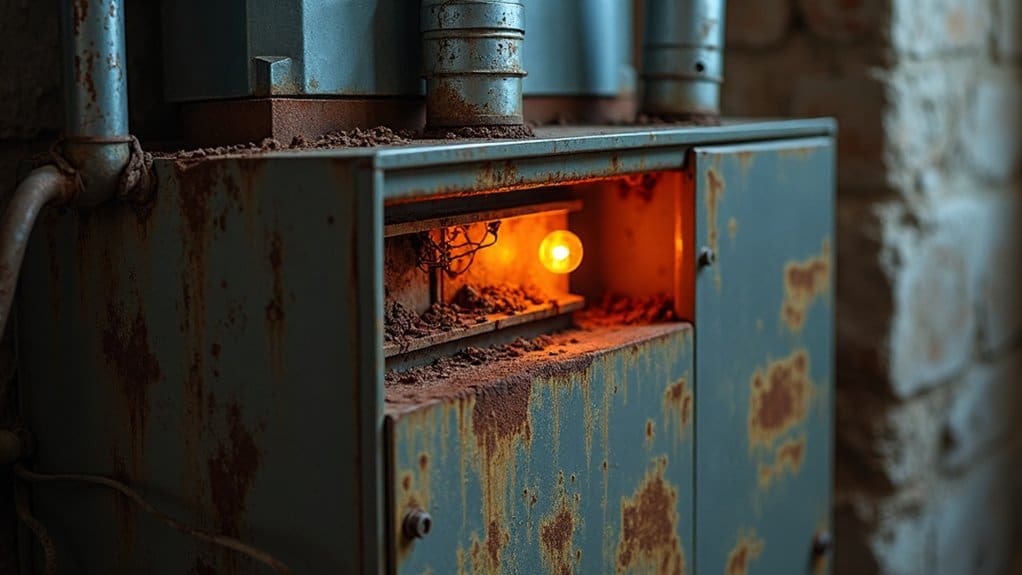
Your furnace sends clear warning signals when it’s struggling, including strange noises like banging or screeching, uneven heating between rooms, unexplained spikes in your energy bills, and frequent cycling on and off. You’ll also notice poor indoor air quality with unusual odors, a yellow or flickering pilot light, and it’s been over a year since professional maintenance. Recognizing these signs early prevents costly emergency repairs during winter’s peak demand, and understanding each warning signal helps you take proactive action.
Key Takeaways
- Strange noises like banging, rattling, or screeching indicate loose components, motor malfunctions, or worn-out parts requiring professional attention.
- Uneven heating between rooms signals clogged filters, ductwork issues, or malfunctioning blower motors that need immediate repair.
- Unexplained spikes in energy bills suggest your furnace is working harder due to dirty filters or worn components.
- Frequent cycling on and off indicates overheating problems caused by dirty filters, thermostat issues, or blocked vents.
- Poor air quality with musty or burning odors reveals mold buildup, electrical problems, or circulation issues.
Strange Noises Coming From Your Heating System
While your furnace should operate quietly in the background, strange noises often signal that something’s wrong with your heating system. Banging, rattling, screeching, or whistling sounds indicate loose components, motor malfunctions, or airflow restrictions that need immediate attention.
These unusual noises point to underlying issues like worn-out parts or system inefficiencies. When noises coming from your unit persist, it’s a clear sign your furnace needs a tune-up before winter’s peak demand arrives. Ignoring these warning sounds leads to more serious and costly problems that can reduce your system’s lifespan.
Don’t wait until your winter furnace fails completely. Professional HVAC technicians can diagnose and resolve the source of strange noises through thorough inspection and targeted repairs. Quality heating services include exhaustive furnace tune-ups that address these acoustic warning signs before they escalate into major breakdowns, ensuring your system operates safely and efficiently throughout the heating season.
Uneven or Inconsistent Heating Throughout Your Home
Nothing’s more frustrating than discovering your living room feels like a sauna while your bedroom remains uncomfortably cold. This uneven heating throughout your home signals underlying problems that require immediate attention before winter intensifies.
Inconsistent heating typically stems from restricted airflow caused by clogged air filters. When filters become dirty, they prevent proper air circulation, creating temperature imbalances between rooms. Some areas become overheated while others remain uncomfortably cold.
Ductwork issues also contribute considerably to improper air flow. Leaks or blockages in your duct system prevent heated air from reaching all areas evenly, resulting in frustrating temperature variations.
Failing system components like a malfunctioning blower motor or damaged heat exchanger can severely impact air distribution. These critical parts guarantee consistent heating throughout your home, and when they’re compromised, you’ll experience noticeable temperature differences.
Don’t ignore uneven heating—it indicates your furnace needs professional attention to restore balanced comfort.
Unexplained Spike in Energy Bills
Uneven heating often signals deeper furnace problems, but another red flag that demands your attention is a sudden jump in your energy bills. Rising energy bills without changes to your heating habits typically indicate your furnace runs harder to maintain comfortable temperatures.
Several culprits can trigger this unexplained increase in energy consumption. Clogged filters restrict airflow, forcing your system to work overtime. Dirty filters create the same problem, reducing your system’s efficiency enormously. Worn components lose their ability to operate smoothly, requiring more energy to produce the same heat output.
Don’t overlook ductwork issues like leaks or blockages. These problems create uneven heat distribution, causing your furnace to run longer cycles to compensate for lost heated air.
A professional tune-up addresses these efficiency killers directly. Technicians clean or replace filters, inspect worn components, seal ductwork problems, and restore your system’s peak performance, ultimately lowering your monthly heating costs.
Frequent Cycling On and Off
Beyond energy bill spikes, frequent cycling presents another troubling sign your furnace needs professional attention. When your system turns on and off repeatedly throughout the day, it’s experiencing short cycling that puts unnecessary strain on critical components.
Several culprits cause this disruptive pattern. A dirty air filter restricts airflow, creating an overheating system that shuts down prematurely for protection. Your malfunctioning thermostat might send incorrect temperature readings, confusing your furnace about when to operate. Blocked vents and ductwork problems also trigger overheating cycles.
This constant starting and stopping prevents your furnace from reaching ideal efficiency levels. You’ll notice higher energy bills as your system works harder while delivering less consistent comfort. More concerning, frequent cycling dramatically reduces the lifespan of your system by wearing down motors, heat exchangers, and electrical components.
A well-maintained furnace operates efficiently with longer, steady cycles. Professional tune-ups identify and resolve cycling issues before they cause expensive breakdowns.
Poor Indoor Air Quality and Unusual Odors
Your furnace affects more than just temperature control—it directly impacts the air you breathe every day. When your system malfunctions, it can circulate dust, allergens, and other pollutants throughout your home, creating serious respiratory issues for your family.
Pay attention to these warning signs that indicate compromised indoor air quality:
• Musty odors emanating from vents, which often signal mold or mildew buildup within your system
- Burning smell when your furnace operates, potentially indicating electrical problems or overheating components
- Increased dust accumulation on surfaces despite regular cleaning
- Family members experiencing more frequent allergy symptoms or breathing difficulties
- Stale or stuffy air that doesn’t circulate properly through your home
- Energy costs skyrocket as your furnace works harder to heat your home
- Minor issues escalate into expensive repairs during peak heating season
- Safety risks develop from neglected components and dirty filters
- System efficiency drops substantially, wasting fuel and money
- Furnace lifespan shortens due to accumulated wear and stress
Neglecting furnace maintenance allows debris to accumulate, creating breeding grounds for contaminants. Regular tune-ups guarantee proper airflow and combustion, preventing these pollutants from compromising your home’s air quality and protecting your family’s health throughout winter.
Yellow or Flickering Pilot Light
While a healthy furnace maintains a steady blue pilot light, a yellow or flickering flame signals dangerous combustion problems that demand immediate attention. This color change indicates your furnace isn’t burning fuel properly due to ventilation issues, creating incomplete combustion that reduces efficiency and poses serious safety risks.
A yellow or flickering pilot light can produce carbon monoxide, a deadly gas that’s colorless and odorless. You can’t detect this threat without proper monitoring equipment, making professional inspection essential when you notice pilot light irregularities.
Don’t ignore these warning signs, especially before winter when you’ll rely heavily on your heating system. Continuing to operate your furnace with a compromised pilot light leads to further system degradation and escalating safety hazards.
Schedule a furnace tune-up immediately if you’ve observed pilot light problems. A qualified professional will identify underlying ventilation issues and restore safe, efficient operation before cold weather arrives.
It’s Been Over a Year Since Your Last Professional Maintenance
If twelve months have passed since your last professional furnace maintenance, you’re operating on borrowed time before winter’s arrival. Your heating system requires annual attention to maintain peak efficiency and prevent costly breakdowns when you need warmth most.
Skipping your yearly tune-up creates a cascade of problems that’ll hit your wallet hard:
Don’t gamble with your family’s comfort and safety this winter. Professional maintenance catches small problems before they become major headaches. Your furnace has worked tirelessly through last winter’s demands – it deserves proper care to perform reliably through another heating season.
Conclusion
Don’t delay decisive action when detecting these dangerous signs. Your furnace’s functionality affects your family’s comfort and safety throughout the harsh winter months. Schedule seasonal service swiftly to sidestep serious setbacks and costly complications. Professional preventative maintenance protects your peace of mind while preserving your heating system’s peak performance. Take these telling signs seriously—they’re signaling that your system seeks skilled attention. Act now before bitter cold catches you completely unprepared.