
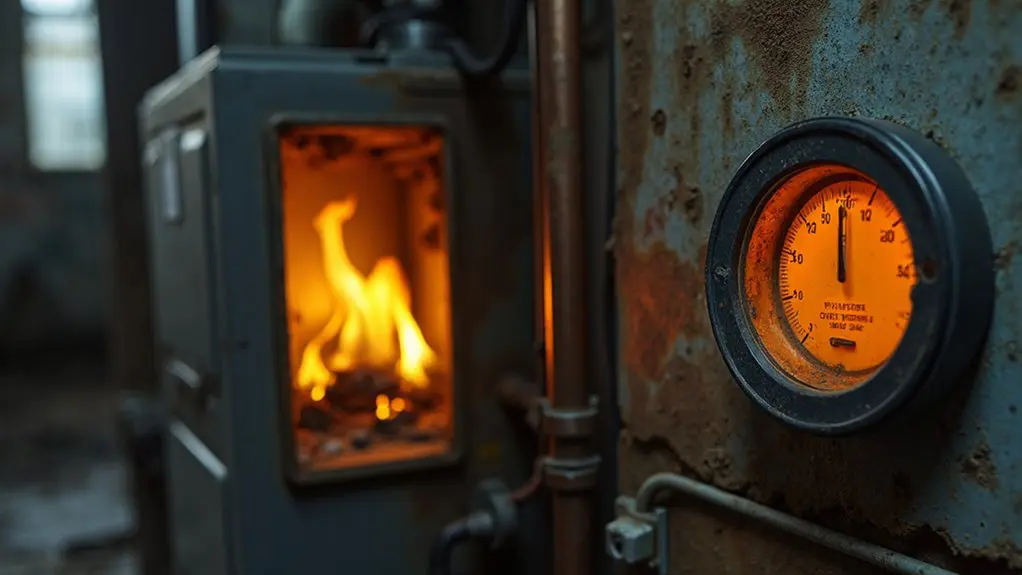
Your furnace shows several critical warning signs that demand immediate attention before winter arrives. Watch for unusual noises like banging or scraping, inconsistent heating between rooms, and rising energy bills despite unchanged usage patterns. You’ll also notice frequent on/off cycling, a yellow or flickering pilot light, poor indoor air quality, and difficulty starting the system. Visible dust or soot around the unit, combined with a furnace over 15 years old, signals potential failure. Understanding these symptoms will help you prevent costly breakdowns.
Key Takeaways
- Strange noises like banging, whistling, or scraping indicate loose parts or worn components requiring immediate professional repair.
- Uneven heating between rooms signals blocked airflow, malfunctioning parts, or improper sizing that strains your system.
- Unexplained increases in energy bills suggest your furnace is working overtime due to failing components or efficiency issues.
- Frequent on/off cycling wastes energy, reduces efficiency, and accelerates wear on furnace components leading to premature failure.
- Yellow or flickering pilot lights indicate dangerous combustion problems that can produce deadly carbon monoxide requiring immediate professional attention.
Unusual Noises Coming From Your Furnace
When did your furnace start making those strange noises that wake you up at night? Those banging, whistling, or scraping sounds aren’t just annoying—they’re warning signs your system Requires Repair immediately. These Noises Coming from your furnace typically indicate loose parts, air trapped in the lines, or worn-out components that won’t improve on their own.
Don’t ignore those loud noises hoping they’ll disappear. What starts as minor strange noises can quickly escalate into major furnace issues, potentially leaving you without heat during winter’s coldest days. Even worse, some sounds signal safety risks that put your family in danger.
You shouldn’t attempt DIY repairs on complex heating systems. Instead, call a professional who can accurately diagnose the problem and provide safe, effective solutions. A reputable repair service will identify the root cause and fix issues before they worsen. Contact us today to schedule your furnace inspection and Guarantee your home stays warm and safe this winter.
Inconsistent Heating Throughout Your Home
Strange noises aren’t the only warning sign your furnace needs attention—uneven temperatures throughout your home signal equally serious problems. When you notice inconsistent heating between rooms, your furnace is struggling with blocked airflow, malfunctioning components, or improper sizing.
This uneven heat distribution creates multiple issues: you’ll experience uncomfortable living conditions, face higher energy bills, and put unnecessary strain on your system as it works overtime to achieve desired temperatures.
Several culprits cause these temperature variations. Clogged air filters restrict proper airflow, while leaky ductwork allows heated air to escape before reaching its destination. Thermostat malfunctions can also disrupt your system’s ability to maintain consistent temperatures throughout your home.
Don’t overlook these warning signs. Contact a qualified HVAC technician who can diagnose the root cause and recommend necessary repairs. Addressing inconsistent heating promptly guarantees efficient operation, maintains comfort, and prevents costly problems from developing during winter’s peak demand.
Rising Energy Bills Without Increased Usage
While your heating habits remain unchanged, skyrocketing energy bills often reveal a furnace that’s silently failing beneath the surface. Your system’s working overtime to maintain comfortable temperatures, wasting energy through worn components and mechanical breakdowns.
A failing blower motor struggles to circulate air efficiently, forcing your furnace to run longer cycles. Meanwhile, a malfunctioning thermostat sends incorrect temperature readings, causing unnecessary heating cycles that drain your wallet. Poor air circulation from clogged filters or damaged ductwork compounds these problems.
Short cycling—when your furnace repeatedly turns on and off—creates excessive energy consumption while failing to heat your home properly. This erratic behavior signals internal components are breaking down, demanding immediate attention.
Ignoring these warning signs leads to costly repairs down the road. What starts as slightly higher bills quickly escalates into major system failures requiring complete replacements. Address rising energy costs now to prevent extensive furnace damage and restore efficient operation.
Frequent Cycling On and Off
Your furnace shouldn’t sound like a car engine that won’t start—constantly turning on and off throughout the day signals serious mechanical problems. This frequent cycling, also called short cycling, wastes energy and reduces your heating efficiency while putting excessive strain on your system.
Several culprits cause this disruptive pattern. Your thermostat might be malfunctioning, sending incorrect signals to your furnace. Restricted airflow from dirty filters or blocked vents forces your system to work harder than necessary. An oversized furnace can also trigger short cycling by heating your home too quickly, then shutting off prematurely.
Don’t ignore this warning sign—constant cycling accelerates component wear and leads to premature failure. You’ll face more extensive, costly repairs if you delay action. Contact a professional HVAC technician immediately to diagnose the root cause. They’ll identify whether you’re dealing with airflow restrictions, thermostat issues, or sizing problems, ensuring proper furnace operation before winter arrives.
Yellow or Flickering Pilot Light
Beyond mechanical disruptions, visual warning signs from your furnace demand immediate attention—especially changes in your pilot light’s appearance. Your pilot light should burn with a steady blue flame, indicating efficient fuel combustion. When you notice a yellow pilot light or flickering flame, you’re witnessing a dangerous malfunction in the combustion process.
A yellow pilot light signals an improper gas-air mixture that can produce carbon monoxide—a deadly, odorless gas. Don’t disregard this critical warning sign. Turn off your furnace immediately and step away from the unit.
This color change indicates incomplete fuel burning, creating toxic fumes that can accumulate in your home. Carbon monoxide poisoning poses serious health risks, including headaches, dizziness, and potentially fatal exposure.
Contact a professional inspection service right away. Only qualified technicians should diagnose and repair combustion issues. Don’t attempt DIY fixes—furnace repair involving gas components requires professional expertise to safeguard your family’s safety.
Strange Odors When System Operates
As your furnace cycles through its heating process, any unusual odors should trigger immediate concern and action. Your heating system shouldn’t produce strong or unpleasant smells during normal operation, making these clear signs that repairs are necessary.
A rotten egg smell indicates a dangerous gas leak requiring immediate furnace shutdown and professional inspection. Don’t ignore this critical warning – evacuate your home and contact emergency services immediately. Persistent musty odors suggest mold growth in your system, while burning smells often point to dust buildup or electrical issues that compromise your air quality.
Strange odors emanating from your furnace represent underlying problems that demand professional evaluation. These repair needs won’t resolve themselves and can lead to severe system malfunctions if left unaddressed. Your indoor air quality suffers when you ignore these warning signs, potentially affecting your family’s health and comfort throughout winter.
Poor Indoor Air Quality
When furnaces develop problems, they don’t just affect your comfort – they compromise the air you breathe every day. A malfunctioning system can circulate harmful contaminants throughout your home, creating serious health risks for your family.
Several issues indicate your furnace is damaging your air quality:
- Dust buildup and dirty filters reduce airflow while spreading allergens and particles through your living spaces
- Loose components and damaged ductwork allow contaminants to enter the system and circulate freely
- Gas leaks or incomplete combustion create dangerous carbon monoxide exposure that threatens your family’s safety
You’ll notice these problems when your furnace running produces unusual noises, increased dust accumulation on surfaces, or worsening allergy symptoms among household members. Don’t ignore these warning signs – poor air quality from furnace issues requires immediate professional attention to protect your health and restore clean, breathable air.
Difficulty Starting Your Furnace
If your furnace hesitates, clicks repeatedly, or refuses to fire up when you need it most, you’re dealing with ignition problems that demand immediate attention. When your furnace turns on only after multiple attempts or won’t start at all, it’s one of the clearest warning signs that repair before winter is crucial.
Difficulty starting your furnace typically stems from electrical issues, a malfunctioning control board, or worn spark igniter components. These problems won’t resolve themselves and often worsen over time. Turn off your furnace if it’s making unusual sounds during startup attempts.
Don’t ignore signs that your furnace is struggling to ignite. What starts as occasional hesitation can quickly escalate to complete system failure during peak heating season. Contact a professional furnace technician immediately when you notice consistent starting difficulties. Early intervention prevents costly emergency repairs and guarantees reliable heating when temperatures drop.
Visible Dust or Soot Around the Unit
While ignition problems create internal mechanical failures, external warning signs around your furnace unit reveal equally serious concerns. When you notice visible dust or soot accumulating around your heating system, these signs your furnace needs professional attention shouldn’t be ignored.
Excess dust and soot indicate issues with incomplete combustion or clogged burners, significantly reducing your system’s effectiveness. This contamination signals that your furnace needs immediate inspection to prevent potential fire hazards and maintain ideal performance.
Key warning signs requiring prompt furnace repairs include:
- Heavy dust buildup on surfaces surrounding the unit
- Dark soot stains on walls or ceiling near the furnace
- Visible debris accumulating around air vents and intake areas
These external indicators require immediate professional cleaning and inspection. Addressing visible contamination helps keep your home warm and safe while preventing more serious problems from developing. Regular monitoring certifies your heating system operates efficiently throughout winter months.
Furnace Age Exceeding 15 Years
Although external warning signs provide immediate indicators of furnace problems, your heating system’s age serves as the most reliable predictor of future repair needs. If your furnace has exceeded 15 years, it’s among the top signs that you’ll face increased repair costs and reduced reliability.
Aging furnaces struggle with increased usage demands, making them less capable of efficiently keeping your home warm during harsh winter months. As components wear down, your system becomes prone to unexpected breakdowns that could leave you without heat when you need it most.
Don’t wait for a complete failure. Schedule an inspection with a qualified technician to assess your furnace’s condition. They’ll determine whether targeted heating repair can extend your system’s life or if replacement offers better long-term value. Proactive maintenance prevents emergency situations and safeguards your family’s comfort throughout winter while avoiding costly mid-season heating repair emergencies.
Conclusion
Don’t ignore these warning signs – they’re telling you something’s seriously wrong with your furnace. You’ll face expensive emergency repairs or complete system failure if you wait until winter hits. Why risk your family’s comfort and safety when a simple inspection could prevent disaster? Schedule professional maintenance now while contractors aren’t swamped with emergency calls. Your wallet and your loved ones will thank you when those freezing temperatures arrive.