
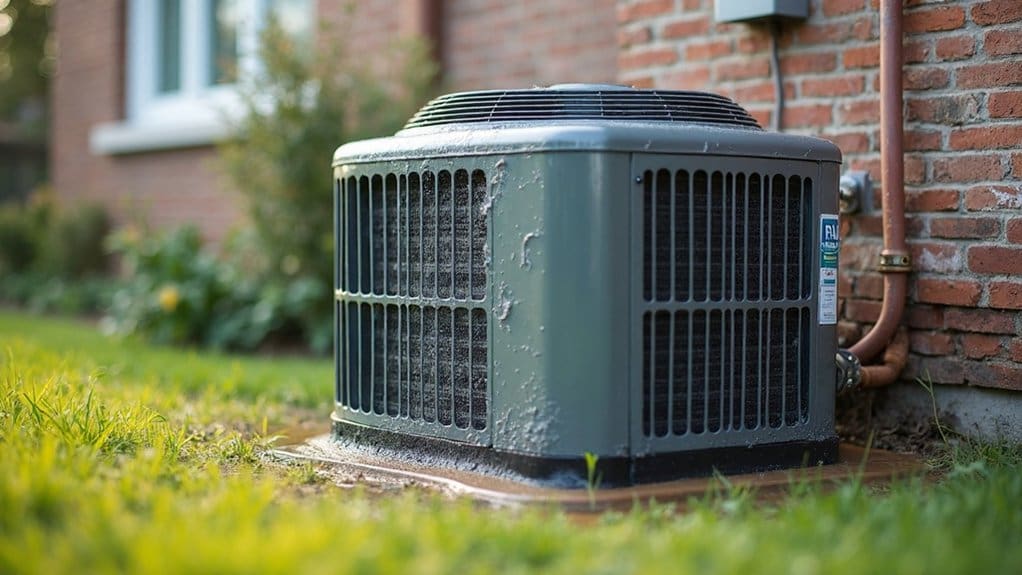
You’ll know your heat pump needs professional attention when it makes unusual grinding, squealing, or rattling sounds, struggles to maintain consistent temperatures throughout your home, or cycles on and off frequently without reaching your desired comfort level. Watch for unexpected spikes in your energy bills, ice buildup on the unit, or strange odors like musty, burning, or chemical smells. These warning signs indicate underlying issues that require immediate professional diagnosis to prevent costly system failures and restore ideal performance.
Key Takeaways
- Unusual noises like grinding, squealing, or banging indicate worn bearings, loose components, or potential system failures requiring immediate attention.
- Inconsistent temperatures and extended runtime without reaching desired comfort levels signal restricted airflow or malfunctioning components.
- Short cycling or constant operation wastes energy and increases wear, often caused by thermostat issues or clogged filters.
- Unexpected increases in monthly energy bills indicate declining efficiency from dirty filters, refrigerant leaks, or worn parts.
- Ice buildup or strange odors signal serious problems including refrigerant issues, electrical problems, or mold growth requiring prompt inspection.
Unusual Noises Coming From Your Heat Pump System
When your heat pump starts making grinding, squealing, rattling, clicking, or hissing sounds, it’s signaling that something’s wrong and needs immediate attention. These unusual noises often indicate serious problems like worn motor bearings, loose hardware, capacitor failure, or refrigerant leaks that require prompt professional attention.
Don’t ignore these warning signs. Continuing to operate your system with these sounds can lead to compressor failure and costly repairs. Banging or clunking noises typically point to loose components, motor issues, or debris obstructing fan operation.
If your heat pump’s running at full power while producing these concerning sounds, shut it off immediately. This persistent operation combined with unusual noises suggests underlying mechanical problems that need professional diagnosis. Whether it’s a broken fan blade or malfunctioning internal components, any odd sounds from your heat pump system shouldn’t be overlooked. Contact a certified HVAC technician promptly to prevent minor issues from becoming major failures.
Declining Heating and Cooling Performance Throughout Your Home
If your heat pump isn’t maintaining consistent temperatures throughout your home or runs for extended periods without reaching your desired comfort level, you’re likely dealing with declining system performance. This troubleshooting scenario often points to underlying issues like low refrigerant levels, dirty air filters, or clogged coils that compromise your system’s efficiency.
When you notice uneven heating and cooling throughout different rooms, it’s a clear signal your heat pump requires professional maintenance. These performance problems typically stem from restricted airflow, malfunctioning components, or thermostat issues that prevent ideal operation.
Don’t ignore noticeable decreases in your system’s heating or cooling output. Such declining performance not only affects your comfort but also increases energy costs as your heat pump works harder to compensate. A thorough professional tune-up can identify and resolve the root causes of these efficiency problems, restoring your system’s excellent performance and extending its lifespan through proper maintenance protocols.
Frequent Short Cycling or Constant System Operation
Beyond temperature inconsistencies, your heat pump’s operating patterns reveal critical information about its health and efficiency. Short cycling occurs when your system turns on and off repeatedly without reaching the desired temperature set by your thermostat settings. This frequent cycling wastes energy, increases wear on components, and reduces your system’s efficiency dramatically.
Conversely, if your heat pump runs constantly without shutting off, it’s struggling to maintain comfort levels. Both patterns indicate underlying problems requiring professional attention. Common culprits include a malfunctioning thermostat that can’t accurately read temperatures, clogged filters restricting airflow, or a failing blower motor that can’t circulate air properly.
A malfunctioning compressor might also cause these irregular operating patterns. When your heat pump exhibits frequent cycling or runs continuously, don’t ignore these warning signs. These behaviors strain your system unnecessarily, driving up energy costs while compromising indoor comfort throughout your home.
Unexpected Increases in Your Monthly Energy Bills
Rising energy bills often serve as the first indicator that your heat pump isn’t operating at peak efficiency. When your system’s efficiency declines, it directly impacts your utility costs by forcing the unit to consume more power to maintain comfortable temperatures.
You’ll notice your heat pump is struggling when monthly energy consumption increases without corresponding changes in usage patterns or weather conditions. Higher energy bills typically result from components working harder due to dirty filters, refrigerant leaks, or worn parts that haven’t received proper maintenance.
Rising energy costs don’t happen overnight – they gradually increase as your system deteriorates. A well-maintained heat pump should maintain consistent energy use throughout its lifespan. If you’re experiencing unexpected spikes in energy costs, it’s time to schedule professional tune-up services. Technicians can identify efficiency problems and restore ideal performance, ultimately reducing energy consumption and lowering your monthly bills.
Ice Buildup or Strange Odors From the Unit
When ice accumulates around your heat pump’s outdoor unit or unusual smells emerge from the system, you’re witnessing clear signs that something’s wrong with your equipment. Excessive ice formation during winter operation indicates potential problems with refrigerant levels, dirty coils, or clogged air filters restricting proper airflow.
Strange odors can signal various issues requiring immediate attention:
- Musty smells may signal mold growth in your ductwork
- Burning odors could indicate electrical problems
- Chemical smells might suggest refrigerant leaks
- Rotten egg odors require immediate professional inspection
- Sweet smells often indicate coolant issues
Ice buildup combined with unusual noises coming from your system creates a serious underlying issue that demands professional intervention. Don’t ignore these warning signs, as they can lead to complete system failure. A professional HVAC technician can identify the root cause and prevent costly repairs while ensuring your heat pump operates safely and efficiently.
Frequently Asked Questions
What Does a Heat Pump Tune up Include?
A heat pump tune-up includes refrigerant charge evaluation, compressor performance check, coil cleaning, filter replacement, electrical connection inspection, thermostat calibration, airflow measurements, system diagnostics, and ductwork inspection to optimize your system’s efficiency.
How Much Is a Heat Pump Tune Up?
You’ll pay $75-150 for professional inspection cost from HVAC technician rates. Average service cost varies by location and preventative maintenance pricing plans. This investment beats expensive heat pump repair estimates while meeting manufacturer tune up recommendations.
How Often Should I Tune up My Heat Pump?
Picture your heat pump humming smoothly through seasons. You’ll need routine maintenance intervals every 6-12 months following manufacturer guidelines adherence. Skilled technician recommendations guarantee consistent energy efficiency, reduced operating costs, and seasonal performance optimization through timely preventive measures.
What Is the Most Common Problem With Heat Pumps?
You’ll most commonly encounter refrigerant leaks in heat pumps. These leaks cause low refrigerant levels, reducing efficiency and cooling capacity. Other frequent issues include thermostat malfunctions, frozen coils, electrical problems, and fan motor failures that impact system performance.
Conclusion
Don’t ignore these warning signs—they’re your heat pump’s cry for help. Why wait until a minor issue becomes a costly breakdown? You’ll save money and extend your system’s lifespan by scheduling professional tune-up services at the first sign of trouble. Whether it’s unusual noises, poor performance, or rising energy bills, you’re better off addressing problems early. Contact a qualified HVAC technician today to keep your heat pump running efficiently year-round.