
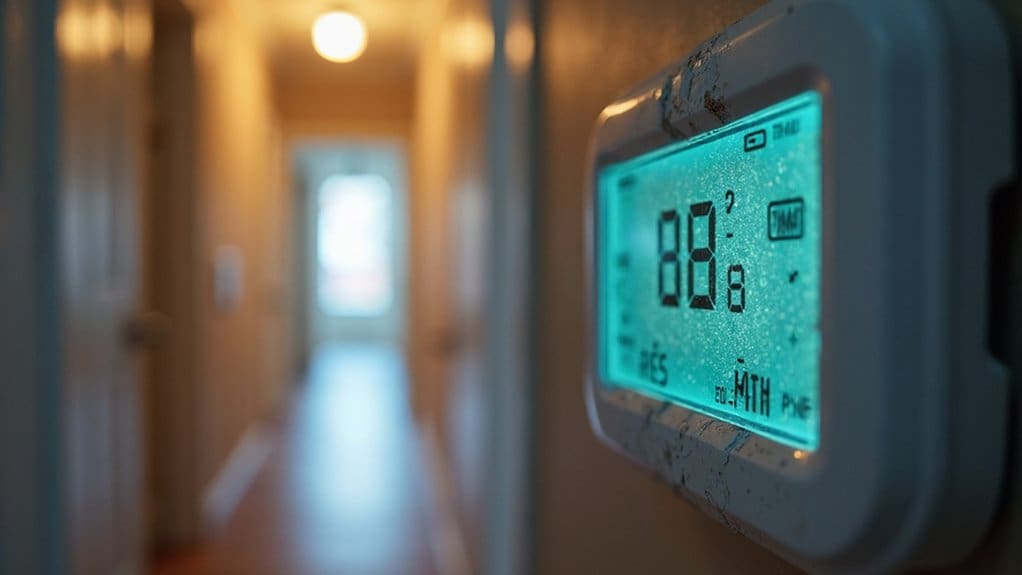
Your thermostat needs professional repair when you notice these five warning signs: a blank or unresponsive display indicating power or circuitry problems, continuous HVAC operation without proper cycling, temperature readings that don’t match your home’s actual conditions, heating or cooling systems that won’t activate despite correct settings, and programmed schedules that keep disappearing or reverting to defaults. These issues signal faulty sensors, wiring problems, or internal component failures that’ll explore detailed solutions below.
Key Takeaways
- Blank or non-responsive display indicates power supply problems or faulty internal circuitry requiring professional diagnosis.
- HVAC system running continuously without cycling off signals thermostat’s inability to accurately measure and regulate temperature.
- Temperature readings that don’t match your home’s actual temperature suggest sensor failures or poor placement issues.
- Heating or cooling system won’t respond despite correct settings due to loose wiring or component failures.
- Thermostat repeatedly losing programmed schedules and reverting to defaults indicates memory or control circuitry problems.
Your Thermostat Display Goes Blank or Won’t Respond
When was the last time you walked over to adjust your thermostat only to find a completely blank screen staring back at you? A blank display or non-responsive thermostat signals serious trouble that demands immediate attention.
This unresponsive thermostat behavior typically stems from power supply problems or faulty circuitry within the unit. Your display screen might’ve gone dark due to malfunctioning display circuit components or deeper issues with the device’s internal circuitry. When your thermostat won’t respond to button presses or temperature adjustments, you’re dealing with compromised control systems that can’t regulate your home’s climate effectively.
Don’t attempt complex repairs yourself. These blank display issues require professional diagnosis from an experienced HVAC technician who can identify whether the problem lies in the power source, display circuit, or other critical components. In most cases, extensive internal damage means you’ll need complete thermostat replacement to restore reliable heating and cooling control.
HVAC System Runs Continuously Without Cycling Off
Your HVAC system should cycle on and off throughout the day to maintain your desired temperature, but if it’s running nonstop, you’re facing a clear warning sign of thermostat trouble. When your furnace or heating system operates continuously running without cycling off, it typically indicates your thermostat can’t properly signal the system to shut down.
This problem often stems from a faulty thermostat that’s unable to accurately measure temperature changes in your home. The thermostat might be sending incorrect temperature readings, preventing it from recognizing when your desired temperature has been reached. Poor thermostat settings or programming issues can also cause this energy-wasting situation.
A continuously running HVAC system drains excessive energy and causes premature wear on your equipment’s components. You’ll notice higher utility bills and potential system breakdowns. Professional thermostat repair is essential to restore normal cycling patterns and return your heating system to energy-efficient operation.
Temperature Readings Don’t Match Your Home’s Actual Temperature
If you’ve noticed your thermostat displays one temperature while your home feels noticeably warmer or cooler, you’re dealing with another telltale sign of thermostat malfunction. This temperature discrepancy typically indicates problems with the sensor or thermistor within your unit. These internal components are responsible for accurate readings, and when they fail, your thermostat can’t properly gauge your home’s actual temperature.
Sometimes the issue stems from poor placement rather than faulty parts. If your thermostat is located near drafts or heat sources, it’ll provide skewed readings that don’t reflect your home’s overall comfort level.
Switching the mode from “Auto” to “On” won’t resolve sensor-related problems. When internal components malfunction, you’ll likely need professional diagnosis to determine whether repair or complete replacement is necessary. These delicate issues require expert attention to restore accurate temperature monitoring and efficient HVAC operation.
Your System Won’t Turn On Despite Proper Settings
One of the most frustrating thermostat problems occurs when you’ve set everything correctly, but your heating or cooling system simply won’t respond. When your furnace won’t turn on despite proper thermostat settings, several underlying issues could be preventing your controller to work effectively.
Common causes include:
- Loose wires between your thermostat and HVAC system that disrupt communication signals
- Faulty wiring or damaged connections preventing proper electrical flow
- Circuit breaker trips cutting off your thermostat’s power supply
- Component failures within the thermostat’s internal circuitry affecting operation
A malfunctioning thermostat can’t properly signal your heating or cooling components to activate. Before you call a professional, inspect the unit for obvious issues like tripped breakers or loose connections. However, complex electrical problems require expert diagnosis. HVAC technicians have specialized tools to identify whether faulty wiring, power supply issues, or internal component failures are preventing your system from responding to thermostat commands.
Thermostat Keeps Reverting to Default Settings After Programming
When you spend time carefully programming your thermostat’s schedule and temperature preferences, only to discover they’ve mysteriously disappeared the next day, you’re dealing with a significant malfunction that demands immediate attention. This persistent reversion to default settings indicates serious problems with your device’s memory or control circuitry.
Your thermostat’s inability to retain user-programmed temperature schedules stems from several potential issues. Faulty internal components can corrupt stored data, while firmware bugs may cause the system to reset unexpectedly. Power supply problems often trigger memory loss, forcing your thermostat back to factory defaults after each reprogramming attempt.
This constant resetting creates inconsistent temperature control and reduces your home’s energy efficiency. You’ll waste time repeatedly entering the same schedules while experiencing uncomfortable temperature fluctuations. Don’t continue this frustrating cycle of reprogramming only to lose your settings again. Professional repair or replacement will address the root cause and restore reliable operation.
Frequently Asked Questions
What Are the Common Symptoms of a Thermostat With Has Failed?
You’ll notice temperature fluctuations, unexpected heating patterns, and inability to maintain set temperature. Your thermostat becomes unresponsive to changes, displays malfunction, reads inaccurate temperatures, cycles rapidly, and fails turning on your HVAC system properly.
Do I Need a Professional to Replace My Thermostat?
Like traversing a ship’s complex control panel, you’ll face thermostat installation complexity, compatibility concerns, connectivity problems, and programming difficulties. While you can handle thermostat batteries replacement, professional help guarantees proper temperature setting changes and sensitivity adjustments.
How to Tell if a Thermostat Needs to Be Replaced?
You’ll notice inaccurate temperature readings, failure to respond to adjustments, temperature fluctuations, increased energy bills, thermostat display issues, and sudden temperature changes. These signs indicate thermostat sensor malfunctions requiring replacement.
What Is the Lifespan of a Thermostat?
Most thermostats last 10 years on average, but your unit’s actual lifespan depends on usage patterns, environmental factors, and maintenance schedule. Smart models with automatic adjustments typically outlast basic manual units requiring frequent temperature swings.
Conclusion
Don’t ignore these warning signs hoping they’ll resolve themselves—you’ll only face costlier repairs down the road. While you might think you can fix thermostat issues with online tutorials, electrical components require professional expertise to avoid safety hazards or further damage. You’ve invested too much in your home’s comfort system to risk amateur repairs. Contact a qualified HVAC technician immediately when you notice any of these symptoms to restore reliable temperature control.