
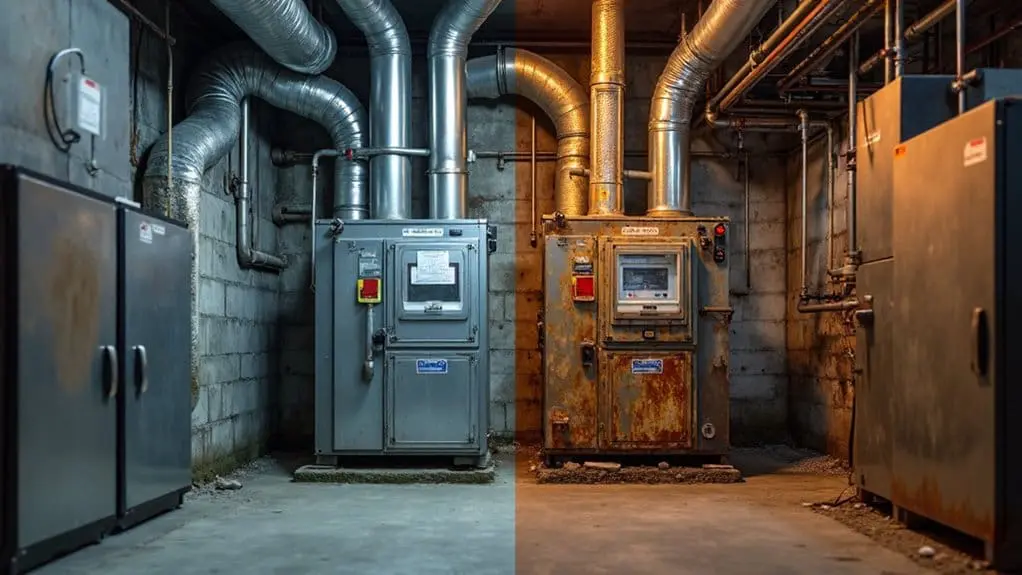
You should replace your furnace when repair costs exceed 50% of a new unit’s price, especially for systems over 15-20 years old operating below 80% efficiency. Immediate replacement is non-negotiable if you detect cracked heat exchangers, carbon monoxide risks, or repeated breakdowns compromising safety. While newer furnaces under 10 years typically warrant repairs, aging systems with escalating energy bills and uneven heating justify replacement for long-term savings. Professional assessment reveals the most cost-effective solution for your specific situation.
Key Takeaways
- Apply the 50% rule: replace your furnace when repair costs exceed 50% of a new system’s price.
- Furnaces over 15-20 years old should typically be replaced due to declining efficiency and increasing repair frequency.
- Older furnaces operate at 60-80% efficiency while modern units achieve 90%+ AFUE ratings for substantial energy savings.
- Replace immediately if safety issues exist: cracked heat exchanger, carbon monoxide risks, or visible corrosion on components.
- Consider replacement when experiencing uneven heating, escalating energy bills, or frequent breakdowns despite regular maintenance.
How Furnace Age Affects Repair Vs Replace Decisions
Your furnace’s age serves as the primary indicator for determining whether repair or replacement makes financial sense. If your heating system is under 10 years old, repair typically proves more cost-effective than replacement, provided you’ve maintained regular service schedules.
Systems between 10-15 years require careful evaluation. Calculate repair costs against remaining lifespan and efficiency losses. Older units in this range often justify replacement if major components fail.
Once your furnace exceeds 15-20 years, replacement becomes the smarter financial decision. Older systems suffer declining efficiency, increasing your heating costs substantially. They also require frequent repairs, creating ongoing maintenance expenses that accumulate quickly.
Beyond 20 years, even minor repairs rarely make economic sense. These aging systems pose safety risks and can’t match modern efficiency standards. Your decision should prioritize long-term cost savings over short-term repair expenses. New furnaces deliver superior efficiency, reliability, and safety features that older models simply can’t provide.
The 50% Rule: When Repair Costs Signal Replacement Time
One simple calculation can instantly clarify whether you should repair or replace your furnace: the 50% rule. When your HVAC repair costs exceed 50% of a new system’s price, replacement becomes the financially sound choice for your home.
This rule proves especially valuable for costly repairs like cracked heat exchangers or major component failures. These expensive issues often signal deeper system problems that’ll continue draining your budget. For furnaces approaching or exceeding 20 years, applying the 50% rule helps you make an informed decision about your home’s heating future.
Consulting a professional HVAC technician guarantees accurate repair estimates and replacement costs. They’ll assess whether continuing repairs makes financial sense or if investing in a new system delivers better value. Remember, replacing an aging, inefficient furnace with a high-efficiency model generates substantial energy savings that offset the higher upfront investment, improving your home’s energy efficiency while reducing long-term operating costs.
Energy Efficiency Considerations for Older Furnaces
While repair costs provide one lens for decision-making, energy efficiency considerations often reveal the hidden financial burden of keeping an older furnace. Your furnace’s Annual Fuel Utilization Efficiency (AFUE) rating directly impacts energy costs year after year.
Older systems typically operate at 60-80% AFUE, meaning 20-40% of your fuel burns wastefully. When you make the choice between Repair or Replace, consider that modern energy efficient units achieve 90%+ Fuel Utilization Efficiency (AFUE) ratings.
Calculate your potential savings: multiply your annual heating costs by the efficiency difference. A 15-20% improvement translates to substantial long-term savings that often justify the cost of a new furnace within 5-10 years.
Regular maintenance can’t overcome fundamental design limitations in aging systems. Time works against older furnaces as components deteriorate, further reducing efficiency. Energy efficient replacements also provide consistent heating, improved safety features, and reduced environmental impact while delivering predictable operating costs.
Safety Red Flags That Require Immediate Replacement
Beyond efficiency concerns, certain furnace conditions present immediate safety hazards that make replacement non-negotiable. A cracked heat exchanger poses the most serious threat, as it can leak deadly carbon monoxide into your home. This warrants immediate furnace replacement regardless of repair costs.
Watch for critical warning signs: strange noises, odd smells, or soot buildup around your unit indicate combustion issues requiring urgent replacement. These symptoms suggest your furnace isn’t burning fuel properly, creating dangerous conditions.
If you’re experiencing repeated breakdowns that can’t be reliably fixed, you’re dealing with an unsafe system. Furnaces over 20 years old are particularly vulnerable to developing cracks and hazardous failures.
Any visible corrosion or rust on interior components signals imminent danger. These deteriorated parts increase carbon monoxide leak risks exponentially. Don’t gamble with your family’s safety—when these red flags appear, replacement isn’t just recommended, it’s essential for protecting lives.
Signs Your Furnace Is Struggling to Heat Your Home
How can you tell if your furnace is losing its battle against winter’s demands? Your heating system provides clear warning signs when it’s struggling to keep your home maintains warm effectively.
Watch for these critical indicators that help you make an informed replacement decision:
- Age-related efficiency decline – If your furnace is over 15 years old, wear and tear reduces its heating capacity, even if it’s still relatively young compared to some systems lasting 20+ years.
- Uneven temperature distribution – Cold spots throughout your home signal your furnace can’t meet heating demands, requiring more energy and driving up costs.
- Escalating energy bills – Sudden increases in heating costs without usage changes indicate declining efficiency that’s costing you money.
A professional HVAC technician can help assess whether repair or replacement makes financial sense. They’ll provide expert advice on deciding whether to repair your aging system or invest in reliable, efficient heating that preserves consistent comfort.
Cost Analysis: Repair Vs Replace Financial Comparison
Three key financial factors determine whether repairing or replacing your furnace makes economic sense. The 50% rule provides essential guidance: if repair costs exceed half the price of a new unit, replacement becomes the cost-effective option. Costly repairs like cracked heat exchangers often push you beyond this threshold.
Your furnace’s age considerably impacts this decision. While repairing units under 10 years old typically makes sense, the cost of repairs for 15-20 year old systems rarely justifies the expense when replacement isn’t always straightforward but offers better value.
Consider long-term savings alongside upfront cost. An energy-efficient model delivers substantial utility bill reductions that offset higher initial investment. Professional HVAC assessment proves indispensable for accurate cost analysis, weighing repair expenses against replacement benefits.
Calculate total ownership costs over five years when determining whether repairing or replacing makes financial sense. When replacement is the better choice, you’ll gain improved reliability, enhanced safety, and measurable energy savings that compound annually.
Benefits of Proactive Furnace Replacement
Why wait until your furnace fails when strategic replacement delivers measurable advantages? When your heating system is nearing the end of its operational lifespan, replacing your furnace proactively helps you make the best decision for long-term comfort and cost efficiency.
Key advantages of strategic furnace replacement:
- Uninterrupted comfort – You’ll guarantee your home stays warm during critical winter months without unexpected breakdowns that leave you without heat.
- Significant energy savings – Newer models deliver superior efficiency ratings, saving you money on monthly heating bills through reduced energy consumption.
- Advanced comfort features – Modern units offer zoned heating, smart thermostat integration, and precise temperature control that older systems can’t provide.
HVAC professionals can help assess your current system’s condition and recommend ideal replacement timing. While proper maintenance can extend the life of aging equipment, your HVAC system’s declining efficiency and increasing repair frequency signal replacement benefits outweigh continued repairs.
Professional Assessment: Getting Expert Guidance
Most homeowners lack the technical expertise to accurately assess their furnace’s true condition and remaining lifespan. You’ll need a professional HVAC technician to diagnose your system’s actual performance metrics, safety concerns, and repair viability. An expert evaluation involves thorough testing of heat exchangers, electrical components, and combustion efficiency ratings.
Professional technicians assess multiple factors simultaneously: your furnace’s age, maintenance history, current efficiency levels, and projected repair costs versus replacement expenses. They’ll provide a detailed cost-benefit analysis comparing short-term repair investments against long-term energy savings from newer systems.
This personalized guidance guarantees you’re making data-driven decisions rather than emotional ones. Qualified professionals identify safety hazards like carbon monoxide leaks or faulty gas connections that untrained individuals might miss. Their expert assessment weighs your home’s specific heating requirements, budget constraints, and efficiency goals to recommend whether repair or replacement delivers ideal value for your situation.
Conclusion
You’re standing at a financial crossroads where your furnace’s twilight years demand decisive action. Don’t let repair costs bleed your budget dry—the 50% rule isn’t just guidance, it’s your financial lifeline. When safety red flags wave or efficiency plummets, you’re gambling with more than comfort. Crunch the numbers, weigh long-term savings against short-term patches, and consult professionals before your heating investment becomes a money pit that compromises your family’s well-being.