
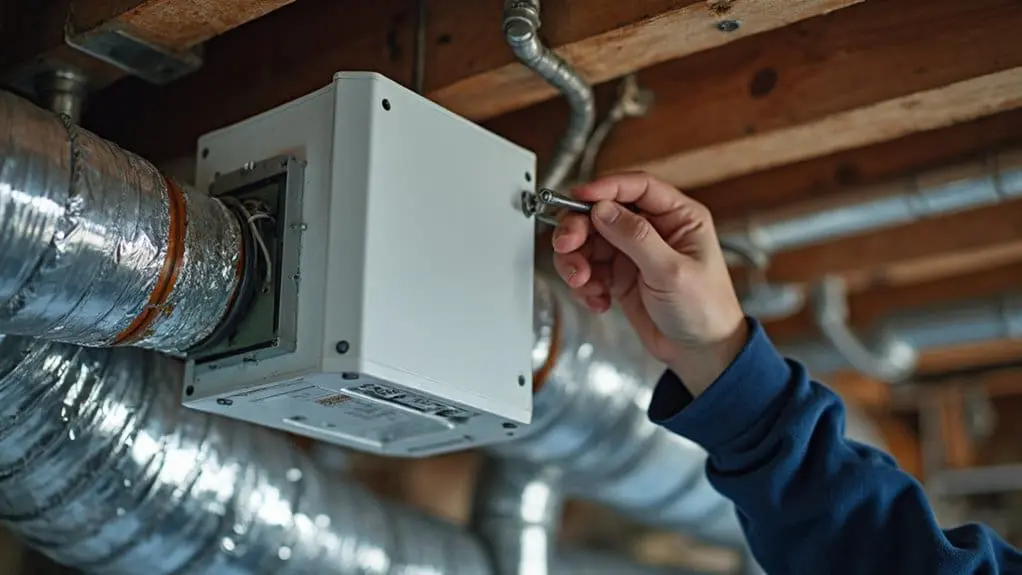
You’ll start by measuring your home’s square footage and testing baseline humidity levels with a hygrometer. Next, examine your HVAC system’s ductwork configuration and verify electrical panel capacity. Choose between bypass, fan-powered, or steam humidifier types based on your system’s compatibility. Gather essential tools like drills, jigsaws, and mounting hardware. Install the unit on a straight ductwork run, connect water supply lines, wire the humidistat, and test system integration. Our detailed guide covers every critical detail.
Key Takeaways
- Measure home square footage, test current humidity levels, and examine HVAC ductwork configuration before selecting the appropriate humidifier type.
- Choose between bypass, fan-powered, or steam humidifier systems based on home size, climate conditions, and HVAC compatibility requirements.
- Gather essential tools including drill, jigsaw, and level, plus materials like duct tape, hose clamps, and manufacturer-provided installation components.
- Install mounting plate and humidifier unit on return air duct, then connect water supply, drainage lines, and electrical wiring.
- Test system operation, integrate with HVAC controls, and establish regular maintenance schedule for optimal performance and longevity.
Pre-Installation Assessment and Planning
Accuracy in pre-installation assessment determines whether your whole-house humidifier will function effectively within your home’s specific environment. Begin by measuring your home’s square footage and calculating required humidity output based on indoor air volume. Test current humidity levels using a hygrometer to establish baseline measurements throughout different seasons.
Examine your existing HVAC system’s ductwork configuration, airflow patterns, and available mounting locations. Verify your electrical panel’s capacity for additional circuits and identify ideal wire routing paths. Assess your water supply lines for accessibility, pressure levels, and connection points near the installation area.
Review local building codes regarding humidifier installations, electrical requirements, and water connections. Document your HVAC system’s specifications, including furnace type, duct materials, and control system compatibility. Measure available space for unit placement and service access.
Create a detailed installation plan identifying tool requirements, material specifications, and safety protocols before proceeding with humidifier selection and installation procedures.
Choosing the Right Whole-House Humidifier Type
Three primary humidifier types dominate the whole-house market, each offering distinct operational characteristics that’ll directly impact your system’s performance and maintenance requirements.
Bypass whole-house humidifiers utilize your existing HVAC system’s warm air circulation through a water-filled evaporator pad. They’re cost-effective but depend entirely on your furnace’s operation for humidity distribution.
Fan-powered units enhance energy efficiency by incorporating dedicated circulation fans, delivering superior moisture distribution regardless of your HVAC system’s cycling patterns. However, they produce slightly more operational noise than bypass models.
Steam humidifier systems operate independently from your heating system, providing precise control humidity capabilities and ideal indoor air quality year-round. While offering superior performance, they require higher upfront investment.
Factors to take into account include your home’s square footage, local climate conditions, and HVAC system compatibility. Proper sizing prevents over-humidification that can cause mold growth or under-performance that fails to achieve target humidity levels. ENERGY STAR certified whole-house systems deliver long-term operational cost savings.
Gathering Required Tools and Materials
Once you’ve selected your humidifier type, proper preparation becomes the foundation for a successful installation. You’ll need essential tools including a drill, jigsaw, utility knife, level, and wrench to complete the project efficiently.
Gather critical materials like duct tape, hose clamps, and sealant for secure connections between your humidifier and existing ductwork. Your installation kit should include the mounting plate, bypass duct, and humidistat – verify these components before commencing.
Review your manufacturer’s instructions carefully to identify any additional requirements. Some models need specific water supply tubing or specialized fittings. Don’t overlook this step, as missing materials can halt your progress mid-installation.
Before beginning work, research local building codes and obtain necessary permits. Many jurisdictions require permits for whole-house humidifier installations, particularly when modifying electrical or plumbing systems. Compliance safeguards your investment and assures safe operation.
System Compatibility and Location Selection
System compatibility determines whether your HVAC unit can effectively support a whole-house humidifier without compromising performance or requiring costly modifications. Examine your ductwork to guarantee it has a straight trunk run of at least 1.8 meters, as complex configurations complicate installation and reduce efficiency.
Verify your water supply line accessibility for direct plumbing connections. Most units connect via saddle valve to existing water lines, while others use refillable tanks. Locate your return air duct for ideal installation positioning.
Check your electrical connections and power source capacity. Standard outlets typically suffice, but larger models may require dedicated circuits. Confirm your HVAC systems can handle the additional load without strain.
Select installation locations away from stoves, heat sources, and high-moisture areas like bathrooms to prevent mold growth and moisture damage. Proper positioning ensures optimal performance and longevity while maintaining safety standards throughout operation.
Preparing the Ductwork and Mounting Area
Before mounting your whole-house humidifier, you’ll need to create precise openings in your ductwork that accommodate the unit’s dimensions while preserving system integrity. Read the manufacturer’s instructions carefully to determine exact placement requirements for your specific model.
Cut a clean hole in the return duct, guaranteeing the humidifier will sit level for proper water drainage. Professional installation requires measuring twice and cutting once to avoid costly mistakes. Apply foam backing around the hole’s edges to sustain an airtight seal when you install the unit.
Connect dedicated ductwork from the humidifier to your HVAC system’s supply line. This connection enables consistent humidity levels throughout your home by distributing moisturized air effectively. Position the unit away from obstructions and high-moisture areas to confirm adequate airflow.
Proper ductwork preparation is essential for achieving ideal humidity levels and maintaining ideal indoor comfort. This foundational step determines your humidifier installation’s long-term performance and reliability.
Installing the Humidifier Unit and Mounting Plate
With your ductwork properly prepared, you’ll mount the humidifier’s base plate securely to the return duct using the provided screws and gaskets. Follow your installation guide carefully, ensuring the mounting plate sits flush against the ductwork opening. Use aviation snips to trim any excess material if needed.
Position the humidifier unit onto the mounting plate, verifying all key components align properly. The installation process requires attention to detail—check that seals create airtight connections. Your DIY skills will be tested here, so take your time.
Next, you’ll connect the wires from the humidifier to your HVAC system’s control board. Turn off power before handling electrical connections. Match wire colors according to the manufacturer’s specifications, securing connections with wire nuts. Double-check that everything is properly installed before proceeding.
Keep your necessary tools nearby for final adjustments. The unit should sit level and secure, with no gaps in the mounting interface.
Connecting Water Supply Lines and Drainage
Water connections form the critical lifeline of your whole-house humidifier system. Begin by shutting off your water supply line and relieving water pressure to prevent spills during installation. For copper pipes, you’ll connect using saddle valves, but avoid this method with PEX pipes due to potential complications.
Secure your water line connection systematically, ensuring tight fittings that won’t compromise system integrity. Once connected, thoroughly inspect all joints for leaks that could cause water damage to surrounding components.
Next, install the drain line to your furnace condensate pump, establishing proper water drainage from the humidifier. This connection prevents water accumulation and maintains ideal system performance.
Throughout installation, consult your manufacturer’s instructions for model-specific requirements. These guidelines provide essential details for proper water supply line integration and drainage protocols. After completing connections, test the system under normal water pressure to verify leak-free operation and confirm adequate water drainage functionality.
Electrical Wiring and Humidistat Installation
Electrical connections complete the humidifier installation process and require careful attention to both power supply and control systems. You’ll connect the transformer to power the unit, following the manufacturer’s instructions precisely for safe electrical wiring. The solenoid valve requires connection to your thermostat to control water flow based on heating cycles.
If your humidistat isn’t integrated with the thermostat, wire it directly to the furnace control board for independent humidity monitoring and regulation. This configuration allows the humidistat to communicate with your HVAC system effectively, maintaining appropriate moisture levels throughout your home.
Always verify voltage requirements and circuit compatibility before making connections. Double-check all wire connections for security and proper routing away from moving parts or heat sources. Given the complexity of modern HVAC system integrations, you should consider consulting an electrician if you’re uncertain about any electrical connections. Professional installation guarantees your humidifier operates safely and efficiently while protecting your equipment warranty.
Testing and System Integration
Proper testing procedures verify your humidifier functions correctly and integrates seamlessly with your HVAC system. Begin by checking all electrical connections for security and confirming adequate power supply to prevent operational failures. Verify the humidistat’s integration with your HVAC system for automatic humidity control capability.
Test the unit by cycling through different settings while monitoring water flow, drainage, and moisture output. Use a hygrometer to measure your home’s humidity levels, guaranteeing they remain within the recommended 30-50% range. This measurement confirms proper system calibration and performance.
Run complete operational cycles to evaluate all functions systematically. Check that the humidistat responds appropriately to humidity changes and activates the unit when needed. Monitor the system’s automated schedule to guarantee it operates according to your programmed preferences.
Continue performance monitoring over several days, making necessary adjustments to settings or operational schedule. This ongoing evaluation ensures ideal indoor air quality maintenance and identifies any issues requiring immediate attention.
Maintenance Requirements and Troubleshooting Tips
After confirming your humidifier operates correctly, you’ll need to establish a regular maintenance schedule to preserve its performance and longevity. Replace filters every 2-3 months to prevent mineral buildup that reduces efficiency. Check the condensate pump monthly for proper drainage and clear any blockages immediately.
Inspect water connections and seals quarterly to prevent leaks that cause excessive moisture and potential mold growth. Monitor humidity levels between 30-50% to avoid creating conditions for mold while guaranteeing you’re not experiencing irritated nasal passages or dry skin from dry air.
When troubleshooting, check for loose components if you hear strange noises. Verify power supply connections and test your humidistat if the unit won’t activate. Address insufficient humidity by examining blocked water lines or clogged distribution systems.
For complex HVAC integration issues, contact a professional technician. Proper maintenance assures improved indoor air quality and supports your family’s overall well-being throughout winter months.
Conclusion
You’ve completed a critical home improvement that’ll impact your family’s health enormously. Studies show properly maintained whole-house humidifiers reduce respiratory infections by up to 43% during winter months. Remember to replace your humidifier pad monthly and inspect water connections quarterly to prevent mineral buildup and leaks. Always shut off your main water supply before performing maintenance. Monitor your humidistat settings between 30-50% relative humidity to optimize comfort while preventing mold growth and structural damage.