
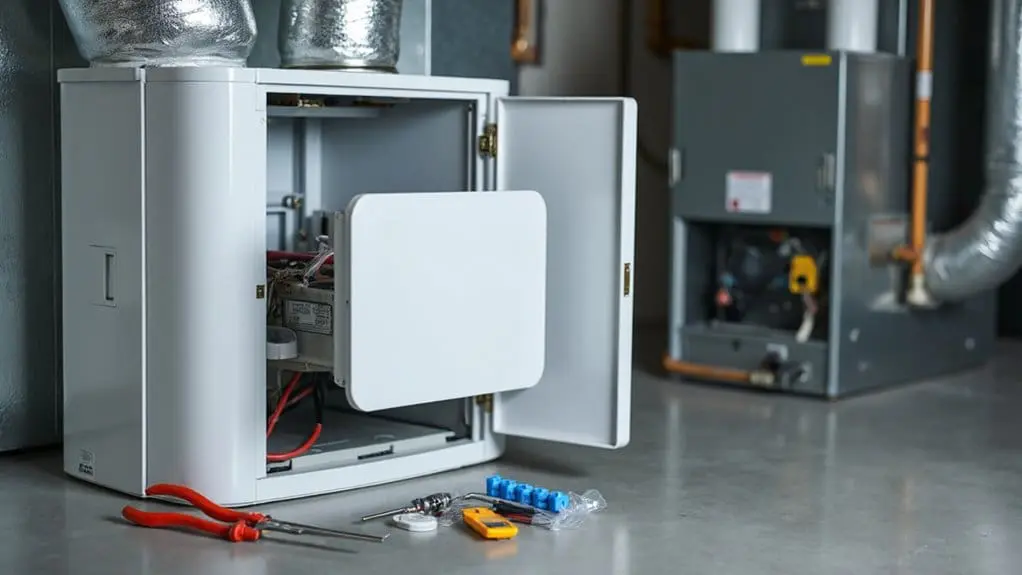
Before calling a technician, you can troubleshoot common whole house humidifier issues yourself. First, shut off electrical power and water supply for safety. Check electrical connections, inspect the circuit breaker, and test voltage with a multimeter. Replace clogged or damaged filters, clean mineral buildup from water distribution components, and clear blocked drain lines. Look for musty odors indicating mold growth or unusual mechanical sounds signaling worn parts. These systematic diagnostic steps will help you identify whether professional intervention is necessary.
Key Takeaways
- Check electrical connections, circuit breakers, and internal fuses before assuming major component failure.
- Replace clogged or damaged filters annually to restore proper humidity levels and prevent system strain.
- Clean mineral buildup from water lines, distribution trays, and drain systems using vinegar solutions.
- Identify warning signs like musty odors, water leaks, or unusual noises that indicate maintenance needs.
- Always shut off power and water supply before attempting any humidifier repairs or inspections.
Signs Your Whole House Humidifier Needs Attention
How can you determine when your whole house humidifier requires immediate attention? Several warning signs indicate your whole-house humidifier needs professional intervention. Musty odors signal potential mold growth, bacteria contamination, or excessive mineral buildup within the system. You’ll notice inconsistent humidity readings or absent misting when internal components malfunction. Water leaks or pooling around the unit indicate compromised supply lines or drainage failures requiring immediate repair. Mechanical grinding, banging, or rattling sounds suggest worn components that could cause system damage. Visible mineral deposits on surfaces or clogged filters reduce operational efficiency considerably. These common problems don’t resolve themselves and typically worsen without proper attention. Recognizing these symptoms early prevents costly repairs and maintains your humidifier’s performance while protecting your home’s air quality and structural integrity.
Safety Precautions Before Starting Any Repairs
Three critical safety measures must be completed before attempting any whole house humidifier repairs. First, you’ll need to shut off electrical power to your HVAC system at both the unit switch and circuit breaker. Never skip this step—water and electricity create lethal combinations. Second, turn off your home’s main water supply to prevent flooding during repairs. Make sure you’ve located the shutoff valve beforehand and tested its operation.
Third, assess whether your repair requires professional intervention. Licensed HVAC technicians should handle electrical connections, gas line modifications, and complex system integrations. Simple tasks like filter replacement or cleaning may be DIY-appropriate, but structural modifications or wiring issues require professional expertise. Don’t compromise safety for cost savings—some repairs demand certified professionals.
Checking Power and Electrical Connections
Once you’ve confirmed all power sources are safely disconnected, you can begin systematically diagnosing electrical issues that commonly cause humidifier failures. First, verify your humidifier’s plugged into a functioning outlet and check the circuit breaker supplying power to your HVAC system. Use a multimeter to test voltage supply at all connection points, ensuring readings match manufacturer specifications. Inspect electrical connections between the humidifier and your heating system’s control boards for loose wires, corrosion, or damaged terminals. Examine any power switches or control boards that regulate air moisture levels throughout your system. Check the humidifier’s internal fuse if present—a blown fuse will prevent operation. These electrical components must function properly for your whole-house humidifier to integrate effectively with your existing HVAC infrastructure.
Inspecting and Replacing the Humidifier Filter
After confirming your electrical components are functioning correctly, the humidifier filter requires thorough examination as it’s often the primary culprit behind reduced performance and system malfunctions. Turn off power to your unit before proceeding with any inspection.
Remove the filter panel and extract the filter media. Look for mineral buildup, discoloration, or structural damage. A clogged or deteriorated filter restricts water flow and reduces efficiency considerably. You’ll need to replace the filter if it’s hardened, cracked, or heavily scaled.
Keep your humidifier in good working order by installing the new filter according to manufacturer specifications. Guarantee proper positioning and secure mounting. Most filters require replacement annually before each heating season begins. Regular maintenance prevents costly repairs and maintains ideal indoor humidity levels throughout winter months.
Cleaning the Water Distribution System
Many humidifier performance issues stem from mineral deposits and debris accumulating within the water distribution system. Your whole house humidifier’s efficiency depends on maintaining clean water pathways throughout the unit.
Before beginning any cleaning procedures, shut off power and water supply to prevent electrical hazards. Focus your attention on these critical components:
- Water line connections – Remove mineral buildup using white vinegar solution
- Distribution tray – Scrub away calcium deposits with soft brush
- Drain line – Clear blockages using compressed air or plumbing snake
- Solenoid valve – Clean inlet screen and verify proper operation
- Water panel housing – Eliminate mold growth with diluted bleach solution
Complex distribution system repairs require specialized knowledge. Contact qualified HVAC technicians if you encounter persistent clogs or damaged components beyond basic cleaning procedures.
Testing Water Supply and Drainage Issues
When your whole house humidifier fails to maintain proper moisture levels, faulty water supply or drainage systems are often the culprits. Start by examining the saddle valve connection to your home’s water line. Check for mineral buildup or loose fittings that restrict flow. Next, test the solenoid valve by listening for a clicking sound when the humidifier works through its cycle. If you don’t hear clicking, the solenoid may need replacement. Inspect drainage lines for clogs or improper pitch that prevents water from flowing freely. Use a multimeter to verify the solenoid valve receives proper voltage. These systematic checks will help you diagnose and repair most water-related issues before calling a professional technician.
Adjusting Humidity Settings and Controls
How do you determine if your whole house humidifier’s control settings are properly calibrated for your home’s specific needs? Start by examining your Control Board’s current configuration and comparing it against ideal performance standards for whole house humidifiers.
- Set humidity levels between 30-50% relative humidity to maintain optimal indoor air quality without risking condensation damage
- Adjust water flow rate to prevent over-humidification while ensuring adequate moisture output for your square footage
- Recalibrate humidity sensors if readings don’t match portable hygrometer measurements, ensuring accurate environmental feedback
- Modify cycling schedules to match seasonal demands, particularly during winter months when heating and cooling systems create drier conditions
- Integrate with furnace controls for automated humidity management that responds to your HVAC system’s operational cycles
Proper calibration prevents equipment damage and maintains healthy indoor environments.
Examining Ductwork and Airflow Problems
While proper humidity settings guarantee satisfactory moisture levels, compromised ductwork can undermine your entire system’s effectiveness by creating air leaks, blockages, and inadequate circulation patterns. You’ll need to inspect your whole house humidifier’s ductwork installation, ensuring all seals remain intact to prevent dry air infiltration. Check for obstructions restricting humidified air delivery throughout your heating and air conditioning system.
Verify your bypass damper operates correctly, regulating airflow through the humidifier unit. Examine your furnace blower‘s operation, confirming it runs at appropriate speeds for effective air circulation. If your house experiences uneven humidity distribution, consider upgrading to a variable-speed blower motor. This enhancement improves both airflow consistency and humidity control performance across all zones in your home’s heating and air conditioning system.
When to Contact a Professional HVAC Technician
Although many whole house humidifier repairs fall within a homeowner’s capabilities, certain situations require professional HVAC expertise to guarantee safe and effective operation.
You should STOP attempting DIY repairs and contact an HVAC technician when encountering these scenarios:
- Malfunctioning humidifier with water line leaks or unusual operational noises
- Installation or replacement requirements that need to change existing ductwork integration
- Electrical component failures or control system malfunctions requiring specialized diagnostic equipment
- Uncertainty about appropriate humidifier capacity or ideal settings for your specific home
- Warranty preservation needs during installation or major component replacement
Professional technicians possess the expertise to diagnose complex issues safely while maintaining manufacturer warranties. If you’re experiencing persistent problems that basic troubleshooting can’t resolve, let me know through our service request system. Contact our certified professionals who follow strict Privacy Policy guidelines for secure, reliable humidifier repair services.
Conclusion
You’ve learned to identify warning signs, you’ve mastered basic troubleshooting steps, and you’ve understood when professional help’s required. Regular maintenance prevents costly breakdowns, systematic diagnosis saves time and money, and proper safety protocols protect your home and family. Remember: turn off power before any electrical work, follow manufacturer guidelines precisely, and don’t hesitate to call a certified HVAC technician when repairs exceed your skill level or involve complex system components.