
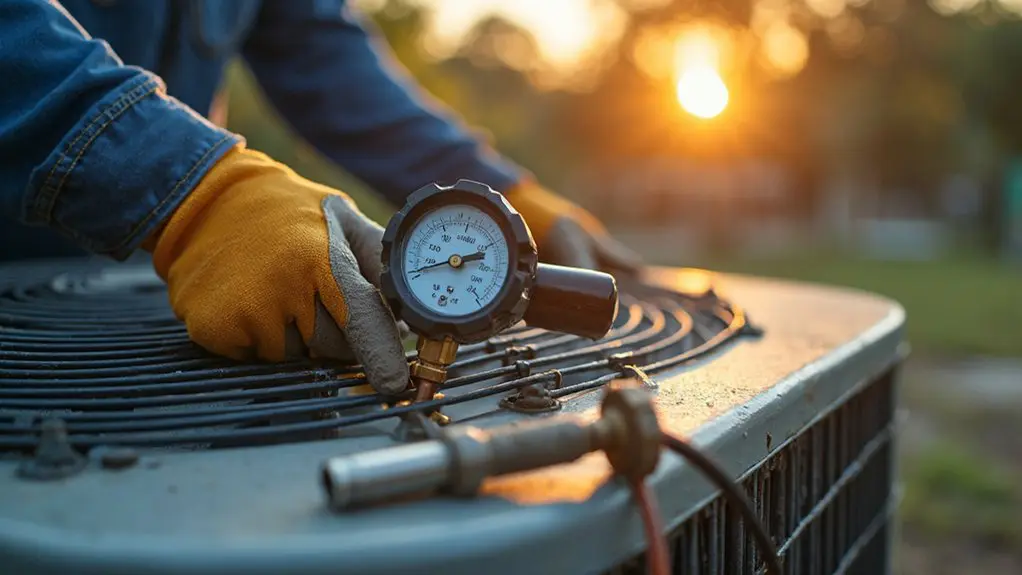
Annual AC tune-ups save you money by maintaining ideal energy efficiency and preventing costly breakdowns. Without proper maintenance, your system loses 5% efficiency yearly, increasing utility bills by up to 30%. Professional tune-ups restore up to 95% of original performance capacity through filter replacement, coil cleaning, and refrigerant optimization. Regular maintenance extends equipment lifespan by five years while identifying potential failures before they occur. This thorough guide explores proven strategies to maximize your HVAC investment returns.
Key Takeaways
- Replacing dirty air filters and cleaning coils during tune-ups improves energy efficiency by up to 30%, reducing monthly utility bills.
- Annual maintenance prevents costly emergency repairs by identifying worn components and potential failures before they cause system breakdowns.
- Regular tune-ups extend HVAC system lifespan by up to 5 years, delaying expensive replacement costs and maximizing equipment investment.
- Properly maintained systems restore up to 95% of original performance capacity, ensuring optimal comfort without energy waste.
- Seasonal maintenance schedules align with operational demands, preparing systems efficiently and preventing off-season repair emergencies.
Understanding the Importance of Regular HVAC Maintenance
When your HVAC system operates without regular maintenance, it accumulates debris, develops mechanical wear, and loses operational efficiency that directly impacts your energy costs. HVAC system maintenance prevents these deteriorating conditions through systematic inspection and component servicing.
Regular HVAC tune-ups maintain consistent energy efficiency by cleaning coils, checking refrigerant levels, and lubricating moving parts. This preventive maintenance approach sustains reliable system performance while reducing power consumption. Without professional tune-ups, your equipment works harder to achieve desired temperatures, consuming excess electricity and increasing utility expenses.
Seasonal maintenance schedules align with your system’s operational demands. Spring preparations optimize cooling components, while fall services prepare heating elements for winter loads. HVAC service providers employ certified technicians who identify potential failures before they occur, preventing expensive emergency repairs.
Proper maintenance protocols deliver extended equipment lifespan and enhanced system reliability. You’ll experience fewer breakdowns, maintain warranty coverage, and avoid premature system replacement costs through consistent professional care.
How Tune-Ups Reduce Energy Costs and Improve Efficiency
How do professional tune-ups deliver measurable energy savings for your HVAC system? Through systematic HVAC system maintenance procedures that restore ideal HVAC system operation and maximize energy efficiency. Your HVAC tune-up directly addresses efficiency-robbing issues that increase energy consumption and utility costs.
During preventative maintenance, technicians replace dirty air filters that can reduce energy efficiency by 15%. They’ll calibrate system components, clean coils, and optimize refrigerant levels to guarantee peak HVAC system performance. These procedures can improve your system’s energy efficiency by up to 15%, translating to substantial energy savings on monthly bills.
Properly maintained systems operate up to 30% more efficiently than neglected units. This improved efficiency reduces HVAC system wear and tear, extending HVAC component lifespan while minimizing energy waste. Regular tune-ups prevent the gradual performance decline that forces your system to work harder, consuming more energy to maintain comfortable temperatures and ultimately protecting your investment.
Preventing Costly Breakdowns Through Preventive Care
The most cost-effective approach to HVAC maintenance involves identifying and addressing minor component issues before they escalate into major system failures. Regular maintenance by HVAC professionals safeguards your system remains in optimal working condition, helping you avoid costly repairs that typically result from neglected equipment.
During a comprehensive HVAC system tune-up, technicians perform critical assessments that directly impact system reliability:
- Component lubrication and cleaning – Prevents mechanical wear and guarantees smooth operation of moving parts
- Thermostat calibration and refrigerant level verification – Maintains proper system cycling and cooling capacity
- Safety switch testing and electrical connection inspection – Identifies potential hazards before they cause system shutdown
Preventive care through annual tune-ups help extend the life of your HVAC system while keeping your home comfortable year-round. This proactive maintenance strategy saves you money by preventing unexpected breakdowns that often require emergency service calls and expensive component replacements.
Extending Your HVAC System’s Lifespan and Performance
Professional HVAC maintenance directly correlates with your system’s operational longevity and peak performance capacity. Regular maintenance extends your HVAC system’s lifespan by up to five years through systematic component care and ideal operational parameters. Tune-ups involving coil cleaning, filter replacement, and moving part lubrication restore up to 95% of your system’s original performance capacity.
Your well-maintained system operates with improved energy efficiency—up to 30% enhancement—reducing operational costs throughout its service life. Following manufacturer-recommended maintenance schedules guarantees warranty validity while preventing minor issues from escalating into costly repairs that compromise system longevity.
Documented service records demonstrate compliance with maintenance protocols, safeguarding your investment against premature failure. Addressing component wear during scheduled intervals prevents cascading failures that can reduce your HVAC system’s lifespan by several years. This proactive approach maintains ideal performance capacity while minimizing emergency service calls and unexpected equipment replacement expenses.
What to Expect During a Professional HVAC Tune-Up
Understanding your HVAC tune-up process guarantees you’ll recognize proper service protocols when technicians arrive at your property. A professional tune-up systematically addresses critical maintenance components that directly impact system performance and the lifespan of HVAC equipment.
During regular maintenance, technicians will execute thorough inspection procedures including:
- Component examination and safety verification – Comprehensive assessment of furnaces, heat exchangers, and electrical connections for wear and tear indicators
- Air filters and coil maintenance – Cleaning or replacing dirty air filters while servicing evaporator and condenser coils to optimize airflow
- Thermostat calibration and lubrication protocols – Precise temperature sensor adjustments and moving parts lubrication for blower motors and compressors
Expect technicians to conduct systematic performance testing throughout the service. They’ll verify proper system activation, measure airflow rates, and document operational parameters. This methodical approach guarantees your HVAC system operates at peak efficiency while identifying potential issues before they escalate into costly repairs.
Seasonal Maintenance Scheduling for Optimal Results
Proper scheduling transforms routine HVAC maintenance from reactive repairs into proactive system optimization. You’ll maximize efficiency by implementing a bi-annual seasonal maintenance schedule that addresses your HVAC system’s specific operational demands.
Schedule spring tune-ups between March and May to prepare your air conditioning components for peak summer performance. Your HVAC services should include refrigerant level checks, coil cleaning, and electrical connection inspections. Fall maintenance from September to November focuses on heating system preparation, ensuring your furnace operates efficiently during winter months.
This strategic timing prevents costly repairs by identifying worn components before system failures occur. Regular maintenance performed every six months extends your system lifespan while reducing energy costs through ideal performance calibration.
Professional HVAC maintenance during seasonal shifts allows technicians to address temperature-specific components when they’re not under operational stress. You’ll achieve consistent indoor comfort while minimizing emergency service calls that typically occur during extreme weather conditions when your system faces maximum demand.
Choosing the Right HVAC Service Provider for Your Needs
Five critical factors determine whether an HVAC service provider will deliver the maintenance quality your system requires. When selecting a professional HVAC company, you’ll need certified and expert technicians with years of experience across diverse HVAC systems. The right HVAC service provider guarantees reliable service through proper training and comprehensive system knowledge.
Evaluate potential contractors using these essential criteria:
- Certification and expertise – Verify technicians hold current HVAC certifications and demonstrate proficiency in furnace repair, heating installation, and system diagnostics
- Service scope – Confirm the HVAC company provides complete maintenance services, including refrigerant level checks, coil cleaning, and thermostat calibration
- Safety protocols – Ensure contractors follow established safety procedures and maintain proper insurance coverage
Professional HVAC technicians helping homeowners through preventive maintenance programs offer the technical competency your system demands. Choose providers who perform thorough tune-up checklists, addressing dirty filters, clogged drain lines, and component inspections that protect your investment.
Conclusion
Your HVAC system operates like a finely-tuned engine—without regular maintenance, it’ll consume excessive energy and suffer premature component failure. You’ve learned that annual tune-ups aren’t expenses; they’re investments in operational efficiency and system longevity. By scheduling preventive maintenance, you’ll optimize performance parameters, reduce energy consumption by up to 15%, and prevent catastrophic system failures. Don’t let your comfort system become a money-draining liability—implement these maintenance protocols to guarantee peak operational efficiency and substantial cost savings.