
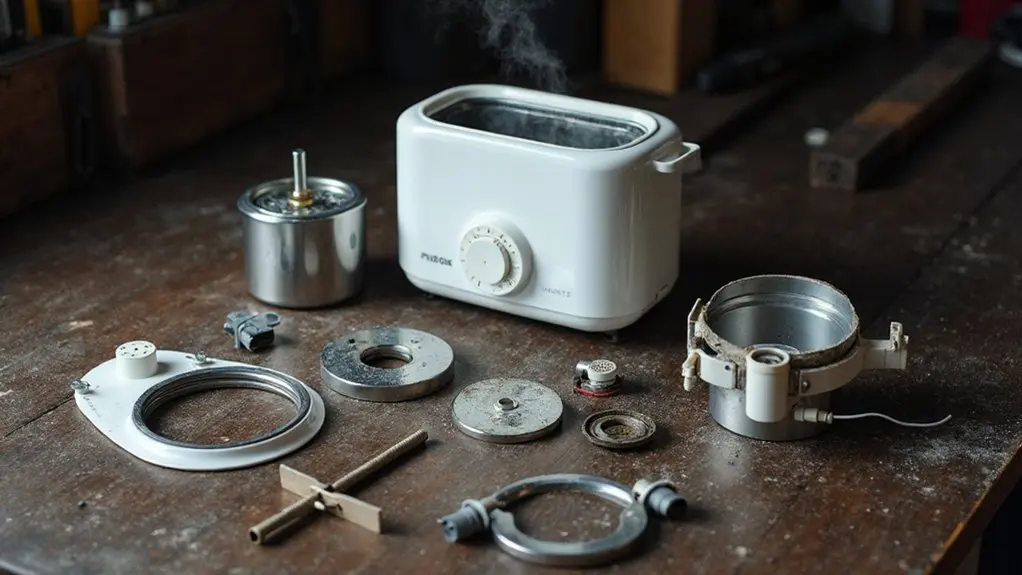
Your humidifier stops working due to seven primary failures: power supply issues from damaged cords or tripped breakers, blocked water lines caused by mineral deposits restricting flow, faulty sensors creating humidity imbalances, water leakage from cracked tanks or worn seals, microbial contamination producing foul odors, excessive noise from mineral buildup on components, and clogged filters reducing mist output. These problems escalate from minor inconveniences to complete system failures without prompt intervention. Understanding each issue’s specific symptoms and targeted solutions will restore your unit’s ideal performance.
Key Takeaways
- Check power supply by verifying electrical outlet function, inspecting cord damage, and testing circuit breakers or fuses.
- Clear mineral deposits from water lines and internal components that block mist production and reduce output.
- Replace faulty humidity sensors that cause inaccurate readings and prevent proper moisture level control.
- Fix water leakage by replacing cracked tanks, damaged seals, or malfunctioning float valves causing persistent drips.
- Clean microbial contamination from water trays and pads that create foul odors and compromise air quality.
Power Supply Problems Preventing Your Humidifier From Starting
When your humidifier won’t start, the power supply is typically the first component to investigate. Begin by verifying your unit’s plugged into a functioning electrical outlet. Test the outlet with another device to confirm it’s delivering power.
Next, examine the power cord for visible damage, fraying, or kinks that could interrupt electricity flow. Even minor cord damage can prevent your humidifier from receiving sufficient power.
Check your humidifier’s control panel and on/off switch. These components can malfunction or become stuck, preventing activation. UNPLUG THE HUMIDIFIER for thirty seconds before reconnecting to reset the system.
Inspect your home’s electrical panel for tripped circuit breakers or blown fuses affecting the power source. For battery-operated models, replace batteries and verify proper installation.
If your unit powers on but creates issues like a noisy humidifier or won’t function properly, guarantee the water reservoir is correctly positioned and perform regular cleaning to maintain ideal performance.
Blocked Water Lines and Clogged Components Stopping Mist Production
After confirming your humidifier receives adequate power, blocked water pathways represent the next major barrier to proper mist production. Clogged water lines severely restrict flow, causing diminished output and potential system failure.
Hard water creates the primary culprit—mineral deposits accumulate throughout internal components, forming stubborn blockages. Steam humidifiers face particular vulnerability, as calcium and magnesium buildup restricts water flow and creates leaks at connection points.
You’ll notice reduced mist output first, followed by complete production cessation if blockages worsen. Check water intake lines, internal tubes, and misting mechanisms for visible mineral deposits or debris accumulation.
Prevention requires switching to distilled water, which eliminates mineral content causing blockages. Regular maintenance involving component cleaning or replacement prevents costly repairs. Disassemble accessible water pathways monthly, removing scale buildup with appropriate cleaning solutions.
Address existing clogs immediately—delayed intervention transforms manageable cleaning tasks into component replacement requirements, substantially increasing repair costs and downtime.
Faulty Sensors Creating Humidity Control Malfunctions
Faulty humidity sensors disrupt your humidifier’s ability to maintain ideal moisture levels, creating a cascade of control malfunctions that compromise both system efficiency and indoor air quality. These sensors provide inaccurate readings, causing your system to over-humidify or under-humidify spaces. When sensors malfunction, humidity levels become imbalanced, promoting mold, mildew, and bacteria growth throughout your building.
You’ll notice excessive energy consumption as your HVAC system struggles against faulty sensor data. Common issues include poorly calibrated sensors that prevent your humidifier from achieving perfect relative humidity ranges. Your humidifier works inefficiently when sensors can’t accurately detect moisture conditions, leading to continuous operation or premature shutoffs.
Regular maintenance and calibration prevent these control problems. Replace or recalibrate defective sensors immediately to restore proper function. Make sure the humidifier receives accurate environmental feedback by testing sensor accuracy monthly. Professional humidifier repair services can diagnose sensor malfunctions and implement precise calibration protocols, ensuring your system maintains consistent moisture control.
Water Leakage From Damaged Tanks and Seals
Water leakage represents one of the most damaging humidifier malfunctions you’ll encounter, often stemming from compromised tanks and deteriorated seals that permit moisture to escape where it shouldn’t.
You’ll typically find cracks or holes in your water tank causing persistent leaks that reduce performance while creating water damage. Damaged seals around tank lids and water inlets create similar problems, allowing moisture to bypass intended pathways.
Mineral buildup and corrosion accelerate deterioration of both tank integrity and seal effectiveness over time. These deposits create weak points where water leaks develop, particularly in hard water areas.
Your float valve may malfunction, causing tank overflow and subsequent leakage. Overfilling also triggers similar overflow conditions.
To resolve these issues, you’ll need to identify the specific leaking component through systematic inspection. Replace cracked tanks immediately, install new seals where deterioration occurs, and facilitate your float valve to operate correctly. Address mineral buildup through regular descaling to prevent future seal and tank damage.
Foul Odors Caused by Mold and Bacterial Growth
Foul odors emanating from your humidifier signal dangerous microbial contamination that’s compromising your indoor air quality. When mold and bacteria colonize your unit’s water trays and evaporator pads, they’ll cause the water to develop unpleasant smells that contaminate circulating air throughout your home.
These microorganisms thrive in your humidifier’s damp environment, particularly when humidity levels remain consistently high. The three main breeding grounds include stagnant water reservoirs, dirty evaporator pads, and mineral deposits that accumulate over time. Unlike white dust issues that affect surfaces, microbial growth directly threatens respiratory health.
You’ll need immediate cleaning and disinfection to eliminate these pathogens. This common problem requires thorough scrubbing of all water-contact surfaces, replacing contaminated pads, and removing mineral buildup that harbors bacteria. Regular maintenance prevents future contamination, ensuring your humidifier delivers clean, odor-free moisture rather than circulating harmful microorganisms throughout your living space.
Excessive Noise From Mineral Buildup and Worn Parts
Grinding, rattling, and buzzing sounds consistently indicate that mineral deposits have accumulated on your humidifier’s moving components, creating friction and mechanical stress that disrupts normal operation. The primary cause stems from hard water minerals coating internal mechanisms, restricting the flow of water and forcing parts to work harder.
Your solenoid valve becomes a critical failure point when mineral buildup prevents proper opening and closing, generating clicking or buzzing noises during operation. Similarly, calcium deposits on your fan motor bearings create grinding sounds that worsen over time without intervention.
Troubleshooting Tips:
- Disassemble and clean all accessible components with white vinegar
- Inspect your solenoid valve for mineral obstruction and replace if damaged
- Examine fan motor assembly for wear or debris accumulation
- Use distilled water exclusively to prevent future mineral deposits
- Replace worn mechanical parts showing signs of damage
Regular cleaning prevents most noise issues, while switching to distilled water eliminates the root cause entirely.
White Dust Formation and Filter Replacement Needs
That fine white dust settling on your furniture and electronics signals mineral-laden water vapor dispersing throughout your home, creating both aesthetic problems and potential respiratory concerns. This white dust formation occurs when hard water for your humidifier contains high mineral concentrations that become airborne particles as water evaporates.
Your humidifier filters bear the brunt of these mineral deposits, gradually clogging and restricting proper moisture output. Replacing humidifier filters every 1-3 months prevents performance degradation and maintains healthy air quality. Usage frequency and water hardness determine replacement intervals.
Switch to distilled or demineralized water to dramatically reduce white dust formation and extend filter lifespan. This simple change eliminates most minerals before they can accumulate on internal components or disperse into your living space.
Neglecting filter maintenance increases energy consumption, reduces humidity output, and creates breeding grounds for bacteria and mold. Regular replacement guarantees optimal performance while safeguarding your family’s respiratory health.
Conclusion
You’ll encounter humidifier problems eventually—studies show 68% of units fail within three years due to maintenance neglect. Don’t let these seven common issues catch you off-guard. Check your power connections first, clean blocked components regularly, and replace filters on schedule. Monitor for leaks, strange odors, and unusual sounds that signal deeper problems. Stay proactive with your maintenance routine, and you’ll extend your humidifier’s lifespan while maintaining ideal indoor air quality year-round.