
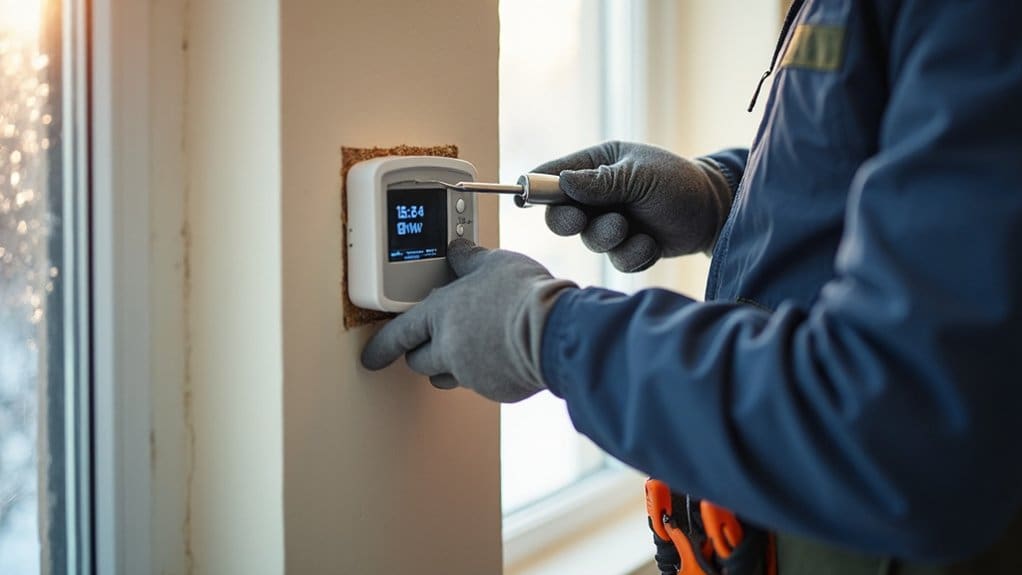
You’ll want to upgrade your St. Louis home’s thermostat before Missouri’s harsh winter hits to guarantee up to 23% savings on heating costs. Smart thermostats automatically adjust temperatures during unpredictable cold snaps while offering remote control through your mobile device. Before installation, identify your HVAC system type and examine existing wiring, particularly C-wire availability. Professional installation verifies proper setup for complex systems, while programmable features protect your pipes from freezing and optimize energy efficiency throughout the season.
Key Takeaways
- Smart thermostats provide up to 23% heating savings through automatic temperature adjustments during St. Louis’s unpredictable winter weather patterns.
- Professional installation ensures proper HVAC system compatibility and handles complex wiring configurations for optimal cold weather performance.
- Programmable scheduling and geofencing technology automatically adjust temperatures based on occupancy, preventing energy waste during frequent Missouri climate changes.
- Remote Wi-Fi connectivity allows homeowners to monitor and control heating systems from mobile devices during extreme cold snaps.
- Dual-fuel compatibility and intelligent climate control features help thermostats seamlessly manage furnace-heat pump operations during Missouri’s temperature extremes.
Why Smart Thermostats Are Essential for St. Louis Winters
Three compelling reasons make smart thermostats indispensable for surviving St. Louis winters while keeping your energy costs manageable.
First, you’ll slash heating expenses by up to 23% through automatic temperature adjustments based on your occupancy patterns and daily schedules. Your smart thermostat learns when you’re home and optimizes your heating systems accordingly, preventing wasteful energy consumption when rooms are empty.
Second, programmable features give you precise control over your HVAC system’s performance throughout winter months. You can create customized temperature schedules that maintain comfort during Missouri’s unpredictable cold snaps while maximizing energy efficiency when you’re away or sleeping.
Third, Wi-Fi connectivity provides remote monitoring and regulation through your mobile device. Whether you’re stuck at work during a sudden temperature drop or returning from vacation, you can adjust your home’s temperature instantly. This remote access certifies your heating systems operate efficiently while protecting your pipes from freezing during extreme St. Louis winters.
Understanding Your Current HVAC System Before Thermostat Upgrade
Before investing in a smart thermostat upgrade, you must identify your existing HVAC system’s specific components and wiring configuration. Check whether you have a forced-air furnace, heat pump, or boiler system, as each requires different thermostat compatibility. Locate your current thermostat and examine the wiring—most modern systems use C-wires for power, but older installations might lack this essential connection.
Document your heating system’s voltage requirements and note if you’re upgrading from a basic manual unit or replacing an existing programmable or smart device. Your current thermostat’s ability to maintain consistent indoor temperature affects your energy bills dramatically. Systems with multiple zones, dual-fuel setups, or auxiliary heating elements need specialized thermostats.
If you’re uncertain about your system’s specifications, contact local HVAC Experts for professional assessment. They’ll determine compatibility requirements and identify any necessary electrical modifications before installation, ensuring your new smart thermostat operates efficiently throughout St. Louis’s harsh winter conditions.
Energy Savings Benefits of Programmable Temperature Controls
Everyone wants to reduce their energy bills, and programmable thermostats deliver exactly that benefit by automatically adjusting your home’s temperature based on your daily schedule. These smart systems can slash your heating and Air conditioning costs by up to 20% through precise temperature control that eliminates energy waste.
Smart thermostats learn your household’s habits over time, optimizing both comfort and efficiency. They’ll pre-heat your home before you arrive while avoiding over-heating when you’re away.
Key energy-saving advantages include:
- Automatic scheduling – No more forgetting to adjust temperatures when leaving home
- Precise control – Eliminates over-heating and over-cooling that wastes energy
- Learning capabilities – Smart systems adapt to your preferences and routines
- Quick payback – Most units pay for themselves within 1-2 years through energy savings
Your programmable thermostat investment becomes a money-saving asset that continuously reduces your utility bills throughout Missouri’s harsh winters.
Professional Installation vs. DIY Thermostat Setup
When it comes down to thermostat installation, you’ll face an essential decision between hiring a professional or tackling the project yourself. The first step involves evaluating your technical skills and comfort level with electrical work.
DIY installation can save money upfront, but you’ll need to make sure you comprehend your HVAC system’s wiring configuration. Incorrect connections can damage equipment or create safety hazards, leading to costly repairs that exceed professional installation fees.
A heating professional brings expertise and proper tools to complete the job safely. An experienced installation team can identify compatibility issues, guarantee proper calibration, and configure advanced features you might overlook. They’ll also handle permit requirements and warranty considerations.
While DIY appeals to budget-conscious homeowners, professional installation offers peace of mind. Consider your skill level, available time, and potential consequences of mistakes. For complex systems or smart thermostats with multiple zones, professional installation typically proves more cost-effective long-term.
Best Thermostat Features for Missouri’s Climate Extremes
Missouri’s unpredictable weather patterns demand thermostats equipped with features that can handle dramatic temperature swings and seasonal extremes. Your HVAC system needs intelligent controls that’ll help maintain consistent comfort while managing energy costs during harsh winters and scorching summers.
Modern thermostats offer advanced capabilities specifically designed for Missouri’s challenging climate:
- Programmable Temperature Settings – Multiple schedules adapt automatically to frequent weather changes, keeping your heating and cooling system responsive to local conditions.
- Dual-Fuel Compatibility – Seamlessly switches between gas furnace and electric heat pump operation as temperatures fluctuate throughout the day.
- Smart Geofencing Technology – Detects home occupancy and adjusts temperatures accordingly, maximizing efficiency when you’re away and ensuring comfort upon return.
- Remote Wireless Connectivity – Enables scheduling and monitoring from anywhere, helping you stay comfortable while minimizing utility costs during extreme weather events.
These features work together to create an intelligent climate control system that anticipates Missouri’s weather challenges.
Optimal Temperature Settings for Cold Weather Comfort
While sophisticated thermostat features provide the foundation for climate control, finding the right temperature settings guarantees you’ll stay comfortable without draining the bank during St. Louis winters. Your local HVAC service provider recommends maintaining indoor temperatures between 68-72°F for ideal comfort and efficiency.
You can achieve significant savings by lowering nighttime temperatures just 1-2°F, reducing heating costs by 1-3%. Keep your home’s temperature consistent within 5°F to prevent your HVAC system’s components from overworking. Never set temperatures below 55°F, as Missouri’s local climate can cause pipe freezing.
Programmable thermostats automatically adjust settings when you’re away, maximizing energy savings without sacrificing comfort. Remember to replace air filters regularly, as clean filters help maintain consistent temperatures. These simple adjustments secure your system operates efficiently throughout winter’s harsh conditions while keeping utility bills manageable.
Integrating Your New Thermostat With Existing HVAC Equipment
After you’ve selected ideal temperature settings, connecting your new thermostat to your existing HVAC system requires careful attention to wire compatibility and system communication protocols. Your HVAC system’s wiring configuration determines which thermostat features you’ll access, especially with heat pump installations common in St. Louis homes.
Before integration, you’ll need to:
- Verify wire gauge compatibility – Check if your existing wires support advanced thermostat functions
- Identify system type – Determine if you’re working with conventional heating, heat pump, or dual-fuel systems
- Test communication protocols – Guarantee your thermostat communicates properly with HVAC equipment
- Schedule professional calibration – Have an HVAC Company like Meyer Heating and Air verify proper system operation
Don’t forget routine maintenance tasks like air filter replacement affect thermostat performance. If you encounter compatibility issues during installation, professional HVAC repair services confirm your system operates efficiently throughout Missouri’s harsh winter months.
Maintenance Tips to Keep Your Thermostat Running Smoothly
Once your thermostat’s properly integrated with your HVAC system, regular maintenance guarantees excellent performance throughout St. Louis’s harsh winter months. Pay attention to your thermostat’s display for error messages or unusual readings that signal potential issues.
Check and replace batteries in programmable models every six months, or when low-battery warnings appear. You’ll need to replace batteries before they’re completely drained to maintain your programmed settings. Clean your thermostat monthly using a soft brush to remove dust buildup that can affect sensor accuracy.
Monitor your HVAC system’s response times during each cold snap. If heating cycles seem longer than usual, recalibrate your thermostat or contact a professional Heating and Air technician. Keep the area around your thermostat clear of furniture, curtains, or heat sources that could cause false readings.
These simple maintenance steps help you stay comfortable while maximizing energy efficiency and preventing costly emergency repairs during Missouri’s coldest weather.
When to Call HVAC Professionals for Thermostat Issues
Even with diligent maintenance, you’ll encounter thermostat problems that require professional expertise. While basic troubleshooting can resolve minor issues, certain symptoms indicate it’s time to call an HVAC professional who can help you save money and prevent system damage.
Contact a technician immediately if you notice:
- Error codes or unresponsive controls – When your thermostat displays cryptic codes or won’t respond to adjustments
- Temperature regulation failures – Rooms feel too hot or cold despite correct settings, especially in poorly insulated areas
- Short-cycling patterns – Your HVAC system’s frequent on-off cycling wastes energy and strains components
- Smart home connectivity issues – Integration problems with your first time smart thermostat installation
Don’t attempt DIY repairs on thermostats that are years old or showing sudden behavioral changes. HVAC technicians possess specialized diagnostic tools to identify root causes and implement lasting solutions, protecting your investment and ensuring winter comfort.
Frequently Asked Questions
What Is the Recommended Thermostat for Winter?
You’ll want smart thermostat features like programmable options and WiFi-enabled advantages for winter. Energy-efficient models optimize heating costs. Follow proper thermostat installation tips and maintenance recommendations to guarantee your system performs reliably during cold weather.
How to Prepare a Heating System for Winter?
You’ll prepare your heating system by maintaining heating equipment, insulating your home efficiently, adjusting ceiling fans clockwise, inspecting chimney and vents, monitoring humidity levels, and winterizing your plumbing system before cold weather arrives.
Is It Better to Keep Your Thermostat at a Constant Temperature in Winter?
Your heating costs will skyrocket if you’re constantly adjusting temperatures! You’ll save money using programmable schedules with energy efficient insulation. Consistent temperatures reduce temperature fluctuations, improve home efficiency, and minimize furnace maintenance needs.
How to Set a Thermostat for Cold Weather?
When adjusting temperature settings for cold weather, you’ll program schedule options between 64-68°F daily, lower to 60-67°F nightly while optimizing energy efficiency, monitoring system performance, managing humidity levels, and troubleshooting heating issues as needed.
Conclusion
You’ll maximize your winter comfort and energy savings with proper thermostat installation. Consider the Johnson family in Webster Groves—they reduced their heating bills by 23% after upgrading to a smart thermostat and programming it for Missouri’s unpredictable weather patterns. Don’t wait until the next polar vortex hits. Schedule your professional installation now, and you’ll stay warm while keeping more money in your pocket throughout St. Louis’s challenging winter months.