
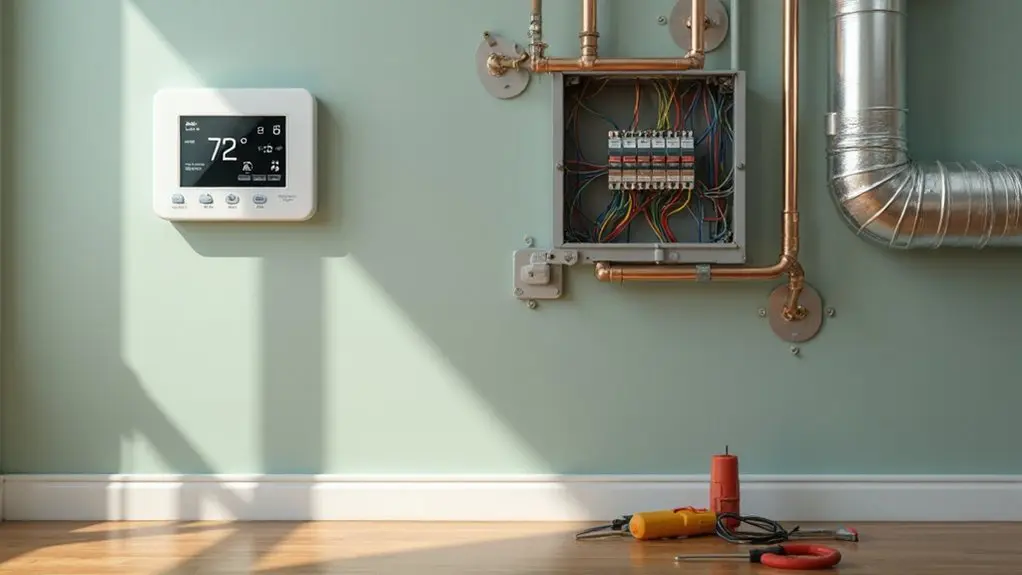
When troubleshooting your multi-zone HVAC thermostat, you’ll need to check each zone individually by comparing room temperatures to thermostat settings and examining the central control panel’s display. Start by testing sensor connections with a multimeter, inspecting zone damper positions, and verifying wiring continuity between thermostats and sensors. Clean sensors monthly and replace thermostat batteries annually for ideal performance. While simple repairs like sensor cleaning are DIY-friendly, complex wiring issues require professional expertise to avoid compromising your system’s energy efficiency and discovering complete solutions.
Key Takeaways
- Multi-zone HVAC systems use individual thermostats and dampers to control temperature in separate areas of your home.
- Common thermostat problems include wiring issues, poor placement, sensor malfunctions, and incompatibility with the zoning control board.
- Diagnose issues by comparing room temperatures to settings, checking damper positions, and testing each zone individually.
- Regular maintenance includes quarterly battery checks, monthly sensor cleaning, and annual temperature calibration for optimal performance.
- Professional repair is recommended for complex electrical issues, while simple sensor or wiring problems may be DIY-friendly.
Understanding Multi-Zone HVAC System Components
A multi-zone HVAC system transforms your home’s climate control by dividing it into separate areas, each with its own thermostat and temperature settings. You’ll find multiple thermostats strategically placed throughout your home, allowing you to customize comfort levels for each zone independently.
The system’s core components work together seamlessly. Zone dampers installed within your ductwork act as gatekeepers, opening and closing to direct airflow where it’s needed most. When your thermostat in the living room calls for cooling while the bedroom thermostat remains satisfied, these dampers guarantee air flows only to the appropriate zone.
A central control panel serves as the system’s brain, coordinating communication between all thermostats and dampers. It processes temperature demands from each zone and signals the dampers accordingly. This sophisticated coordination prevents energy waste by avoiding unnecessary heating or cooling of unoccupied areas, while maintaining your desired temperature in active zones.
Common Thermostat Problems in Zoned Systems
Even the most sophisticated zoned HVAC systems can experience thermostat-related issues that compromise your home’s comfort and energy efficiency. When your zone thermostats malfunction, you’ll notice improper temperature regulation in specific areas, leaving some rooms too hot or cold despite proper settings.
Wiring issues between your thermostat controls and zone dampers frequently disrupt airflow and temperature control throughout your HVAC zoning systems. These electrical problems prevent proper communication between components, causing erratic system behavior.
Poor thermostat placement creates another common problem in multi-zone homes. When you’ve installed zone controls in locations with direct sunlight, drafts, or heat sources, they’ll provide inaccurate temperature readings that affect your entire system’s performance.
Incompatibility between your thermostat and zoning control board prevents seamless integration, while dirty or malfunctioning sensors deliver faulty temperature data. These issues collectively undermine your system’s ability to maintain consistent comfort levels and ideal energy efficiency across all zones.
Diagnosing Temperature Control Issues by Zone
How can you pinpoint which zones aren’t functioning properly when your HVAC system struggles with temperature control? Start by checking the temperature in each room with a reliable thermometer, comparing actual readings to thermostat settings. Your zone control panel displays which zones are calling for heating or cooling – zones showing constant operation but poor results indicate problems.
Walk through different zones systematically, noting which areas feel too hot or cold despite proper thermostat settings. Check damper positions in problem zones; stuck or partially closed dampers restrict airflow. Listen for unusual sounds from zone dampers when they should be operating.
Test each zone individually by adjusting one thermostat while keeping others at neutral settings. This isolates whether issues stem from specific zone components or the main Zoned HVAC System. Document which multiple zones experience similar problems, as this pattern helps identify whether you’re dealing with zone-specific failures or central system issues affecting your ability to control the temperature effectively.
Sensor Connection and Wiring Troubleshooting
When temperature sensors fail to communicate properly with your thermostat, the entire zoned HVAC system can’t maintain accurate climate control across different areas. You’ll need to systematically check each sensor connection to identify the problem.
Start by inspecting the wiring between your thermostat and temperature sensors in each zone. Look for visible breaks, loose connections, or signs of damage that could interrupt communication. Test each wire for continuity using a multimeter to detect shorts or breaks that aren’t immediately visible.
Verify that sensors are securely mounted in their designated locations and properly connected to the zoned system’s control panel. Check for interference from other electronic devices that might disrupt signal transmission between components.
Configure your thermostat settings to guarantee it recognizes all connected sensors for multi-zone monitoring. If you’re still experiencing issues after these troubleshooting steps, consult the manufacturer’s documentation or contact a professional technician for assistance with complex wiring problems.
Zone Damper Malfunction and Repair Solutions
After resolving sensor communication problems, you may discover that your zones still aren’t receiving proper airflow due to malfunctioning dampers. Faulty zone dampers in your HVAC system can cause uneven temperatures and reduce energy efficiency throughout your home.
Common zone damper problems include motors stuck in open or closed positions, failed actuator motors, and control board malfunctions. You’ll need diagnostic testing to identify the root cause—measure airflow in each zone and conduct pressure tests within your ductwork to pinpoint issues.
Repair solutions typically involve adjusting or replacing the defective zone damper, cleaning accumulated debris from ductwork, and recalibrating your zoned system’s control components. If the control board has failed, you’ll likely need an HVAC technician for replacement.
Prevent future damper failures through regular maintenance. Inspect and clean your zone dampers periodically to extend their lifespan and maintain ideal performance in your multi-zone system.
Central Control Panel Diagnostic Procedures
Where should you begin when your zoned HVAC system isn’t responding properly to temperature commands? Start by examining your central control panel, which serves as the brain of your entire HVAC zoning system. This control hub manages communication between multiple thermostats and your existing HVAC equipment.
First, check the panel’s power supply and verify all LED indicators are functioning normally. Next, review the system’s error codes displayed on the control interface. These diagnostic messages will allow you to control your troubleshooting approach more effectively.
Test each zone individually by adjusting temperature settings on multiple thermostats while monitoring the control panel’s response. Look for delayed reactions or zones that don’t register changes. Check wire connections between the panel and zone dampers, ensuring they’re secure and undamaged.
Finally, verify that your control system’s programming matches your home’s current zoning configuration, as mismatched settings often cause communication failures.
Individual Zone Thermostat Calibration Methods
Beyond control panel diagnostics, thermostat calibration issues can create temperature discrepancies that affect your zoned system’s performance. When one thermostat reads differently than actual room temperatures, you’ll experience uncomfortable conditions and energy waste.
Start calibration by comparing each thermostat’s reading with a reliable digital thermometer placed three feet away. If you discover a different temperature reading exceeding two degrees, recalibration’s necessary. Most modern zoning thermostats feature digital calibration through their settings menu, allowing adjustments in one-degree increments.
For mechanical thermostats, locate the calibration screw behind the unit’s faceplate. Turn clockwise to increase readings, counterclockwise to decrease. Make small adjustments and wait fifteen minutes between changes.
Test each room or area separately, ensuring zones in your home maintain consistent temperatures. Properly calibrated HVAC systems with accurate zoning deliver ideal comfort while reducing energy costs. Document calibration settings for future reference, as seasonal changes may require minor readjustments to maintain peak performance across all zones.
Professional Vs DIY Multi-Zone Thermostat Repair
When multi-zone thermostat problems exceed basic troubleshooting, you’ll face the critical decision between professional repair services and DIY fixes. Professional HVAC technicians bring specialized knowledge and advanced tools to diagnose complex issues within your heating and cooling system. They understand the intricate programming and electrical components that make your HVAC setup function efficiently across multiple zones.
DIY repairs might appear cost-effective initially, but they require advanced electrical and programming expertise most homeowners lack. Without proper skills, you risk damaging your multi-zone thermostat further, potentially compromising your entire system’s energy efficiency. Improper fixes often create bigger problems, leading to higher long-term costs.
Professional services offer warranties on their work, ensuring quality parts and correct installation. They can safely handle electrical components while optimizing your system’s performance. While DIY attempts may save money upfront, the complexity of multi-zone systems makes professional intervention the smarter, safer choice for lasting repairs.
Preventive Maintenance for Zoned HVAC Thermostats
Regular maintenance schedules can extend your zoned HVAC thermostat’s lifespan by years while preventing costly emergency repairs. Your zoned heating system requires specific preventive maintenance steps that differ from single-zone units.
Check thermostat batteries quarterly and replace them annually, even if they’re still functioning. Clean sensors monthly using compressed air to remove dust buildup that affects temperature readings. Make sure each zone’s dampers operate smoothly by testing them during seasonal shifts.
Calibrate temperature sensors per room annually to maintain accurate readings across all zones. Verify wireless connectivity between thermostats and your main heating and air conditioning control panel. Update firmware when manufacturers release new versions to improve energy efficiency and system performance.
Schedule professional inspections twice yearly to identify potential issues before they cause system failures. During these visits, technicians can optimize zone programming and guarantee proper communication between all system components, maximizing your investment’s longevity.
When to Replace Vs Repair Multi-Zone Components
How do you determine whether to repair or replace a failing multi-zone HVAC component? Consider several key factors when making this decision. If your thermostat or zoning equipment shows simple issues like wiring problems, sensor failures, or damper malfunctions, repairs are typically more cost-effective. However, replacement becomes necessary when components can’t maintain accurate temperature control, are outdated, or function improperly.
Evaluate your system’s age, parts costs, and required expertise level. Older systems may benefit from replacement to achieve better energy savings and improved performance. Whether you’re managing a heat pump or traditional system designed to heat and cool your entire home, consulting the best HVAC professionals guarantees proper diagnosis.
Professional System Installation experts can determine if repairs will restore functionality or if replacement provides better long-term value. Regular maintenance extends component lifespan, reducing frequent replacement needs. Don’t attempt complex repairs yourself—qualified technicians provide accurate assessments for ideal system performance.
Conclusion
You’ve now got the roadmap to tackle your multi-zone thermostat troubles head-on. Remember, your zoned HVAC system is like a symphony orchestra – every component must work in harmony for ideal performance. While you can handle basic calibration and sensor checks yourself, don’t hesitate to call professionals for complex wiring issues or damper repairs. Stay proactive with regular maintenance, and you’ll keep each zone singing the right temperature tune year-round.